
• The Care Quality Commission will be the first regulator in the world to have such a wide remit over both health and social care
• The Department of Health says it expects all GP practices will eventually have to register with the CQC, but they have yet to announce how this will be rolled out from 2010
• Practices will have a mandatory requirement to register with the CQC or face sanctions, such as fines of up to £50,000
• The CQC will be able to issue a penalty notice in lieu of prosecution, suspend or cancel registration or prosecute for specified offences
Source: Care Quality Commission, draft enforcement policy document 2008
Newsletter sign up
Advertisement
Advertisement
Advertisement
Advertisement
Advertisement
Advertisement
Advertisement
Threat of legal action if GPs fail to follow NICE
11 Dec 08
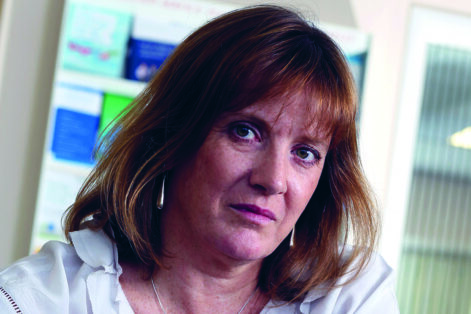
GPs will have to prove they follow NICE guidelines or face the possibility of suspension, prosecution or the closure of their practice, the Government’s new health and social care regulator has warned.
Baroness Young, chair of the Care Quality Commission, revealed that guidance from NICE would become legally enforceable from 2009/10, with doctors to face tough annual checks on their compliance.
Pulse has also learned that the commission is determined to bring all GPs under its remit, having told the Government the ‘significant clinical risks’ justify ‘system regulation of primary care as well as professional regulation of individuals’.
Baroness Young told last week’s NICE annual conference in Manchester that policing clinical guidance was set to be a key part of the CQC’s work, and admitted the commission had been handed ‘draconian’ powers by ministers.
‘We want to raise the profile and highlight the importance of NICE guidance and build this into the new registration scheme,’ she said.
Baroness Young added: ‘I have an image of a patient sat in front of their GP or consultant with a card with the NICE guidance so they can interrogate their healthcare provider.’
A CQC spokesperson said: ‘We expect providers always to comply with NICE guidelines and other national guidance unless they can show a good reason to vary from them.’
The CQC will select clinical topics for ‘special reviews’ of implementation of NICE guidance, with a consultation to begin this month on those to be scrutinised in 2009/10. Failure to implement NICE guidance could bring severe sanctions.
‘The steps we can take range from a formal warning notice to prosecution and imposition of restrictions, or even closure of a service,’ said the spokesperson.
The Department of Health is expected to announce details of a consultation process on the remit of the CQC in the new year, but the commission has asked for its remit to cover all doctors and dentists. It wants its responsibilities phased in, with GPSIs likely to be registered first, and other GPs to follow ‘after 2010’.
Val Moore, implementation director at NICE, said the institute was in talks with the commission over how the plans would work. ‘We are not an inspector or a regulator, but it would be very welcome to get going on topics together with the CQC.’
Some of NICE’s recent decisions have been hugely controversial and GPs reacted sceptically to the prospect of guid- ance becoming compulsory.
Dr Pam Brown, a GP in Swansea and a GP appraiser, said: ‘We are not going to wilfully disobey NICE – it is just there are some disease areas where we feel it has not got it right.’
Dr Alun Cooper, a GPSI in osteoporosis in Crawley, West Sussex, and chair of the National Osteoporosis Society’s primary care forum, claimed recent NICE guidance on osteoporosis was in direct opposition to clinical opinion.
‘We are going to be heavily policed and I don’t have a problem with that if the NICE guidance is sensible. But here we are with the extreme example of guidance that took six years to develop and is completely unworkable,’ he said.
Regulatory crackdown on GPs


Readers' comments
As several of the NICE guidelines are controversial, disputed and have more relevance to cost-effectiveness, I look forward to standing in front of the Government's new health regulator with my wrists handcuffed saying "Its a fair cop Guv!"
The Baroness seems to assume that NICE is the only truth out there purely because a few academics have taken a few months to cobble together a cost-effective protocol. Most GPs deviate from the NICE guidelines for reasons other than bad practice. They aim for even better than NICE recommends, which happens to be the cheaper less viable option for the patient. I guess most GPs will wait to see if the Baroness asks for Atorvastatin after IHD instead of Simvastatin or Bonviva instead of Etidronate for prevention of OP.
I agree that this move is good for the patient's care and also for the clinician to keep up to date. But the guideline can be applied to the general level and the treatment should be individualised to the patient's needs after discussion of the choices available.
Also the regulatory body should take the responsibility of educating the GPs/practice nurses about the new guidelines as just reading the guidelines do not help us to make decisions during patient consultations.
Also they should have the services available as mentioned in the NICE guidelines before taking the above action.
Usual load of top down political tosh from folk that never actually see one of those strange things called 'a patient'. How can it be a 'guideline' if it is enforced dogmatically? Baroness Young might also not want to trumpet so loudly about her powers being 'Draconian' since it is never good to base your approach on the thinkings of a nasty bastard from 620BC who felt the death penalty was really rather a good thing and advocated a system of punishments that were particularly cruel and unusually severe to the poor and 'underclasses' and more lenient to the rich and powerful....good old New labour eh?
Why have political heroes like Bevan and Attlee when you can dellight in in the powers of Draco!! Long live Athenian politik!
Interesting - when did "guidelines" attain the status of law?
As a patient, my health would certainly suffer, and badly, if my GP adhered strictly to the recommendations of the NICE bean-counters, whose only concern is cost, NOT patient welfare.
"I have an image of a patient sat in front of their GP or consultant with a card with the NICE guidance so they can interrogate their healthcare provider." What an absurd idea. In my experience many patients have little or no understanding of the requirements of their particular illness, and would take up a ludicrous amount of GP's time with these idiotic checklists.
On the other hand, I have made it my business to know as much as possible about my conditions. I know what the optimum maintenance treatment is, and what I need to treat exacerbations. This means I can discuss my treatment sensibly and quickly with my GP. I really don't need Baroness Young and her prodnose Commission making things difficult for all concerned.
A chance to challenge NICE guidelines in court might be a good thing.
I get quite irritated by the lack of understanding of the English language that some politicians seem to have. Guidelines are NOT protocols that ALWAYS have to be followed regardless. And I agree with everyone else here - NICE guidelines are not always following best practice are they?
If Pulse ever wanted to run an important campaign this is is the one to go for. Anyone with an iota of medical knowledge recognises the severe deficiencies of cookbook medicine. It leads to disaster not benefit.
NICE guidelines are applicable to that very small percentage of patients who fit the models from which the evidence was drawn, not the other 92% who would not have been randomised to whatever clinical trial was involved. For the rest the guidelines help us to interpret what to do but are just that.
Baroness Young has no medical background and patently knows nothing of health care. This latest diktat is rather like a five year old instructing an experienced pilot on how to fly a Boeing 747 using the manual. Disaster is predictable.
I always thought that guidelines were exactly that - a guide for professionals to consider when placed with a unique set of circumstances that relate to the individual in front of them. I look forward to a new army of highly paid managers who will interrogate doctors about each individual deviation from the latest NICE diktat.
Of course, in these times of increasing unemployment I should probably welcome such a well thought out way to spend public money.
On a more serious note, I signed up for GMS2 on the basis that GPs were a limited resource, and any new work would be funded. I foolishly thought that our negotiators sat down with the Government's representatives and agreed what level of work we would be able to do and this became part of QOF. It seems that our new contract is no longer valid and I am looking forward to the GPC initiating negotiations on a new contract. I hope that this time their fresh memories of government deceit will lead them to a more watertight agreement.

Guidelines are, and should always be, tools that are used in the decision making process. They are not, however, a "recipe book" for the management of clinical conditions. This attitude is positively Orwellian. It will suppress independent thought - the very thing which is the backbone of progress in medicine.
The Baroness seems power mad. Micromanagement of GP services by a non clinician is a recipe for disaster.
I do agree with much of the comment above. Surely, "she cannot be serious"! Non-clinicians sometimes have to be reminded that in looking after the health of individuals, Drs use a considerable amount of art as well as science.
A clinical straight jacket really is not the way forward. I would also suggest that the Baroness, in the quote you give , should also consider her grammar. "....image of a patient sitting in front of their GP...." would be so much better than "sat".
I thought the advice was that rules are for the guidance of wise men and the observance of fools.