This site is intended for health professionals only
This content is funded by Idorsia UK Ltd, produced in collaboration with Cogora and is intended for UK healthcare professionals only.
Prescribing information and adverse event reporting information for QUVIVIQ™▼(daridorexant) can be found at the bottom of the page.



QUVIVIQ™ is indicated for the treatment of adult patients with insomnia characterised by symptoms present for at least 3 months and considerable impact on daytime functioning. Treatment duration should be as short as possible. Treatment should be assessed within 3 months and periodically thereafter.1
The limited treatment options available for patients with long-term insomnia can lead to people feeling at crisis point.2 QUVIVIQ™ could offer a targeted treatment option for patients who are persistently deprived of restorative sleep owing to their long-term insomnia.1
Clinical trials have shown that consistent nightly dosing of QUVIVIQ™ 50 mg helps adults with long-term insomnia fall asleep faster and stay asleep longer versus placebo, and also improves their daytime functioning.3 Pivotal studies showed lasting improvements at months 1 and 3, which were maintained with continuous treatment in the extension study up to 12 months.3 Unlike some insomnia medications, QUVIVIQ™ is not linked to withdrawal symptoms or rebound insomnia when discontinued, nor is there any evidence of physical dependence.3 In addition, QUVIVIQ™ maintains the ability for patients to wake in the night if they need to, whilst still preserving their ability to function and go back to sleep.4,5
Insomnia is a 24-hour condition – in addition to night time symptoms, insomnia impacts daily functioning, which can be debilitating.6

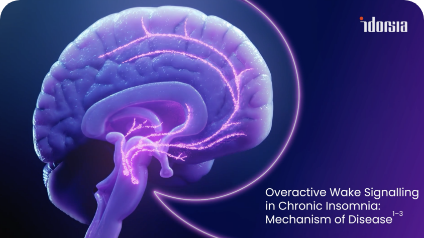
QUVIVIQ™ reduces overactive wake signalling, enabling restorative sleep – learn more about how your patients may benefit with this comprehensive handbook.

Download this quick guide now for essential tips on what to cover during the patient consultation and further support on initiating QUVIVIQ™ treatment.
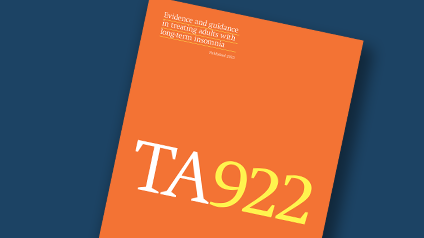
NICE published their technology appraisal guidance on daridorexant for treating long-term insomnia in October 2023.18 The guidance details NICE evidence-based recommendations on daridorexant (QUVIVIQ™) for treating long-term insomnia in adults. A summary of this guidance has been created highlighting key points, including clinical evidence supporting the use of QUVIVIQ™.
Download the summary now to learn more.
*QUVIVIQ™ 25 mg is recommended for patients with moderate hepatic impairment or if taking moderate CYP3A4 inhibitors
Access further bite-sized resources that will help you learn more about QUVIVIQ™ and its role in treating long-term insomnia – visit the pro.Idorsia site – Idorsia’s educational website for UK healthcare professionals.







Download a free, printable patient brochure to help facilitate conversations around:
Written by experts, in collaboration with Idorsia, for a lay audience to provide clear, reassuring information and to engage patients in their treatment
Download1. QUVIVIQ 50 mg film-coated tablets - Summary of Product Characteristics (SmPC) - (emc). Accessed 08/2025. https://www.medicines.org.uk/emc/product/15360/smpc#gref
2. Artis L. NICE Guidelines for New Insomnia Treatment. The Sleep Charity. September 20, 2023. Accessed 08/2025. https://thesleepcharity.org.uk/nice-guidelines-for-new-insomnia-treatment/
3. Mignot E, Mayleben D, Fietze I, et al. Safety and efficacy of daridorexant in patients with insomnia disorder: results from two multicentre, randomised, double-blind, placebo-controlled, phase 3 trials. The Lancet Neurology. 2022;21(2):125-139. doi:10.1016/S1474-4422(21)00436-1
4. Magliocca M, Koopmans I, Vaillant C, et al. Nighttime safety of daridorexant: Evaluation of responsiveness to an external noise stimulus, postural stability, walking, and cognitive function. Journal of Psychopharmacology. 2024;39(3):223-232. doi:10.1177/02698811241293997
5. Dauvilliers Y, Braunstein G, Zammit G, et al. Effect of daridorexant on nighttime wakefulness and next-morning sleepiness: assessing the transition from night to day in insomnia disorder. Sleep medicine. 2025;131:106523. doi: 10.1016/j.sleep.2025.106523.
6. Insomnia: Symptoms, Causes, and Treatments. Sleep Foundation. October 13, 2018. Accessed 08/2025. https://www.sleepfoundation.org/insomnia
7. Robbin R, Quan SF, Buysse, et al. A nationally representative survey assessing restorative sleep in US adults. Front Sleep. 2022;1:935228 doi: 10.3389/frsle.2022.935228.
8. Kunz D, Dauvilliers Y, Benes H, et al. Long-term safety and tolerability of daridorexant in patients with insomnia disorder. CNS Drugs 2023;37(1):93-106. doi: 10.1007/s40263-022-00980-8.
9. Roch C, Bergamini G, Steiner MA, Clozel M. Nonclinical pharmacology of daridorexant: a new dual orexin receptor antagonist for the treatment of insomnia. Psychopharmacology (Berl) 2021;238(10):2693-2708. doi: 10.1007/s00213-021-05954-0.
10. Di Marco T, Djonlagic I, Dauvilliers Y, et al. Effect of daridorexant on sleep architecture in patients with chronic insomnia disorder: a pooled post hoc analysis of two randomized phase 3 clinical studies. Sleep 2024:47(11):zsae098. doi: 10.1093/sleep/zsae098.
11. Chaput JP, Dutil C, Sampasa-Kanyinga, H. Sleeping hours: what is the ideal number and how does age impact this? Nat Sci Sleep 2018:10:421-430. doi: 10.2147/NSS.S163071.
12. NICE CKS. Scenario: managing insomnia. 2025. Available online: https://cks.nice.org.uk/topics/insomnia/management/managing-insomnia/ (accessed 08/2025).
13. Ustinov Y, Lichstein KL, Vander Wal GS, et al. Association between report of insomnia and daytime functioning. Sleep Medicine 2009;11:65-68. doi:10.1016/j.sleep.2009.07.009
14. Shamim SA, Warriach ZI, Ali Tariq M, et al. Insomnia: risk factor for neurodegenerative diseases. Cureus 2019;11(10):e6004. doi: 10.7759/cureus.6004
15. Li L, Gan Y, Zhou X, et al. Insomnia and the risk of hypertension: a meta-analysis of prospective cohort studies. Sleep Medicine Reviews 2021;56:101403. doi: 10.1016/j.smrv.2020.101403
16. Hertenstein E, Feige B, Gmeiner T, et al. Insomnia as a predictor of mental disorders: a systematic review and meta-analysis. Sleep Medicine Reviews 2019;43:96-105. doi: 10.1016/j.smrv.2018.10.006
17. Javaheri S & Redline S. Insomnia and risk of cardiovascular disease. Chest 2017;152(2):435-444. doi: 10.1016/j.chest.2017.01.026
18. NICE. Daridorexant for treating long-term insomnia (TA922). Available online: https://www.nice.org.uk/guidance/ta922/resources/daridorexant-for-treating-longterm-insomnia-pdf-82615544244421 Accessed 08/2025



IMPORTANT LINKS
MORE FROM COGORA
© Cogora 2026
Cogora Limited. 1 Giltspur Street, London EC1A
9DD Registered in the United Kingdom. Reg. No. 2147432


