

Managing severe obesity – navigating Mounjaro eligibility and other options
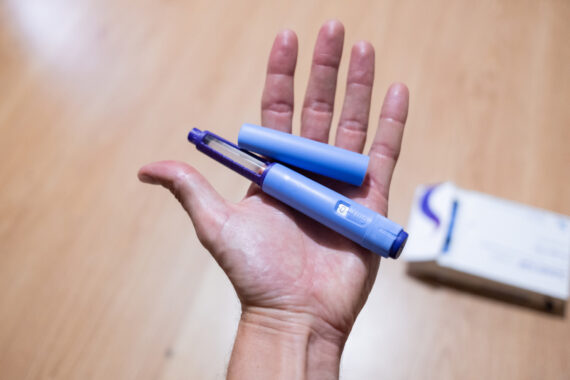


Clinical conundrum: GP and obesity specialist Dr Ellen Fallows discusses the management of a patient with severe obesity, including where eligibility criteria or medical history may preclude the use of tirzepatide (Mounjaro)
A 63-year-old female patient attends to talk about her weight. She has a BMI of 43.4 and suffers from ischaemic heart disease, hypertension and mild obstructive sleep apnoea, and is on a statin. She therefore seems to fulfil the eligibility criteria for Mounjaro, but is concerned because she is known to have gallstones and has a family history of thyroid cancer – which she has read could contraindicate this treatment. ‘So what else can you do?’ she ask. ‘Are there other injections or treatments I can have? And what about surgery?’
1. How are the eligibility criteria defined? For example, what does dyslipidaemia in this context mean, and would being on a statin suffice? Are all levels of sleep apnoea included? And what if a patient has borderline hypertension not requiring treatment?
This patient may not fulfil the ‘year 1 – 2025/6’ eligibility criteria for Mounjaro as set out in the NICE Technology Appraisal. Despite having a BMI >40kg/m2, she might not have four or more of the qualifying comorbidities high blood pressure, abnormal lipids, obstructive sleep apnoea, cardiovascular disease and Type 2 diabetes because her sleep apnoea has been described as ‘mild’. If her sleep clinic letter suggested CPAP treatment (even if she, like many, declines or doesn’t use it) then she should fulfil these criteria.
Sleep apnoea needs to be confirmed as severe enough to require CPAP through a sleep study, but there is no formal guidance on the type or quality of sleep study. NICE advises that an OSAS diagnosis requires at least five episodes of apnoea or hypopnoea lasting at least 10 seconds/hour of sleep, but also that overnight oximetry can be used as an alternative if access to sleep services is poor,1 while NICE obesity guidance advises screening for OSAS using the STOP-BANG or Epworth Sleepiness Scales.2 Due to this lack of clarity, private provision of sleep tests is expanding which creates problems for GPs in interpreting and judging the validity of results.
The eligibility criteria’s definition of ‘dyslipidaemia’ includes being on a statin (or alternative) which she is. However, it also includes eligibility for those with untreated dyslipidaemia as defined by a specified range of LDL cholesterol or HDL cholesterol or triglycerides. Frustratingly, the lipid ranges for eligibility are not related to QOF LDL cholesterol targets, but a higher threshold of LDL cholesterol ≥4.1 mmol/L. So we can’t rely on our QOF pop-ups, but need to look at latest blood results. Ranges for HDL cholesterol are another potential tick box and to complicate things, this is sex specific, with lower ranges for men (HDL <1.0 mmol/L) than women (HDL<1.3 mmol/L). Additionally, she could just have fasted triglycerides greater than 1.7 mmol/L.
The hypertension criteria are a little less complex. Hypertension diagnosis would follow the latest NICE thresholds of a clinic blood pressure of >140/90mmHg or ABPM/HBPM average of >135/85mmHg. Few clinicians would tie themselves in knots about whether this patient has stage 1 or 2 hypertension as both stages can be offered medications. In this case, if we mean borderline hypertension to be clinic readings under 140/90 and HBPM under 135/85, then no, she probably wouldn’t be eligible.
In cases such as this, GPs will use their holistic skills in interpreting what is a rationing guideline; to balance the individual patient’s need with the wider population’s need, while documenting their decision rationale.
Many of us are using EMR searches to identify eligible patients. However, it’s easy to see how these may not suffice, so if someone is motivated to get support for weight loss, take an individualised approach and avoid ‘computer says no’. It’s worth noting however that this may involve repeat blood tests, BP monitoring, OSA screening and referral which is why many in general practice are concerned about the impact of this work on other stretched patient services.
2. What are the absolute and relative contraindications to Mounjaro? What is the relevance of gallstones and thyroid cancer – the BNF does not seem to mention them yet they do sometimes seem to appear in the patient information leaflets?
Absolute contraindications for Mounjaro should include: initiation or continuation for someone who is allergic to it; underweight (particularly malnutrition and underweight – possibly more of a problem with private/black market medicines, but may become an increasing issue with prolonged use in the future); during pregnancy; or prior significant gastroparesis. We should also consider avoiding use prior to anaesthesia, due to the risk of aspiration of stomach contents.
Relative contraindications include breast feeding, advanced retinopathy, pancreatitis, biliary disease, malabsorption and frailty. We should also be cautious upon diagnosis of a significant advanced cancer which might require chemotherapy or result in concomitant cancer related appetite suppression leading to worsening malnutrition or frailty. Similarly, we may need to be careful when prescribing to those who live in food poverty due to the risks of malnutrition even with obesity;3 it may not be possible to safely prescribe to these groups without significant additional support such as fruit and veg vouchers to avoid risks of malnutrition.
Glucagon-like peptide (GLP)-1 receptor agonists (RAs) like semaglutide and liraglutide have been associated with increased risk of biliary disease.4 This is likely due to direct suppression of the gut hormone cholecystokinin causing delayed emptying of the gall bladder.5 However, significant weight loss (>5% starting weight over 3-6 months), often seen with new weight loss drugs, has also been independently associated with biliary disease. However, tirzepatide is a dual agonist with gastric inhibitory peptide (GIP) activity which has been found to relax the gall bladder and may explain why one study has found a lower risk of biliary issues with tirzepatide compared to other, single agents.6 This real-world safety data study did, however, find increased reporting for diabetic retinopathy and medullary thyroid cancer with tirzepatide.
Rapid significant weight loss with 800-calorie meal replacement diets (offered in the NHS Paths to Remission programme) have also been found to increase the risks of biliary disease, particularly for women with higher starting weight. This is thought to be related to insufficient fat content in the meals and shakes leading to poor gall bladder emptying.7
In clinical experience, people can underestimate the impact of biliary disease as ‘a bit of tummy pain’ when it can lead to perforation, sepsis and chronic pancreatitis. During these early days when Mounjaro is still a black triangle drug awaiting large-scale real-world data and safety monitoring, we should carefully explain the risks around biliary disease. For those with known biliary disease it might be useful to get some advice and guidance from a local hepatologist around the potential use of ursodeoxycholic acid to prevent gall stone formation.8
3. Other treatments such as Wegovy and orlistat seem to have rather been sidelined given the publicity around Mounjaro – when should they be considered and what are the eligibility criteria? And in which patients should we consider bariatric surgery, and should this always be preceded by a trial with Mounjaro?
Currently, much of the publicity around various weight loss medications is driven more by drug availability and pharmaceutical and political activity than necessarily scientific evidence or clinical experience. Semaglutide (Wegovy) and liraglutide (Saxenda) remain available and have more data on safety and effectiveness than newer Mounjaro. There is no evidence that any of these GLP1/GIP agents are ‘safer’ than another. The single agents may lead to slower weight loss and less severe appetite restriction than Mounjaro which may be advantageous for some groups – particularly for those with malnutrition in obesity for example. Only Mounjaro can be prescribed by primary care teams for obesity (depending on local funding arrangements), while semaglutide and liraglutide can only be prescribed from tier 3 weight management services.
Orlistat has never been a very popular or effective medication due to its unpleasant side effects and minimal weight loss effects. It’s unlikely many patients will miss it. It is available over the counter quite widely at a fraction of the cost of GLP-1/GIP agents.
Availability of bariatric surgery remains very restricted on the NHS and referral criteria vary by locality. However, it is still the obesity treatment with the most sustained effects as we don’t yet have data on how long weight loss is maintained with new medicines or for how long they can be safely tolerated.
There is no suggestion that people need to have tried particular medicines prior to bariatric surgery; with a BMI over 40 with comorbidities, it would likely come down to local availability and patient preferences.
Ultimately, this patient is at high risk of increased mortality and morbidity with her long-term condition of obesity. She is likely to have experienced significant stigma, particularly unfortunately in healthcare interactions and will be extremely disappointed if she isn’t eligible for NHS treatment in this instance. As GPs, we will continue to maintain our longitudinal relationship with this patient and, if not eligible currently, she may become eligible in later cohort definitions in the guidance.
Dr Ellen Fallows is a GP with specialism in obesity, a fellow of the British Society of Lifestyle Medicine and past RCGP advisor on obesity and type 2 diabetes
References
- NICE. CKS. Management of sleep apnoea. Last revised 2021
- NICE. Overweight and obesity management. [NG246] 2025
- Fallows E. Malnutrition with use of GLP-1 agonists is an underestimated real-world harm. BMJ 2025;390:r1512
- Zeng Q et al. Safety issues of tirzepatide (pancreatitis and gallbladder or biliary disease) in type 2 diabetes and obesity: a systematic review and meta-analysis. Front Endocrinol 2023;14:1214334
- Rehfeld J et al. Cholecystokinin secretion is suppressed by glucagon-like peptide-1: clue to the mechanism of the adverse gallbladder events of GLP-1-derived drugs. Scand J Gastroenterol 2018; 53(12):1429–32
- Caruso I et al. The real-world safety profile of tirzepatide: pharmacovigilance analysis of the FDA Adverse Event Reporting System (FAERS) database. J Endocrinol Invest 2024;47:2671–8
- Gebhard R et al. The role of gallbladder emptying in gallstone formation during diet–induced rapid weight loss. Hepatology 1996;24(3): 544–8
- Stokes C et al. Ursodeoxycholic acid and diets higher in fat prevent gallbladder stones during weight loss: a meta-analysis of randomized controlled trials. Clin Gastroenterol Hepatol 2014 Jul;12(7):1090-1100.e2
Visit Pulse Reference for details on 140 symptoms, including easily searchable symptoms and categories, offering you a free platform to check symptoms and receive potential diagnoses during consultations.
Related Articles

READERS' COMMENTS [3]
Please note, only GPs are permitted to add comments to articles







“What else can I (the Doctor) do?”
Instead of giving her injections to stop her eating so much, would I be correct to just tell her to stop eating so much?
Since that appears to have the same intent?
Thpse of us over here are going to have a hard time trying to explain the different eligibility here. If you prescribe, it is outside expertise, so contrary to GMC guidelines, but also liable to result in a bill for the cost of the dugs from LHB, who have not approved the spending.
If you don’t prescribe, you have failed to comply with the requirement that you issue a prescription for any medications required for the treatment of the patient.
If you learn about it and issue a private prescription, you will have patients sueing you for useing, in effect, the wrong form, so that it cost them more than it should have, which will be stressful and cost you a lot of time and lawyers’ fees.
we’re stuffed here, aren’t we?
SEcondary care waiting list appears to be 2 years, but also there are several areas where no referred patients have yet been seen by the local service in secondary care, because there isn’t one.
Millions of people using Mounjaro with minimal medical input, without bodies piling up in the streets, and losing a lot of weight.
But trust the usual suspects to introduce the maximum bureaucracy possible into the process to obstruct NHS access.
What people fail to understand is that the NHS is not a system to enable access to care, but a system to obstruct access.
I scanned this article due to one of the headings ‘what is the relevance of gallstones’ for Mounjaro prescribing, but I’m non the wiser after reading it.
Is ‘biliary disease’ being used as a term for gallstones here?
In which case should I be getting in touch with a hepatologist for those with gallstones to discuss ursodeoxycholic acid to prevent more gallstones? The text implies preventing gallstones at all, so should I be getting in touch with the hepatologist to discuss this treatment for those at risk of gallstones (i.e most who fulfill the criteria for Mounjaro).
I’m also not clear from the text given on why the thyroid cancer (mentioned in the same heading as the gallstones) is different from any other cancer. A clearer article would be useful for these points.