Neighbourhoods ‘will likely fail’ if Burnham doesn’t change course, says senior GP adviser
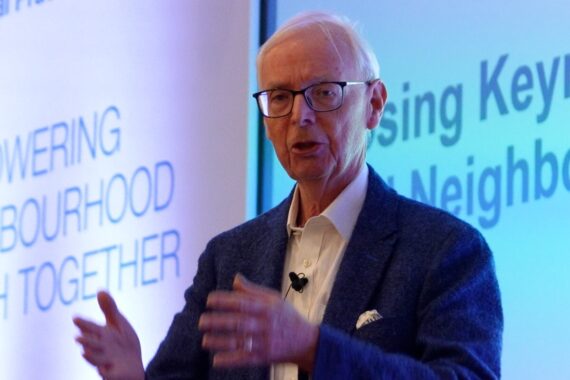


Exclusive The Government’s flagship shift to neighbourhood health services ‘will likely fail’ unless the new Prime Minister changes its current direction, a senior former adviser on neighbourhood health has warned.
However, speaking exclusively to Pulse, Sir John Oldham said that Andy Burnham – who is due to become Prime Minister next week – has the opportunity to change the course of the plans by recognising the value of family medicine and continuity of care.
The retired GP, who most recently advised Wes Streeting on neighbourhoods between 2025 and 2026, worked with Mr Burnham when he was health secretary and was then his adviser as shadow health secretary from 2012 to 2015, notably leading his Commission on Whole Person Care.
As it stands, Sir John warned neighbourhoods risk becoming the latest in a series of ‘failed’ attempts in the previous 15 years to shift care from hospitals to the community.
He told Pulse: ‘I now see the same things happening with NHS England on neighbourhood health. They are focusing on geography and contracts, not the needs of the people we serve. They’re shoehorning patients into segments that are organisationally convenient for them, but ignoring the massive evidence on family medicine and continuity of care.
‘That will just institutionalise the existing fragmentation that people with complex needs face, and it will just make things worse.’
On how Burnham’s premiership may change things, Sir John said: ‘I’m not entirely sure he would be comfortable with the direction of travel.
‘One of the strategic inevitabilities for health and social care is that growth in GDP will not keep pace with the growth in demand, and that that demand is largely by driven by people with more and more complex needs. That’s not just people with multiple long-term conditions, but kids from dysfunctional families, people with enduring mental illness, and people who feel they can’t work.
‘[Burnham] will instinctively, in my view, understand that creating relationships and empowering people at a local level is vital to addressing those problems.’
He added: ‘I also think that things like advanced foundation trusts he would be quite wary of. They would go against his instinct to have greater democratic input into health and social care.’
Advanced foundation trusts are high-performing hospital trusts which will be given the opportunity to gain primary care commissioning responsibilities within neighbourhood health, by holding integrated health organisation (IHO) contracts.
Some GP leaders have raised concerns that these plans are another indication that secondary care is being primed to take a leading role in neighbourhoods at the expense of primary care.
Sir John added that NHS England’s ‘institutionalised ignorance of primary and community care’ proves the need for a course correction if neighbourhoods are to work.
He said this was ‘most recently exemplified by the statement [by NHS England chair Dr Penny Dash] that primary care has too much estate‘, and warned there would be ‘a further exacerbation of the haemorrhage of organisational knowledge in the current restructuring of ICBs‘.
‘They don’t understand the vital importance of fostering relationships at a local level between health, social care, voluntary sector, and most importantly, empowering people to make decisions that work for those they serve.’
‘NHS England thinks it can create a national model of care that begins with protocols and doesn’t begin with people, and I’m afraid my view is that that is likely to fail in just the same way that all the other attempts over the last 15 years have.
‘Whilst I have complete faith in the people at DHSC leading neighbourhood health… I have little faith in the senior officers at NHS England who are charged with delivering neighbourhood health,’ he said.
Sir John was speaking to Pulse as part of our wider investigation into the future of LESs and how they might fit into the Government’s plan for neighbourhood health.
Mr Burnham set out a broad vision for greater devolution of powers to local areas following his re-election to Parliament last month, although he was light on detail on what this would mean for the NHS.
Neighbourhood contracts were announced as part of the 10-year plan and were expected at the end of last year but have not yet been published.
NHS England previously said that the new contracts will be developed during this financial year, but its lead for neighbourhood health recently could not commit to a specific timeline for the contracts.
Earlier this month, every GP practice in Kent and Medway signed up to a ‘neighbourhood’ care model using existing PCN contract arrangements, the first of its kind.
Sir John was also a keynote speaker at the recent Community Pharmacy and General Practice conference, where he said this was a ‘last chance’ to secure the NHS’s future as we know it.
Pulse has contacted NHS England for comment.