
Anaphylaxis: myths and facts for GPs
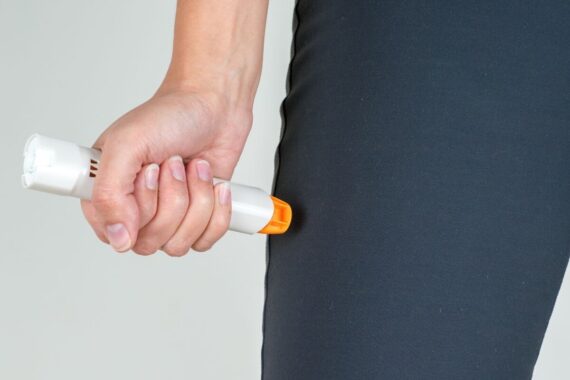


GP with an interest in allergy Dr Elizabeth Angier dispels some common myths and highlights some under-recognised facts regarding anaphylaxis
MYTHS
1. Future risk of anaphylaxis is predictable from history or blood tests
British Society for Allergy and Clinical Immunology (BSACI) primary care guidance is clear that there is no reliable way to predict the severity of future allergic reactions.
Someone with a previous history of anaphylaxis continues to be at risk of anaphylaxis if exposed to the same allergen in the future.
People with anaphylaxis do often have a less severe reaction to allergen exposure the next time. Conversely many people with severe (including fatal) anaphylaxis have a history of relatively mild previous allergic reactions.
There is currently no test or biomarker that can predict risk of anaphylaxis.
It is thought that certain ‘co-factors’ may worsen the severity of an allergic reaction. These include exercise, lack of sleep, stress, alcohol, NSAIDs and infections. Patients with a history of anaphylaxis or a known allergy should be made aware of these co-factors. For example, if a person has previously had a relatively mild reaction to nuts, any future reaction to nuts could potentially be worse if combined with exercise, or being unwell.
In summary, we cannot predict who will experience anaphylaxis although it’s important to advise patients about the role of potential co-factors. Preparedness is key here, particularly the knowledge of how to recognise and manage symptoms.
2. Anaphylaxis always has a clear trigger
Anaphylaxis is a clinical diagnosis and as such is not dependent on any blood test or an identified trigger.
Having a high suspicion for exposure to a known trigger can be helpful though.
There are instances where triggers such as venom, drug and food allergy can be identified with a thorough allergy focused clinical history.
However, it is sometimes difficult to identify a trigger. For example, it might be a hidden allergen such as a spice. This requires specialist review and testing to detect.
Be mindful of exercise-induced anaphylaxis. This can be brought on by exercise alone but more usually occurs when exercise follows certain foods. It is therefore important to ask about exercise in the history. The type, duration and intensity of exercise that can trigger anaphylaxis varies but usually involves aerobic activity like cycling or running.
Anaphylaxis with no apparent trigger is known as idiopathic anaphylaxis.
3. Urticaria is always present in anaphylaxis
In fact, up to a fifth of cases of anaphylaxis do not involve urticaria or angioedema.
Resuscitation Council UK guidelines on emergency treatment of anaphylaxis 2021 state thatanaphylaxis can be recognised by:
- Sudden onset and rapid progression of symptoms
- Airway and/or Breathing and/or Circulation problems
- Skin and/or mucosal changes (flushing, urticaria, angioedema) – although may be absent in up to 20% of cases.
Idiopathic angioedema and urticaria are often mistaken for anaphylaxis. They constitute a high percentage of allergy clinic referrals. In these conditions, there is no reproducible temporal relationship to any triggers and symptoms are often ongoing.
4. Only patients with previous anaphylaxis need adrenaline devices
A personalised shared decision-making consultation is required when considering the offer of adrenaline devices.
The BSACI guidance recognises that some patients with a history of anaphylaxis or allergic reactions have an absolute need for prescription of adrenaline auto-injectors (AAIs). The exceptions are those with drug allergy where the trigger is easily avoided.
Whether to prescribe AAIs to other patients is complex. In general an AAI prescription should be offered to patients with a moderate allergic reaction (e.g., generalised urticaria) to a trace of a food or with co-existing asthma.
Someone with a previous mild reaction, without asthma and who had more than trace exposure to the trigger, would not require an AAI.
See algorithm in BSACI guidance for full details.
5. Antihistamines have a key role in managing anaphylaxis
Antihistamines are actually not recommended specifically for emergency anaphylaxis management. Antihistamines have no role in treating the respiratory or cardiovascular symptoms of anaphylaxis.
Antihistamines may be used to treat skin symptoms that often occur as part of allergic reactions including anaphylaxis, but their use must not delay treatment with adrenaline or intravenous fluids. Non-sedating oral antihistamines may be used, in preference to chlorphenamine, for persisting skin symptoms (urticaria and/or angioedema).
FACTS
1. Anaphylaxis cases are on the rise, but deaths have fallen
While there has been a substantial increase in hospitalisations due to anaphylaxis, the anaphylaxis case fatality rate has fallen. Around 20-40 people die from anaphylaxis in the UK each year.
This means that patients and their families can be reassured that fatalities are very rare. The balance needs to be struck between appropriate vigilance in avoiding triggers and being able to have a good quality of life.
Advise patients to always carry their adrenaline devices and a charged mobile phone. They should inform families, friends and colleagues about their allergy. Patient charities can help support advocacy in restaurants and traveling. Go through trigger avoidance. This will be done in detail in the specialist clinic alongside dietitians when necessary.
Adolescents and young adults are at increased risk of fatal anaphylaxis. They need an individualised, developmental-age appropriate approach and advice. For example, their ability to recognise anaphylaxis, carry and use AAIs (usually attained by age 11-13) will vary.
GPs should consider systematically identifying teenagers at their practice who have had anaphylaxis and been prescribed AAIs. They should have reviews alongside their repeat AAI prescriptions. Reviews should be checking key aspects such as whether the patient: knows how to recognise anaphylaxis; carries an allergy action plan and in-date AAIs; knows how to use their AAIs; and has awareness of co-factors such as alcohol and exercise. Advise that specific activities such as attending festivals may pose particular risks.
A recent report summarises key learning and recommendations from child deaths from asthma and anaphylaxis.
2. Cow’s milk allergy is the commonest cause of fatal anaphylaxis school-aged children
Generally, non-IgE-mediated delayed cow’s milk allergy in young children causes only mild symptoms. Most infants with this outgrow their allergy in early childhood.
However, immediate-onset IgE-mediated cow’s milk allergy can give rise to severe reactions. Again this form is usually outgrown at primary school age.
Fatal anaphylaxis to milk is usually seen in young people with persisting milk allergy.
Cow’s milk protein can be difficult to avoid as it is present in many foods and even low levels of exposure can cause reactions. Families need advice and support about how to recognise milk products in food labelling and advocacy in social situations.
Children with co-existing asthma and milk or other food allergies are at increased risk of severe allergic reactions. This is particularly the case if the asthma is poorly controlled. Guidelines emphasise the importance of optimising the asthma control in such patients. GPs should also ensure allergic rhinitis is adequately treated and controlled, under the ‘one airway-one disease’ principle.
3. All patients with a history of anaphylaxis need specialist review
NICE guidelines advise that all patients suspected of having anaphylaxis should be referred to a specialist clinic for allergy assessment.
Patients should be offered an appropriate AAI as an interim measure before the specialist allergy assessment (unless the reaction was drug-induced).
Patients prescribed AAIs (and/or their parents/carers) must receive training in their use. They should have an emergency management or action plan. It is important to prescribe two AAIs in case of a severe reaction that requires more than one dose of adrenaline before the arrival of emergency services, or incorrect administration of the first dose/device failure. Advise the patient to carry the AAIs at all times.
Note that there is now a needle-free adrenaline product – a nasal spray (see next Fact) –but this is not yet widely available and guidance is pending.
Training should be specific to the device, ongoing and be incorporated into the prescribing process alongside an individualised action plan. Refer to patient organisations for resources and peer support.
Encourage self-management by issuing an allergy action plan supporting the patient to know how and when to use their adrenaline devices, and avoidance of triggers.
4. Adrenaline is safe to use in anaphylaxis and needs to be given early
Prompt use of intramuscular adrenaline can save lives. As above, patients can be trained in the use of adrenaline devices, and they can be given trainer devices to practice with via links from the manufacturers’ websites.
In summary, the Resuscitation Council UK guidelines say:
- Adrenaline is the first-line treatment for anaphylaxis.
- Give intramuscular (IM) adrenaline early (in the anterolateral thigh) for Airway/Breathing/Circulation problems.
- If in doubt, give IM adrenaline.
Repeat after 5 minutes if Airway/Breathing/Circulation problems persist.
Newer, needle-free forms of adrenaline devices are being explored (intranasal and sublingual). The Medicines and Healthcare Products Regulatory Agency (MHRA) has approved an adrenaline nasal spray (EurNeffy) for emergency treatment of anaphylaxis.
When reviewing patients, check their adrenaline devices are appropriate for weight and in date, and that they are carrying their devices, know the process for renewal and have reminders for expiry in place.
Patients can be signposted to patient training videos on the manufacturers websites which also explain how to set up phone reminders for expiry dates.
Practical tips:
- Make sure your practice team knows where to access allergy action plans. See BSACI website.
- Assign a practice clinician to train colleagues in the use of adrenaline devices. This could be combined with leading on asthma medications.
- Make sure you are checking weight when offering adrenaline prescriptions.
5. Sudden movements should be avoided by patients being treated for anaphylaxis
Advise patients on positioning during anaphylaxis. They should sit up if they are having breathing difficulties and lie down if they are feeling faint. Sudden movement to sit up should be avoided. The patient should not stand up.
Also be aware of refractory anaphylaxis. This is where two (appropriate) doses of intramuscular adrenaline do not stabilise the patient (according to the Resuscitation Council UK). This is rare, affecting approximately 2% of cases of anaphylaxis. It is important to be aware of and to recognise promptly. The Resuscitation Council UK algorithm for refractory anaphylaxis highlights the importance of early transfer to the emergency department and treatment with intravenous fluids and an adrenaline infusion under specialist supervision. While this is being organised, further intramuscular adrenaline should be given.
Practical tips:
- Ensure your practice has scenario training as part of resuscitation training, including anaphylaxis as part of this.
- Also ensure all staff know where adrenaline is kept, understand the advice on positioning and resuscitation in anaphylaxis and are aware of refractory anaphylaxis.
- Refer to the algorithms in up-to-date resuscitation guidelines for emergency treatment of anaphylaxis and refractory anaphylaxis.
Dr Elizabeth Angier is a portfolio GP with an interest in allergy. Dr Angier is primary care lead at Hampshire and Isle of Wight ICS
Sources and further reading
- Anagnostou K and Turner P. Myths, facts and controversies in the diagnosis and management of anaphylaxis. Arch Dis Child 2018 Jun 16;104(1):83-90
- Angier E et al. Adrenaline auto-injector prescription for patients at risk of anaphylaxis: BSACI guidance for primary care. Clin Exp Allergy 2023;53:951–4
- Anaphylaxis UK. Fact sheet: Exercise-induced anaphylaxis.
- BSACI. Adrenaline auto-injector prescription for patients at risk of anaphylaxis: BSACI guidance for primary care. 2023
- Conrado A et al. Food anaphylaxis in the United Kingdom: analysis of national data, 1998-2018. BMJ 2021 Feb 17;372
- MHRA. MHRA approves adrenaline nasal spray – the first needle-free emergency treatment for anaphylaxis in the UK. July 2025
- National Child Mortality Database. Child deaths due to asthma or anaphylaxis. 2024
- NICE. Anaphylaxis: assessment and referral after emergency treatment. [NG258] Last reviewed May 2026
- NICE. Food allergy in under 19s: assessment and diagnosis. [GC116] 2011
- Primary Care Respiratory Society UK. Primary Care Respiratory Update: One airway, one disease. Issue 24; 2022
- Resuscitation Council UK. Guidance: Anaphylaxis. 2021
- Resuscitation Council UK. Refractory anaphylaxis. 2021
- Roberts G et al. EAACI Guidelines on the effective transition of adolescents and young adults with allergy and asthma. Allergy 2020;75:2734–52
- Skypala I. Food-induced anaphylaxis: role of hidden allergens and cofactors. Front Immunol 2019;10:673
- Turner P et al. Fatal Anaphylaxis: Mortality Rate and Risk Factors. J Allergy Clin Immunol Pract 2017;5(5):1169-78
Resources
- Allergy UK: https://www.allergyuk.org
- Allergy UK Fact sheets – available at: www.allergyuk.org/resources/anaphylaxis-and-severe-allergic-reaction-factsheet
- Anaphylaxis UK: https://www.anaphylaxis.org.uk (Note Allergy UK and Anaphylaxis UK are merging)
- BSACI allergy action plans – available at: www.bsaci.org/resources/allergy-action-plans/
- GPs interested in the GP with extended role (GPwER) in allergy can access the BSACI framework at: www.bsaci.org/resources/primary-care-resources/gp-with-extended-role-gpwer-framework/
Visit Pulse Reference for details on 140 symptoms, including easily searchable symptoms and categories, offering you a free platform to check symptoms and receive potential diagnoses during consultations.