

Baroness Gerada: ‘Why general practice needs its own investment standard’
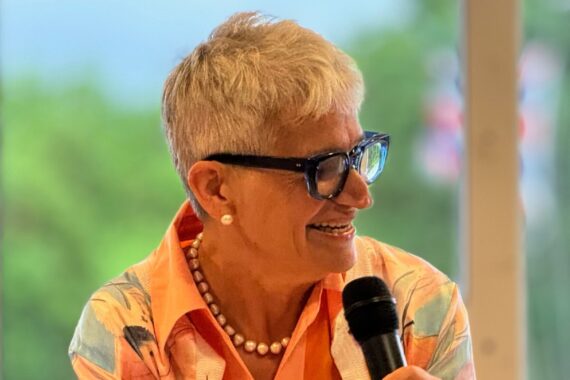


Practising GP and peer in the House of Lords Baroness Gerada of Kennington on why transparency for general practice spending should be a statutory requirement like it is for mental health
A few weeks ago, in the House of Lords, I put a question to the Minister: If the Secretary of State is required by statute to report to Parliament each year on how much is spent on mental health services, why is there no equivalent duty to report on what is spent on general practice?
The Minister undertook to have officials write to me. I am still waiting. But the question deserves a public airing, because it goes to the heart of why primary care keeps losing out in the annual scramble for NHS resources – and why GPs, more than almost anyone else in the system, should be making the case for it.
The mental health investment standard exists precisely because mental health spending used to be invisible, and therefore vulnerable. Trusts could quietly underspend, ICBs could quietly reallocate, and nobody outside the system would necessarily know until the damage to services was already done. In 2016, Parliament decided that sunlight was the remedy: a statutory duty to report annual mental health spend, against agreed benchmarks, so that politicians, clinicians and the public could see whether parity of esteem was being delivered in practice rather than just promised in policy documents.
General practice is in the same position today – arguably a worse one. It now receives under 8% of the overall NHS budget, the lowest share for decades, even as the consultant workforce has grown substantially and the number of GP partners has fallen. There is no statutory requirement for the Secretary of State to report, year on year, what is spent on general practice, dentistry, community pharmacy, or optometry against any benchmark at all. We have no equivalent of the mental health investment standard for the services that handle most NHS patient contacts. What gets measured gets protected. What goes unmeasured gets raided.
This is not an abstract governance point. It has direct and daily consequences for the patients GPs see. Continuity of care – the single intervention with perhaps the strongest evidence base in general practice for improving outcomes and reducing costs – is being replaced by transactional, fragmented contact because there is no budgetary mechanism to force the system to protect the workforce that delivers it. Practice nurses, health visitors and district nurses – the unglamorous infrastructure of community medicine – have been quietly hollowed out over a decade, while nobody outside the profession was required to notice or explain why.
The case for redress is not just moral – though it is that too. But a service that only catches patients once they have fallen, rather than one that walks alongside them and prevents the fall, is a service that has lost sight of why the NHS was founded. It is also a hard-nosed fiscal case.
Every untreated case of childhood dental decay that ends up in A&E, every late-presenting glaucoma a properly resourced optometry service would have caught, every frail patient admitted because district nursing capacity had run out, is a downstream cost generated by upstream neglect. We are, in effect, paying premium acute-sector prices to manage problems that good, well-funded primary care would have prevented from reaching that threshold in the first place.
A statutory reporting duty will not, by itself, redistribute a single pound. But it would do something this debate desperately needs: make the underfunding of general practice visible, comparable year on year, and politically uncomfortable to ignore. It would give GPs, royal colleges and patient groups a hard, published figure to hold ministers to account, exactly as mental health campaigners can now.
And it would shift the conversation from periodic reviews and reorganisations – of which we have had no shortage – towards the sustained, measurable political will that primary care actually needs: realistic workforce planning, training that places doctors in community settings, and a rightful place for community practitioners on ICBs.
Baroness Gerada of Kennington is a peer in the House of Lords and a practising GP in London. She was previously chair of the RCGP
Have you got a view you want to share with Pulse?
We’re always open to first-hand pieces and opinions from GPs.
Email your piece for consideration to be published on our site.
Related Articles

READERS' COMMENTS [7]
Please note, only GPs are permitted to add comments to articles







I welcome Baroness Gerada highlighting the importance of transparency in investment in general practice and her continued support for this important issue.
Greater transparency is essential if we are to build a sustainable NHS and deliver the Government’s ambition to shift more care into the community. This is precisely why the RCGP has been calling, through our engagement on the Health Bill, for a Primary Care Investment Standard. This would require the Secretary of State to report annually to Parliament on the proportion of NHS spending invested in general practice and primary care, mirroring the existing statutory requirement for mental health.
We have also proposed that every Integrated Care Board should report this proportion annually and be held accountable for increasing it over time.
Alongside this, the College has called for a guaranteed GP voice on every ICB and a stronger duty for ICBs to work with GPs when developing local plans. Moving more care into the community will only succeed if general practice has both the resources and the influence to help shape the system.
We will continue to press for these changes as the Health Bill progresses.
The RCGP’s proposals are available here: https://www.rcgp.org.uk/getmedia/72a7d512-7fbb-45c1-b4eb-23decd248017/RCGP-Second-Reading-MP-Briefing-on-Health-Bill.pdf
Confronted by the sight of his flock of dead and mutilated sheep, the gentleman farmer demanded the evidence of data…
(#just fund it using the magic money tree that the banks use)
STBFA – are you referencing that amazing and dramatic scene in Hardy’s Far from the Madding Crowd when a young, inexperienced sheepdog named Young George chases Gabriel Oak’s entire flock over a steep cliff, driving them to their deaths? It’s a catastrophic accident that leaves Gabriel financially ruined and in massive debt. There’s clips on YouTube from the films of the book..
I wasn’t thinking about that, David, but you’re right it must have been in my subconscious. By that reckoning, Young George must be our mad neoliberal Govts driving primary care and the NHS off a cliff!
(BTW, are not Hardy’s novels and poetry simply some of our greatest? For me, especially the tragic Jude the Obscure.)
Yes but he was an even greater poet. He generally only wrote poetry in his later years and all the 20th century greats : Auden, Eliot, Hughes etc revered him. You can still visit his home near Dorchester it’s very interesting. Not sure if he wrote much about General Practice but I’ll have another look!!
Thanks for that info David. He felt especially important to me in my angst-ridden youth….I should revisit his writings – it’ll be like meeting an old friend and comparing if and how we’ve changed.
The trouble with the article’s and the RCGP’s thrust is that the cynic in me thinks this approach is naive and a distraction from appropriate state funding (not necessarily by taxing or borrowing).
In creating another measure, I’m reminded of Campbell’s Law. And also that in the search for evidence-based policy, the cunning Govt’s bureaucrats will reverse engineer policy-based evidence.