
Key questions on polycystic ovary syndrome


GP and Primary Care Women’s Health Society Director Dr Toni Hazellanswers key questions on polycystic ovary syndrome (PCOS). Complete the full module on Pulse 365 today
PCOS is a common metabolic condition which can have effects on weight, cardiovascular co-morbidities and fertility. Management is often done in primary care and will vary depending on the woman’s specific symptoms and priorities in terms of cycle control and fertility.
Learning objectives
This module will bring you up to date and extend your knowledge of:
- How to diagnose PCOS and avoid overdiagnosis.
- The rare but important differential diagnoses to exclude if considering PCOS.
- Lifestyle advice to give to all women with PCOS.
- Management of the symptoms of PCOS in primary care.
- When to refer if a woman with PCOS has issues with her fertility.
What are the commonest forms of presentation of PCOS in primary care?
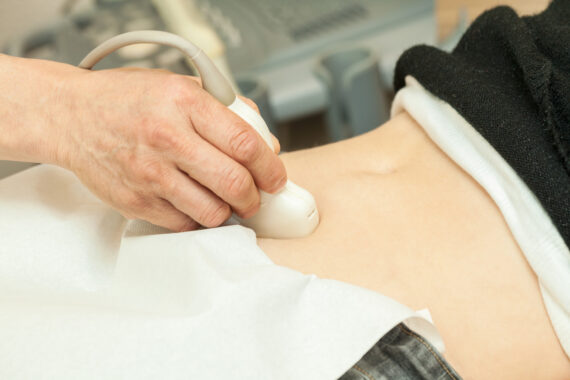
The cardinal symptoms of PCOS are hyperandrogenism (usually demonstrated by hirsutism, female pattern hair loss or acne) and irregular periods. You might also see polycystic ovaries as an incidental finding on an ultrasound done for another reason, but this doesn’t in itself diagnose PCOS. Around a quarter of women will have polycystic ovaries on scan, but the prevalence of PCOS is around 10 – 13%.
It’s important that we don’t over-diagnose PCOS, particularly in adolescence. Irregular cycles are normal in the first year after menarche and can take a few years after that to completely settle down to a usual pattern. Medicalising normality is generally unwise and so assessment with ultrasound or Anti-Müllerian hormone (AMH) is not advised in the first 8 years after the menarche – we’ll discuss how to handle those who present with symptoms of PCOS at this time later in the article.
There seem to be a number of definitions and diagnostic criteria for PCOS. Which should GPs use, and why?
NICE doesn’t currently have a guideline on PCOS – it is due in December 2026 – and the RCOG withdrew their green-top guidance in 2024, signposting to the European Society of Human Reproduction and Embryology (ESHRE) guidance published in 2023. That ESHRE guidance, written in conjunction with a variety of endocrine societies from around the world, is widely seen as the current gold-standard and so I would recommend that GPs follow the diagnostic criteria in there, which are listed below.
The 2023 guideline doesn’t actually give a definition of PCOS, saying only that it is a ‘significant public health issue with endocrine, reproductive, cardiometabolic, dermatologic and psychological features’. The 2003 Rotterdam ESHRE/American Society for Reproductive Medicine definition is a reasonable one to use (cited by NICE CKS) and says that ‘PCOS is a syndrome of ovarian dysfunction along with the cardinal features hyperandrogenism and polycystic ovary (PCO) morphology’.
ESHRE diagnostic algorithm
- Irregular cycles + clinical hyperandrogenism with other causes excluded = PCOS.
- Irregular cycles but no clinical hyperandrogenism → test for biochemical hyperandrogenism → if found and other causes have been excluded, PCOS is diagnosed.
- If there is only one of either irregular cycles or hyperandrogenism:
- Do not diagnose in an adolescent, consider at risk of PCOS and reassess later.
- For an adult arrange a pelvic ultrasound or AMH test – if either are positive with other causes excluded, PCOS is diagnosed.
- This can also be summed up as needing two out of the following three to diagnose:
- Oligo/amenorrhoea.
- Hyperandrogenism.
- Polycystic ovaries on scan (or raised AMH if available).
That leaves more questions than it answers! What do we mean by irregular cycles, clinical and biochemical hyperandrogenism, and what are we looking for on a scan with AMH?
The definitions are given in the table below – you can see that the expectations for cycle regularity are less stringent in the first four years after menarche, and that the definition of clinical hyperandrogenism is different for adults and adolescents, acne being very common in the adolescent years. AMH levels are largely irrelevant at the moment for UK primary care, as most GPs don’t have access to it, but this may change if the NICE guideline currently being written also recommends that we use AMH
Diagnostic feature Diagnostic criteria Irregular cycles Any irregularity is normal in the first year after menarche.
<21 or >45 days from 1–3 years after menarche.
<21 or >35 days or <8 cycles per year once >3 years after menarche.
Any one cycle >90 days, >1 year after menarche also counts, as does primary amenorrhoea at 15 or at >3 years after thelarche (appearance of breast development).Clinical hyperandrogenism Adults – acne, female pattern hair loss, hirsutism. Adolescents – severe acne, hirsutism.
Hirsutism is defined as a score of 4-6 or more on the modified Ferriman Gallway (mFG) score. This rates 9 areas of the body for hirsutism, giving each a rating of 1-4; in usual primary care we will generally just use a clinical assessment. The mFG score is designed for use in a Caucasian population and thresholds may vary with ethnicity.Biological hyperandrogenism The ESHRE says that we should use total testosterone and free testosterone, and consider measuring androstenedione and dehydroepiandrosterone sulfate, but that those are less specific for PCOS diagnosis.
Testosterone is bound to sex hormone binding globulin (SHBG) in the human body, so if you have too little SHBG, you could have an excess of free testosterone despite the headline level of testosterone being normal.
UK labs often don’t report free testosterone but you can calculate the free androgen index (FAI) as total testosterone divided by SHBG, multiplied by 100.
Guidelines, including those from ESHRE and NICE CKS, unhelpfully often just refer to a ‘normal’ FAI without giving a number, but various sources give an FAI above 5 as the point where PCOS might be considered.Ultrasound This may depend on how your local radiology department reports their scans – the ESHRE guideline gives a threshold of ≥20 follicles per ovary and/or an ovarian volume ≥10ml on either side, avoiding corpora lutea, cysts or dominant follicles. AMH The ESHRE guidance doesn’t give a value, so this would be down to your local laboratory.
Elevation above 3.8 ng/ml has been said to be 80% sensitive and specific for the diagnosis of PCOS; if in doubt, check with your local lab.
What are the differentials we should consider? One of the rare mimics is an androgen secreting tumour – when should we think of this, and how do we rule it out?
This is a key part of our role as a GP – how to make a positive diagnosis of a common condition, which usually doesn’t need secondary care involvement, whilst being sure that we are not missing the rare but important differentials. PCOS affects 10 – 13% of women whereas the prevalence of androgen secreting tumours is around 0.2%, so most GPs will diagnose PCOS many times in their career but very few will find an androgen secreting tumour.
ESHRE suggest that a clinical assessment (looking particularly for features of Cushing’s) and a set of blood tests to include TSH, prolactin, progesterone and LH/FSH would be a reasonable screen for alternative causes. If checking testosterone then local reference ranges should be used, but a level of >4.8 nmol/L in a morning sample, particularly if repeated, should raise concerns. A normal range for a woman would be something like <1.8 nmol/L.
Another differential is non-classical (or late onset) adrenal hyperplasia (NCAH), which accounts for approximately 4% of clinical hyperandrogenism. NCAH should be considered if there is a baseline follicular phase progesterone level >30 nmol/L, and endocrine advice should then be sought.
Click here to complete the full module on Pulse 365 and log 2 CPD hours towards revalidation
Dr Toni Hazell is a GP in north London and Primary Care Women’s Health Society Clinical Director
Sources and further reading
- Dason E. Diagnosis and management of polycystic ovarian syndrome. CMAJ 2024;196(3):E85-E94
- ESHRE. International evidence-based guideline for the assessment and management of polycystic ovary syndrome (PCOS). 2023
- NHS Gloucestershire Hospitals NHS Foundation Trust. Chemical pathology. Testosterone
- NICE. Guidelines in development. Polycystic ovary syndrome: assessment and management. Expected publication date 9 December 2026
- Primary Care Dermatology Society. Hyperandrogenism. Last updated May 2025
- White L. New diagnostic option for polycystic ovarian syndrome. Am Fam Physician; December 2024
Visit Pulse Reference for details on 140 symptoms, including easily searchable symptoms and categories, offering you a free platform to check symptoms and receive potential diagnoses during consultations.