

Axial spondyloarthritis – how to recognise it and what to do
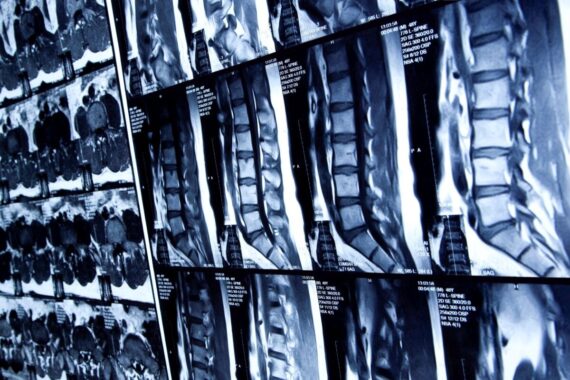


Under the radar: In the next in our series on diagnoses that can be overlooked in primary care, GP and rheumatology specialist Dr Louise Warburton describes how a case of axial spondyloarthritis is picked up after initially being treated as mechanical back pain, and explains what GPs can learn to identify and treat the condition promptly
Note the case featured in this article is hypothetical and developed for educational purposes
Clinical history
A 31-year-old woman presented repeatedly to her GP over three years with intermittent lower back pain. This was initially attributed to mechanical back injury related to office work. The pain was in the buttocks and radiated down the back of her legs, but sometimes on the right and sometimes on the left side.
The patient described gradual-onset pain without any specific precipitating injury, associated with morning stiffness lasting over an hour and difficulty turning in bed due to nocturnal pain. In the mornings, she had difficulty bending down to get on her shoes and socks. Symptoms improved with exercise and yoga but worsened after prolonged sitting.
She also reported persistent fatigue. Inflammatory markers and routine blood tests were normal, and initial management focused on physiotherapy and analgesia.
She re-presented with worsening symptoms and disclosed a history of recurrent painful red eyes treated by ophthalmology as uveitis. Further review highlighted a family history of psoriasis. Given the inflammatory pattern of back pain and associated features, axial spondyloarthritis was suspected.
The patient was referred to rheumatology where MRI of the sacroiliac joints and spine demonstrated bilateral sacroiliitis with bone marrow oedema, confirming axial spondyloarthritis.
The patient was commenced on NSAID therapy and referred for specialist physiotherapy and rheumatology follow-up.
Making the diagnosis
Axial spondyloarthritis (also known as axial SpA, or axSpA) is an umbrella term for inflammatory arthritis conditions primarily affecting the spine and sacroilial joints, incorporating ankylosing spondylitis (where radiographic changes are visible on X-ray) and non-radiographic axial SpA (where clinical features are present but radiographic changes not yet visible on X-ray.
Before we had MRI scanning, the diagnosis of axial SpA could be very delayed as the typical radiographic changes on X-ray can take ten years or more to appear.
This can have severe consequences for the patient in loss of mobility and jobs and chronic illness.
Today, we have MRI scanning which can demonstrate the early features of disease, well before X-ray changes, but there is still a delay in diagnosis of 8.5 years in the UK. This is partly because back pain is such a common presentation in primary care and the typical symptoms of axial SpA may be overlooked or misattributed to mechanical back pain. Also its insidious onset means it does not initially impact on the patient’s life.
Symptoms
Back pain is the earliest presenting feature of axial SpA. The pain is insidious in onset and the sufferer will not be able to remember a precipitating event.
This contrasts with mechanical back pain, with which patients will often remember having an acute injury or strain, such as after lifting a something heavy.
The back pain is inflammatory in nature and associated with prolonged morning stiffness lasting more than an hour.
Inflammatory back pain is characterised by:
- Insidious onset in a person less than 45 years of age.
- Prolonged morning stiffness.
- Nocturnal pain which can wake the person from sleep and cause difficulty turning over in bed.
- A good response to non-steroidal anti-inflammatory drugs (NSAIDs) which will take away the pain and stiffness very effectively.
- The pain and stiffness are improved by exercise and movement, in contrast to acute mechanical back pain which is worse after exercise or activity.
- Alternating buttock pain because of inflammation in the sacroiliac joints.
If a person presents with inflammatory back pain, there may be a reduction in spinal movements on examination. However, there may not be if the clinical appointment is later in the day when the stiffness has resolved.
Generally, the spinal and buttock pain is associated with malaise and fatigue.
There may be associated diseases which can be part of the spondyloarthropathy condition, namely:
- Uveitis (painful red eye); this is very strongly associated with axial SpA.
- Inflammatory bowel disease (Crohns or ulcerative colitis).
- Psoriasis.
- Reactive arthritis from an infection such as chlamydia or salmonella.
If any of these are present, or there is a family history of them, suspicions should be raised.
Also, there can be associated peripheral inflammation of fingers and toes, called dactylitis. This is where the whole digit swells up like a sausage and is pathognomic of spondyloarthropathy.
There can also be inflammation where tendons attach to bones (enthesitis), such as bilateral achilles enthesitis or plantar fasciitis. Bilateral symptoms due to a mechanical cause would be unlikely.
Investigations
As above, typical X-ray changes can take years to develop, so a normal X-ray does not rule out a diagnosis of axial SpA. Blood tests are not helpful in early disease either, as the inflammatory markers can remain normal (as in this case). Even in established disease in women, inflammatory markers are not elevated as much as in men.
Diagnosis of axial SpA is made on MRI scanning. The features of the inflammation (bony oedema, sacroiliitis and bony bridges called syndesmophytes) are only visible on a special ‘inflammatory back pain’ protocol MRI scan which images the whole spine and the SI joints, and uses images which demonstrate bony oedema. These are T2 weighted and STIR images.
The standard MRI scan which is requested for mechanical back pain will not demonstrate these features and a lot of early cases of axial SpA are missed because of this. The required MRI scan often cannot be ordered directly by the GP and should be requested by specialist care after referral.
The genetic phenotype HLAB27 is associated with the disease, especially in men. Approximately 10% of the normal population are HLAB27 positive but do not have axial SpA. In men with inflammatory back pain, positivity for HLAB27 is about 90% specific for the disease.
The HLAB27 test can also be very helpful in women presenting with symptoms which may or may not be axial SpA. For instance, symptoms of fibromyalgia can mimic early axial SpA, but a positive HLAB27 test would be more suggestive of an axial SpA diagnosis.
Referral
As above, referral should be made on clinical suspicion, as investigations (standard X-ray / MRI and inflammatory markers) may well be normal. The National Axial spondyloarthritis society (NASS) has a symptoms checker Symptoms Checker – Act on axial SpA which people can complete electronically and which generates a summary of their symptoms, which can be helpful to use in a referral or advice and guidance to rheumatology.
Learning points for GPs
Axial SpA affects about as many people as rheumatoid arthritis, so it is not rare, but it is underdiagnosed.
In the early stages, inflammatory markers will not be raised – and in women, these may never be raised.
The disease affects as many women as men; it is a popular misconception that men are disproportionally affected.
In women, the imaging features are often not as obvious and there is more widespread pain and fatigue and the symptoms can mimic fibromyalgia. This can be another barrier to referral and diagnosis.
If the disease is missed, then it can result in many years of pain and often lost employment for the patient.
Look out for dactylitis and enthesitis, particularly bilateral enthesitis which can be associated with spinal inflammation.
Key points
- Axial SpA is the new umbrella term for inflammatory arthritis of the spine including ankylosing spondylitis and non-radiographic axial SpA.
- It affects young people and presents as inflammatory back pain, which is very different from mechanical back pain. However, inflammatory features can be missed by GPs and other clinicians in primary care due to the sheer number of people consulting with back pain.
- A standard MRI scan will miss the cardinal features of bony oedema, so diagnosis should be made by a rheumatologist.
- Blood tests are unhelpful, although HLAB27 can be very specific in men with features of inflammatory back pain.
- Be aware that uveitis is strongly associated with axial SpA and if you see a patient with previous uveitis and back pain, refer to rheumatology.
- Similarly, if you have someone with inflammatory bowel disease and back pain, refer to rheumatology if there are inflammatory features.
- Psoriasis can be associated with inflammatory arthritis and axial spondyloarthropathy.
Dr Louise Warburton is a GPSI in rheumatology and MSK medicine and co-president of the Primary Care Rheumatology and Musculoskeletal Medicine Society
Sources and further reading
- National Axial Spondyloarthritis Society (NASS). Available at: www.nass.co.uk
- NASS: Act on axial SpA – includes resources for Primary Care to aid diagnosis and reduce the time to diagnosis
- NHS England. Getting It Right First Time (GIRFT). Axial spondyloarthritis: New presenation in patient >16 years. 2022
- NICE. Spondyloarthritis in over 16s: diagnosis and management. [NG65] 2017
- McAllister et al. Spondyloarthritis: diagnosis and management: summary of NICE guidance. BMJ 2017;356:j839 – includes infographic.
Visit Pulse Reference for details on 140 symptoms, including easily searchable symptoms and categories, offering you a free platform to check symptoms and receive potential diagnoses during consultations.
Related Articles

READERS' COMMENTS [2]
Please note, only GPs are permitted to add comments to articles







Excellent article.
Unfortunately a request for a spinal X-ray or MRI scan in a 31 year old with back pain would be refused, and a referral to rheumatology with normal blood tests would be rejected faster than you can say “spondyloarthritis”.
Very true in the real world David.
Interesting article but I think this needs more up to date research, that isnt linked to their society. One of the key studies only investigated 38 people.
More than happy to be corrected by those with knowledge, but from the few papers I found when trying to read up on AxSpa last year it seems only around half of people get an initial response from biologics but that less than 20% get any longer-lasting impact from them. So 80% who will go through tests, labels and trials of treatment to then be discharged by rheumatology/pain clinics/physios will then continue for decades seeing their GP with something we can’t fix.
There are obviously many other illnesses with equally low prevalence and equally low NNT that we look for and try to help with every day, but I think we need to improve on asthma/DM/depression as a country before we expect cheaply commissioned MSK triage services to get this right.