

Coroners on our case
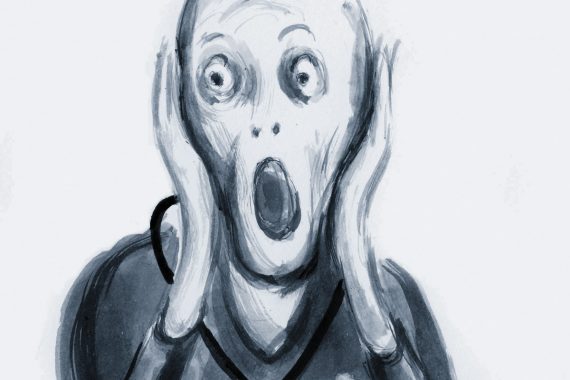


Copperfield reflects on a recent inquest and asks whether the wrong lessons are being learned about GPs’ role in emergency referrals
A few years ago my son developed classic appendicitis symptoms. I diagnosed him by phone – it was that obvious. Even he knew the difference between a dodgy kebab and a surgical emergency. My wife then called me to say the ‘paramedic’s ultrasound’ suggested it was just gastroenteritis. I gave her a message to pass back to them which she did, just deleting the expletives. He perfed that evening but was already in hospital by then, and so lived to tell the tale.
Which is why the horrible and sad story about a poor child similarly misdiagnosed in A&E who wasn’t so lucky really resonates.
Our thoughts, obviously, are with the family. But with the GP also, as the coroner’s comments sound obliquely critical, despite a correct primary care diagnosis. Obviously, we don’t know all the nuances of the case. But those comments have implications for all of us and so warrant scrutiny. In order:
1. No ambulance was summoned. No surprise there. There’s the wait for a reply, the endless interrogation and the no-NEWS-score shaming. And anyway, the ambulance takes the scenic route as soon as they hear the patient is with the GP – hence me left recently with a query MI for an hour, at which point I told his elderly mum the least bad option was for her to drive him to A&E.
2. No letter. OK, in an ideal world, the niceties are, well, nice. But sometimes a letter isn’t needed, feasible or appropriate. Besides, when was the last time anyone in secondary care took any notice of anything you wrote? The patient or carer is perfectly capable of explaining they’ve been sent up after GP assessment – the problem is whether anyone listens.
3. Lack of GP awareness of triage and assessment in local hospitals. Why would we understand the intricacies of a system of their own making which is not communicated to us, or has changed anyway by the time it is? Also, when you do try to negotiate the correct pathway, the on-call team – if it ever answers – inevitably diverts you elsewhere. Usually, ironically, to A&E.
So I don’t buy the assumption that a letter or an ambulance is a proxy for severity, which therefore implicates the GP. Similarly, the absence of a letter or ambulance shouldn’t downgrade the case: very sick patients may pitch up themselves, give up waiting for an ambulance or be sent in via a phone call. Issues around how patients present, with what paperwork, and how that affects triage are just noise, drowning out the real issue – which is that any acutely ill patient merits a proper assessment from suitably qualified and experienced staff.
We shouldn’t draw too many conclusions from just one case. But my experience, and that of my colleagues, suggests that the journey of the acutely ill is fraught with peril once they leave their home or the GP surgery. This is what requires scrutiny. We have our own theories about what might be going wrong. Oh, and I can put them in a letter if that helps.
Dr Tony Copperfield is a GP in Essex
Have you got a view you want to share with Pulse?
We’re always open to first-hand pieces and opinions from GPs.
Email your piece for consideration to be published on our site.
Related Articles

READERS' COMMENTS [19]
Please note, only GPs are permitted to add comments to articles






Spot on DC. I have experienced similar with A&E Ax with perforated appendix being told to go away as ‘Gastroenteritis’. Fortunately they lived to tell the tail, but only just
Well written analysis.
Totally agree!
Totally agree. I’ve sent in someone with a letter who was discharged despite a good history, tenderness and raised CRP. I had to send them back again. Second time they were admitted for surgery. And that was a resident doctor with a high pain threshold.
We remember the stories that don’t go well. Policies need to be changed to improve the outcome for all.
Sadly, it is a perfect summary of current state of affairs. Unsafe chaos and confusion. Sending patients with print outs of suspected diagnosis so all is needed is investigations to dispel 1% doubt of that being something else and still patients being sent home with some benign diagnosis ignoring all signs and symptoms which later turn out to be what we as GP suspected in the first place.
Totally agree! Sadly we still practice in a medical world that GPs are treated as lower level medics. Not to start from the self-explanatory fact that we are in 2026 and still not allowed to be called consultants as our secondary care colleagues. And it feels to me that this distorted culture is perpetuated to the new generation of doctors who are taught by their senior consultants in secondary care to talk to GPs with a patronizing attitude and in some cases completely ignoring our clinical judgement and concerns when we dare to send a patient to A&E.
1. phone….no one answers and if they do, they are ‘going off shift’
2. letter……taken by reception team and never seen again
3. on-call team………. for ”safety” in our local hospital everything must go through a/e for ”assessment” (boosting a/e numbers)
4. i send an accur-x text , very short and simple in the hope that , the patient is my witness that the communication happened, and as its on the patient’s phone (and their clinical record) it is less lekely to be ‘lost ‘ in the NHS labyrinth.
As a secondary care consultant I have to say I agree entirely with this. If there are professionals charged with assessing patients – whoever the patients are, however sick they may or may not APPEAR to be and by whatever route they come in, then they must be properly trained and should take individual responsibility. And they should expect to be held to account, personally, for their actions. Doctors are treated in this manner. Other clinicians should, if taking on these roles and responsibilities, be expected to be treated the same way. Criticising letters and routes of referral and triage misses the point – we have “sublet” these tasks to non-doctors. This increases risk. If an organisation does this, it (and the clinicians involved) should expect to be held to account if and when it goes wrong, in just the same way as doctors are.
Jim Lawrie – that’s a great idea – a message and/or screenshot to patient’s mobile so they have GP’s info and concerns available to show to anyone who needs to see.
A truly sad case but I don’t feel the analysis presented really matches my experience with the local hospital in Devon. I refer 90% of my admissions direct to an on take medical or surgical team or a specialty like ENT or plastics. Only a few go direct to ED often after referral, if I’m really worried I will discuss with the ED team. I agree a letter is not always possible – obvious admission following a phone call for example. I can’t comment on how many referral letters get read – occasionally the question I ask doesn’t seem to be answered so I think some get lost in travel – medico-legally risky for the receiving team and bad for the patient when it happens. As a junior zi found them and the paramedic notes really helpful. Bashing the ambulance service is a bit unfair, they don’t have enough resources and like any triage prioritise the most emergent which does end up in some really poor care for those bumped down the pecking order. As for the bit about GP bashing – no comment!
I wrote a reply on the news page re this, but thought better of it. It was, more or less, excatly this. It has made me really angry that the failing of every other service has led to criticism of a (correctly diagnosing) GP), and a totally preventable and tragic death of a child
Tragic story. Presumably, if not the coroner, then it’ll be left to a civil claim for negligence (or an inquiry) to ask the relevant questions and clarify the institutional, structural and cost-cutting issues at this hospital, so that the real lessons are learnt (instead of deflecting the focus onto GPs and ambulance). And hopefully bring some comfort to the family.
I took our 11 year old son to A&E after 1. 5 days of temp 39c with tepeat vomitting and crying with severe left leg pain concerned about posdible septic arthritis.
Got to see consultant, who scanned his leg, xrayed, , did bloods, high Crp. Sent us home with viral gastroenteritis and. muscle strain
Next morning got rung with +ve staph blood cultures, osteomyelitis and septic arthritis and we rushed back in for iv antiniotics. It was caught early so no bone abscess or necrosis.
Am sure blood cultures were only done due to my stated concern for sepsis and that i was a GP and I stood there checking…
All these problems are due to not enough doctors nurses or paramedics to cope with the politicians scaremongering and the increasing population.. Instead of recruiting more staff the managers instigate the next round of changes and spend a fortune on renaming things (so no one understands anything) , more meetings and more managers. Been going on for years. Hopeless.
The NHS is a failed system, with outcomes worse than comparable Countries.
We have tried throwing ever more money at it, up from 4% GDP to 12% in my working life and it’s still failing; the more money the worse Productivity gets.
Perhaps look at how other Countries do Healthcare? Look at what works?
GP’s are low hanging fruit when it comes to critisism by a coroner rather than directing it wholly to the responsible and larger governmental institutions like the Healthcare Trusts. GP working conditions and possible excessive workload at the time are NEVER taken into account.
I agree! The mode of transport to A&E should not determine how a patient is assessed. A hospital triage system that results in this tragedy suggests that their system is seriously flawed and needs an urgent review. I was gobsmacked that the lesson to be learned was “lack of GP awareness of hospital triage assessment in the local hospital”
When you are consulted by someone with abdominal symptoms, you are walking into potentially dangerous territory.
The history- taking is important but the examination is crucial.
1. Things evolve…Better to arrange a re- examination after a few hours than asset a definite cause.
2. it is always the last doctor who sees the patient who makes the correct diagnosis..
– Heart- breaking for all if this is the pathologist…
When are Doctors ( GPs and Secondary Care Doctors) going to be asked honestly whether they think the NHS is able to function to keep patients safe? Crisis in Accident and Emergency has become the acceptable norm. This needs honest action at a political level. If a service is completely under resourced, overloaded and chaotic, it becomes impossible to triage and treat in a safe way. Directing blame at Accident and Emergency Departments and/or to GPs is a reflection of the pressure and overload of the system. GP is full, OOH is full, Accident and Emergency is full, Hospitals are full. There is no spare capacity, hence danger to patients. If you put any system under so much pressure, it’s not rocket science to work out that the system will fail regularly (in spite of having very capable, highly motivated, highly trained and highly regulated individuals working in the system).