

Quick cases in neurology
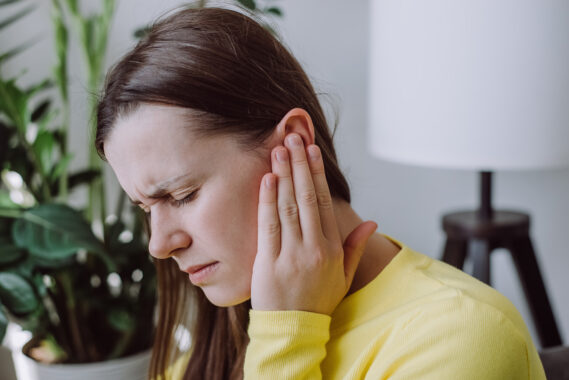


Our latest CPD module explores five common but challenging neurology cases encountered in general practice, and discusses evidence-based approaches to assessment, investigation and management. Complete the full module on Pulse 365 today.
Neurological symptoms are a frequent source of diagnostic uncertainty in primary care, ranging from common presentations such as migraine and peripheral neuropathy to more unusual conditions including multiple sclerosis (MS), trigeminal neuralgia (TN) and motor neurone disease.
This case-based module covers topics including migraine management in patients with comorbidities, the assessment of TN and exclusion of secondary causes, distinguishing true MS relapse from pseudorelapse, investigating peripheral neuropathy in older adults and assessing patients concerned about motor neurone disease.
This module will support GPs to:
- Select appropriate acute and preventive treatment strategies for migraine, including management options when beta blockers are contraindicated and considerations around menstrual migraine.
- Recognise the clinical features of TN, identify red flags for secondary causes such as multiple sclerosis, and understand appropriate investigation and referral pathways.
- Differentiate between a true relapse and a pseudorelapse in MS, and apply current guidance on the use of corticosteroids in relapse management.
- Assess and investigate peripheral neuropathy in older adults, including identification of common reversible causes and appropriate use of referral pathways.
- Evaluate patients presenting with muscle cramps and fasciculations, distinguishing benign causes from features suggestive of motor neurone disease and providing appropriate reassurance, investigation and safety-netting.
Case 1. Intractable migraine in young asthmatic woman
Case 1: A 28-year-old woman suffers intractable migraine. These tend to be worse around her period, though happen at other times too. The fact that she is asthmatic precludes her from having a beta blocker. What are the options here?
The co-existence of asthma and migraine is common in young women, and the aspirin-sensitive asthmatic also raises additional caution around NSAIDs, so your therapeutic options do require some thought. That said, you have several effective alternatives to beta blockers.
Firstly it is important to confirm the diagnosis. Intractable migraine with menstrual clustering fits with a common pattern seen in women, of either pure menstrual migraine (attacks only in the perimenstrual window) or menstrually-related migraine (also occurring at other times, which appears to be the case here).
For preventive treatment, NICE guidelines on headache in over-12s (CG150, 2021) recommend topiramate or amitriptyline as first-line options where beta-blockers are contraindicated. Topiramate is effective but carries important caveats – it is a significant teratogen and absolutely requires reliable contraception in women of childbearing age; this must be discussed explicitly and documented. Start low (25mg at night) and titrate slowly to minimise cognitive side effects. Amitriptyline (10–75mg at night) is a reasonable alternative if topiramate is poorly tolerated or contraindicated and candesartan (off-label but with reasonable evidence) is another alternative.
For the menstrual component specifically, frovatriptan or zolmitriptan used as mini-prophylaxis when migraine is purely menstrual (starting 2 days before expected onset and continuing until 3 days after bleeding starts) is evidence-based and endorsed by NICE, although note this is off-label use for both drugs. Here, where the patient has menstrual exacerbations (rather than pure menstrual migraine) continuous daily preventive therapy – topiramate, amitriptyline, or candesartan – is the logical backbone of management, with mini-prophylaxis potentially added on top to target the predictably worse menstrual attacks as an adjunct. Also, if she uses hormonal contraception, manipulation of the pill-free interval to suppress menstruation can be transformative.
For acute treatment, ensure she has adequate triptans – sumatriptan 50 or 100mg is first choice. Combination with a NSAID (e.g. naproxen) is more effective than either alone, though check respiratory tolerance to NSAIDs carefully; if there’s any aspirin sensitivity, avoid entirely.
If attacks remain intractable despite optimised preventive and acute strategies, specialist referral is warranted. Calcitonin gene-related peptide (CGRP) monoclonal antibodies such as erenumab, fremanezumab and galcanezumab are now NICE-approved for chronic migraine and episodic migraine with inadequate response to prior preventives.
Sources
- British Association for the Study of Headache (BASH) Guidelines. Primary headache – Migraine: management. 2026
- MHRA. Topiramate (Topamax): introduction of new safety measures, including a Pregnancy Prevention Programme. 2024
- NICE. Headaches in over 12s: diagnosis and management [CG150] 2021
Case 2. Lancinating facial pain in 38-year-old
I have a 38-year-old woman who has had lancinating facial pain for some weeks, getting worse. Clinically this seems to be TN. What else should I rule out, does she need investigation and how should she be treated?
Trigeminal neuralgia is the most likely diagnosis here, but in a 38-year-old woman you must actively exclude secondary causes – and this demographic should make you think hard about multiple sclerosis (MS). MS is diagnosed in 2–14% of cases of TN but is disproportionately seen in younger patients under 40 and women. Other secondary causes include cerebellopontine angle tumours (acoustic neuroma, meningioma), vascular compression from an aberrant loop of the superior cerebellar artery (the commonest cause of classical TN) and, rarely, skull base pathology.
Investigation is strongly indicated here. The Royal College of Surgeons of England and European Academy of Neurology recommend MRI of the brain with dedicated trigeminal protocol in all patients with TN. This is particularly relevant for those under 50, with atypical features or where secondary cause is suspected. The MRI should include high-resolution sequences to visualise the neurovascular contact point and exclude demyelinating plaques or structural lesions. Do not simply start treatment without imaging – refer to neurology or a specialist headache/facial pain clinic for this, and make clear to the patient why you are doing so.
Classical TN produces brief (seconds), severe, electric shock-like pain typically in the maxillary and/or mandibular nerve distribution (cheek, jaw, teeth), triggered by light touch, eating or cold air. Continuous background aching or sensory loss (‘anaesthesia dolorosa’) suggests a secondary or atypical form requiring even more urgent investigation.
For treatment, carbamazepine remains first-line – start at 100mg 1-2 times daily and titrate to response, typically 200mg 3-4 times a day, increasing if necessary up to 1.6g daily. It is effective in at least 70% of patients initially. Warn about drowsiness, ataxia and drug interactions (it is a potent enzyme inducer). Oxcarbazepine is better tolerated with a similar mechanism and is an acceptable alternative but is usually specialist initiated.
If the patient proves drug-resistant or poorly tolerant, she should be referred for consideration of microvascular decompression or gamma knife radiosurgery.
Sources
- Bendtsen et al. European Academy of Neurology guidelines on trigeminal neuralgia. Eur J Neurol 2019;26:831-49
- BNF. Carbamazepine.
- NICE Clinical Knowledge Summary. Trigeminal Neuralgia. 2022
- Royal College of Surgeons of England. Guidelines for the management of trigeminal neuralgia. 2021
- Stefano G et al. Trigeminal neuralgia secondary to multiple sclerosis: from the clinical picture to the treatment options. J Headache Pain 2019 Feb 19;20(1):20
- World Health Organisation. Proposal for the addition of carbamazepine to the WHO model list of essential medicines for the treatment of trigeminal neuralgia. 2024
Complete the full module on Pulse 365 and log 2 CPD points for your appraisal
Module reviewed by Dr Keith Hopcroft, GP and Pulse clinical advisor
Visit Pulse Reference for details on 140 symptoms, including easily searchable symptoms and categories, offering you a free platform to check symptoms and receive potential diagnoses during consultations.





