

What will new health secretary Yvette Cooper do for general practice?
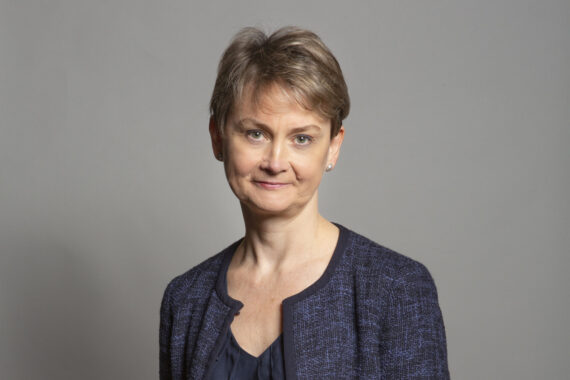


Pulse’s Maya Dhillon takes a look at the CV of the new health secretary, Yvette Cooper, to see what her appointment could mean for general practice
Unlike her immediate predecessor, the new health secretary does not need as much in the way of introduction. Appointed by new prime minister Andy Burnham yesterday evening, Yvette Cooper is one of the most established names in his reshuffled cabinet.
She has experience as a junior health minister, has previously expressed views on GP access, and praised her GP for taking her seriously when she suffered from ME/CFS in her twenties.
Speaking about her new role, the former foreign secretary and MP for Pontefract, Castleford and Knottingley said it was a ‘real honour’, and she looks forward to supporting the NHS, ‘Labour’s proudest achievement.’
We look at her career so far, and about what her appointment could mean for the future of general practice.
Who is Yvette Cooper?
Ms Cooper was born in Inverness, Scotland. She studied philosophy, politics and economics at the University of Oxford, before going onto study at Harvard University and the London School of Economics.
Before being elected as an MP in 1997, she had a variety of policy research and adviser roles, working for shadow chancellor John Smith, Democrat nominee for President of the United States Bill Clinton, and shadow chief secretary to the Treasury Harriet Harman.
Most recently, Ms Cooper was the foreign secretary and before that the home secretary, after serving as the shadow home secretary since 2021.
But she has a history of working within the Department of Health and Social Care. One of her first roles in Government was parliamentary under-secretary of state for health in Tony Blair’s administration, in which she held the portfolio for public health. In that role as a junior health minister from 1997 until 2002, she worked on the first NHS cancer plan as well as helping to implement the Sure Start programme.
Ms Cooper has held a wide array of other roles: in Government, as work and pensions secretary, housing minister and chief secretary to the Treasury; and in opposition as shadow minister for women and equalities. She also ran for leadership of the Labour Party in 2015 (as did Mr Burnham) ultimately losing to Jeremy Corbyn.
What is she inheriting from her predecessors?
GPs are currently in dispute with the Government over this year’s GP contract, and collective action could be stepped up a gear soon, after a new executive of the BMA’s GP committee was elected. Ms Cooper will have her work cut out in trying to navigate the relationship with the new committee and – one imagines – working towards ending the dispute. ‘GPs in England continue to take collective action, but the change in health secretary provides a critical opportunity to reset,’ says BMA council deputy chair Dr Emma Runswick. ‘Solving the dispute and channelling a path that delivers for practices and patients, and assures the future of general practice as we know it.’
Ms Cooper also inherits the hefty NHS Modernisation Bill which includes the legislation abolishing NHS England and dissolving it into the DHSC; the legislation and legal framework that will create the single patient record; and the legislation that will give ICBs legal responsibility for primary care commissioning.
And, she will be expected to continue carrying out the 10-year health plan, including its policies on neighbourhood health and the shift of care from hospitals into the community – although Mr Burnham announced yesterday that his administration will publish a new 10-year plan, which could include new health priorities.
She also inherits Labour’s commitments to primary care as laid out in the Party’s 2024 manifesto, which Mr Burnham has pledged to build upon. These included: training thousands more GPs; guaranteeing face-to-face appointments for all patients who want one; modern appointment booking system to end ‘8am scramble’; incentivising continuity of care; taking pressure off GP surgeries by encouraging access to other treatment and service routes; and expanding self-referral routes where appropriate.
Many of the changes have proved controversial among GPs. The changes to online access in last year’s GP contract were widely criticised due to issues of patient safety and GP burnout (and eventually led to a breakdown in relations between the BMA and Government); and increased reliance on schemes like Pharmacy First to ‘take pressure off’ GPs has led to concerns from regulators.
Ms Cooper will also be at the helm for the much delayed long-term workforce plan, the Casey Commission on adult social care, the cancer plan, the capital plan and more.
What does it all mean for general practice?
While it is still early days to know for sure, there already are some indications as to her view of the profession. When running for Labour leader in 2015, Ms Cooper argued for local government to have greater control in the running of the NHS. This incline towards local decision-making could prove significant as she takes responsibility for the shift towards neighbourhood health. However, for that vision to succeed, the question will be whether neighbourhood health strengthens the role of general practice or simply creates new structures around it.
More recently, Ms Cooper has written about the need for more GP appointments to cut down on the number of patients going to A&E and to have a NHS that centres on prevention, rather than treatment. This suggests that she understands that general practice is the key to cutting costs in the NHS.
One may also hope that her own experience with general practice may influence her decision-making. She has spoken about suffering from ME/CFS in her twenties and praised the ‘good’ GP she had at the time for not saying ‘it was all in the mind’ and taking it seriously.
What will her priorities be?
With so much on her plate already, it will be interesting to see where Ms Cooper directs her efforts first. In the 25 years since leaving DHSC, she has been largely quiet on all things health.
Social care will certainly be at the forefront of her agenda. In his rapid rise to power since the Makerfield by-election last month, Mr Burnham has made no secret of his desire to reform the UK’s approach to social care – a topic he has advocated for since his own days as health secretary. He has already hinted at tax rises to pay for improved social care. Mr Burnham and Ms Cooper were both proponents of integrating health and social care when they ran to lead the Labour party in 2015.
RCGP president Professor Victoria Tzortziou Brown says that Ms Cooper has ‘an important opportunity’ to put general practice at the heart of the Government’s plans for the NHS. ‘Publishing the long-awaited 10-year workforce plan should be an early priority with a clear focus on recruiting, retaining and supporting the GPs needed to improve access, strengthen continuity of care and deliver high-quality care closer to home,’ she says.
And the Doctors’ Association’s GP spokesperson Dr Steve Taylor says that he hopes the new health secretary will listen to people working in general practice. ‘She takes on the role with so much to do and many in the NHS workforce disillusioned,’ he says. ‘We look forward to a new day of collaboration and listening to the people who work in the NHS and patient voices. Top down reorganisation and implementation is not the answer.’
Related Articles

READERS' COMMENTS [1]
Please note, only GPs are permitted to add comments to articles






Useless in every post occupied to date.
Set the bar low and expect to be disappointed even so.