

Challenges in paediatric infectious disease: A primary care update


CPD: GP and paediatrics specialist Dr David Capehorn provides an update for GPs on recognition and management of infectious diseases in children. Complete the full CPD module on Pulse 365 today
Childhood infectious disease has changed shape rather than disappeared. The UK immunisation programme has dramatically reduced bacterial meningitis and many vaccine-preventable infections, but measles, pertussis and scarlet fever have all resurged in recent years as vaccine coverage has faltered and social mixing has resumed after the Covid-19 pandemic.
GPs often see children with non-specific febrile rashes, often brought in by anxious parents. Of course, complications occur when the child’s mother is also pregnant. Distinguishing between benign and serious rashes can be challenging. Knowing when to test, when to notify, when to treat and when to reassure, is key to successful management.
Learning objectives
This module addresses five practical questions to bring GPs up to date on:
- How to recognise measles, a condition many GPs have never seen.
- What to do when a child’s rash suggests a viral aetiology and the mother is pregnant.
- When to think of whooping cough (pertussis) and how to investigate.
- How to spot eczema herpeticum and what action is needed when suspected.
- What features in a child with sore throat prompt suspicion of scarlet fever, and how this affects management.
1. Measles: a disease many GPs have never seen
Many GPs have never seen a case of measles, which is apparently on the rise and should be considered in febrile children with a rash. What are the key pointers and how do we reach a definitive diagnosis?
The UK once achieved measles elimination status, meaning there was no continuous endemic transmission for over 12 months. This status was first attained in 2014 and reaffirmed in 2017, as validated by the World Health Organisation (WHO). However, due to sustained falls in MMR coverage below the herd immunity threshold in many areas, the UK lost its elimination status in 2018 and remains non-elimination status today. As a result, many GPs now in practice will have had little or no direct experience of a case, but outbreaks are recurring.
The typical clinical picture of measles is as follows:
- Prodromal phase (2–4 days)
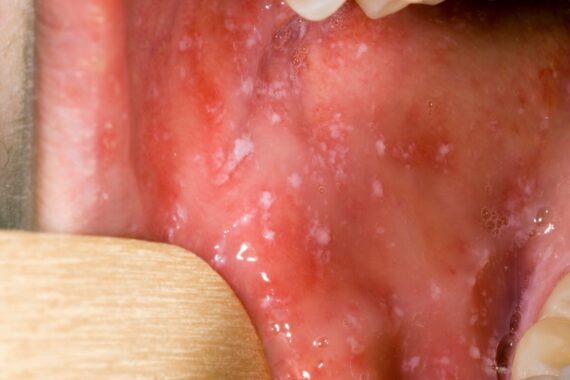
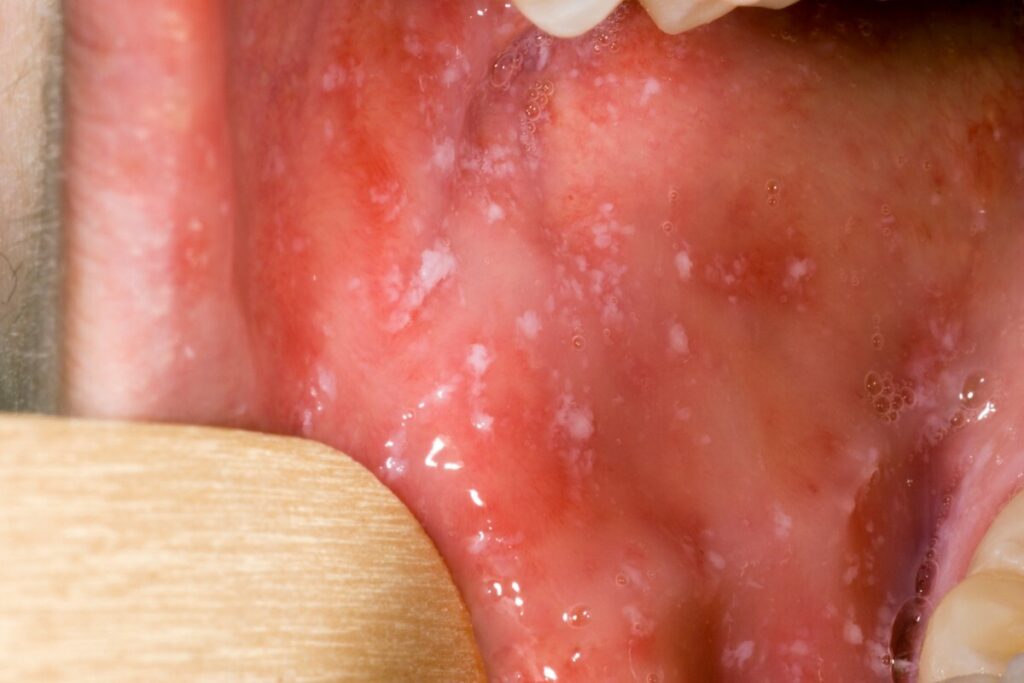
This starts with high fever (often >39°C) followed by cough, coryza and conjunctivitis, the classic ‘3 Cs’. Koplik spots on the buccal mucosa (tiny white spots on an erythematous base, usually opposite the molars) appear 1–2 days before the rash (see image 1). NB: Children are usually infectious from 4 days before to 4 days after rash onset.
Image 1. Koplik spots in child with measles
- Rash phase (4–7 days)
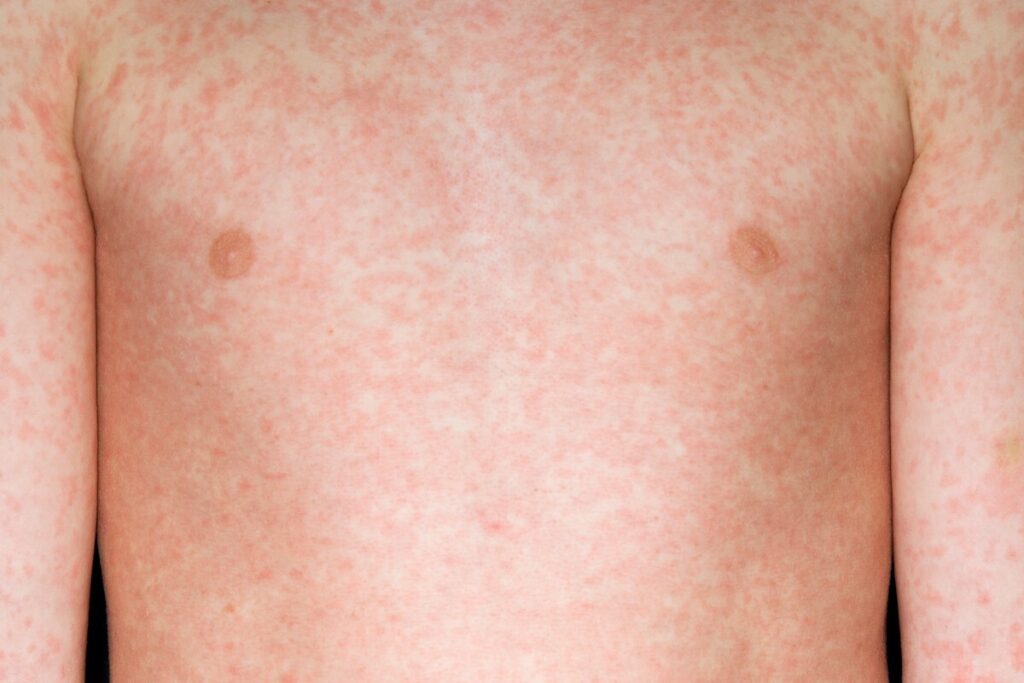
A red, maculopapular rash starts behind the ears or at the hairline, then spreads over the face, trunk and limbs (see image 2). It often becomes confluent on the face and upper trunk. Usually, the child is toxic and miserable, not just mildly unwell.
Image 2. Typical maculopapular rash on chest of child with measles
- Recovery
The rash fades with fine desquamation. However, the cough and malaise may persist for several weeks.
Table 1. Comparison of measles with common viral exanthems
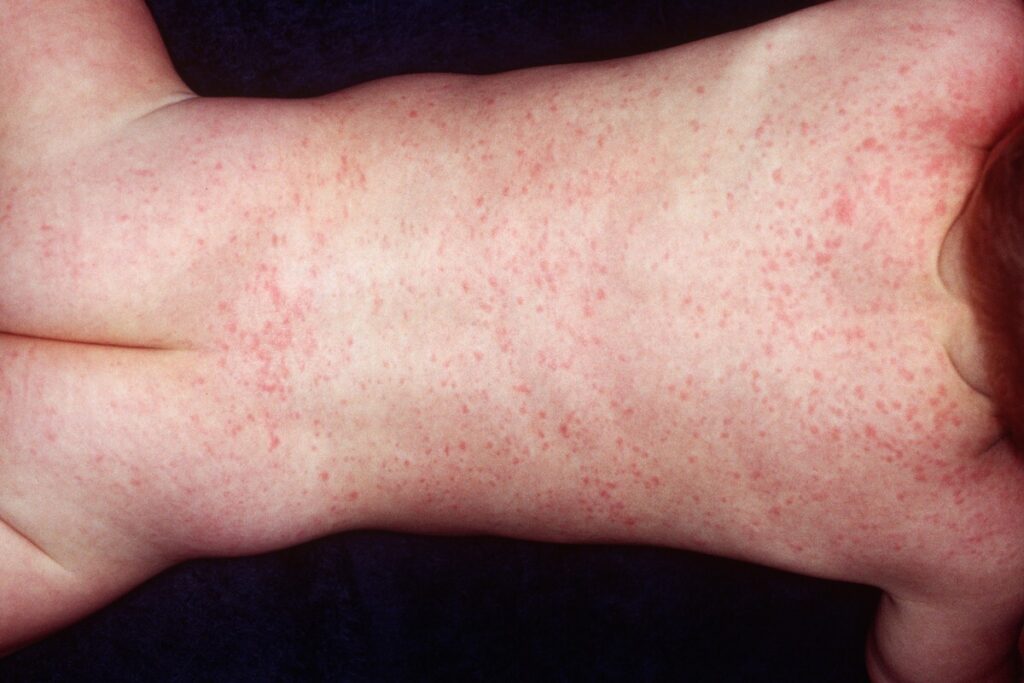
Feature Measles Rubella Parvovirus B19 Roseola (HHV-6) Toxicity High, usually very unwell Mild to moderate Usually mild High fever, then usually completely well once rash appears Prodrome 3 Cs + Koplik spots Mild fever, with possible postauricular or occipital lymphadenopathy Mild upper respiratory symptoms or none A few days days of high fever, then defervescence when rash appears Rash timing Rash with ongoing fever Rash with mild systemic symptoms Rash after prodrome resolves Rash after fever subsides Rash pattern Confluent, usually head head-to-toe Fine, non-confluent, ‘3-day’ rash (see image 3) ‘Slapped cheek’ on face (see image 4); then a fine, lacy (reticular) maculopapular rash on trunk and limbs Pink macules on trunk then limbs (see image 5)
Image 3. Rash on chest of child with rubella infection
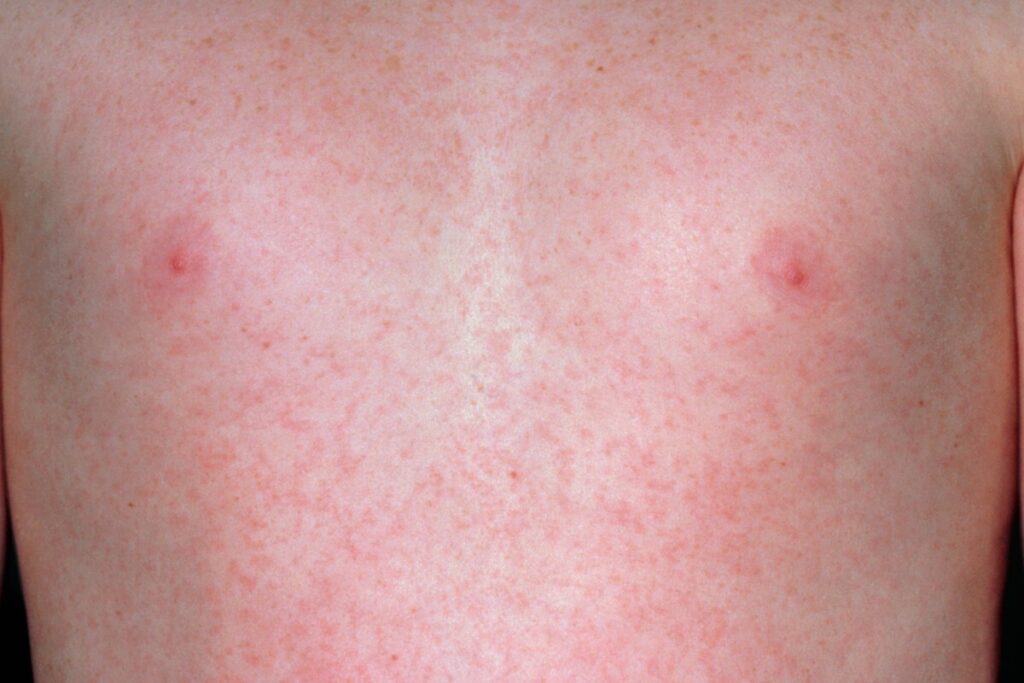
Image 4. Facial rash in child with fifth disease caused by parvovirus B19 infection.
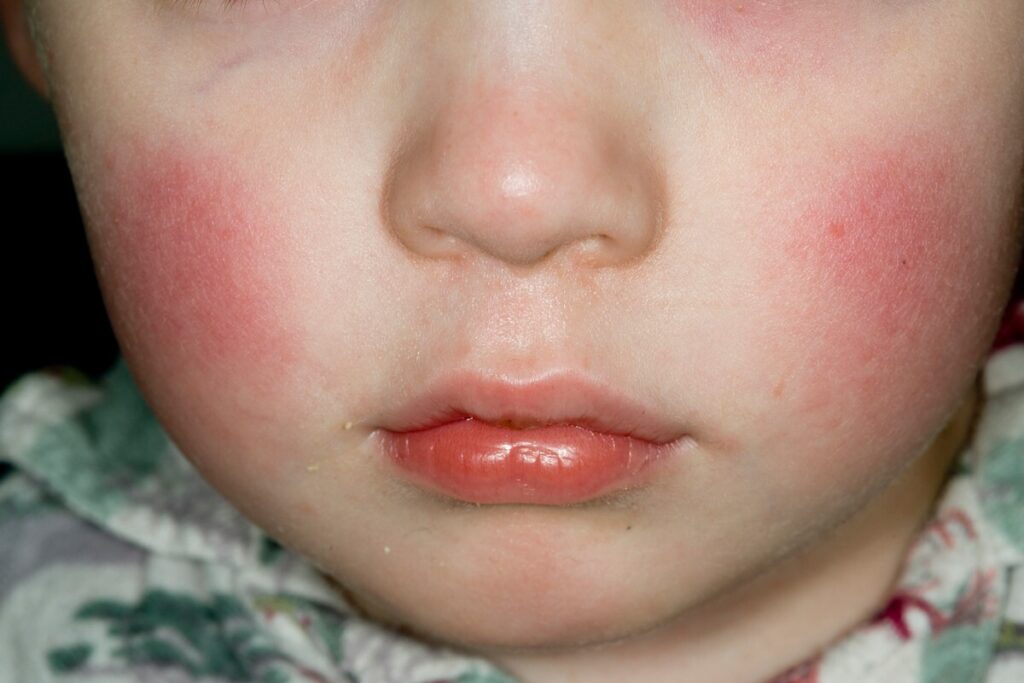
Image 5. Rash on trunk and limbs in child with roseola infection
What should the GP do when measles is suspected?
1. Infection control in the surgery
If measles is suspected when the parent contacts the surgery, advise them to avoid the waiting room (e.g., ask them to wait in the car and call reception on arrial). On arrival, take the child straight to a single room with the door closed, and minimise staff exposure. Measles virus is highly infectious and can remain airborne for up to two hours.
2. Notification and testing
Measles is a statutory notifiable disease. Notify the local Health Protection Team (HPT) on clinical suspicion, rather than waiting for results. Diagnostic confirmation is usually by Polymerase Chain Reaction (PCR) from a throat/nasopharyngeal swab or oral fluid sample, ideally within 7 days of rash onset.
3. Management and complication awareness
Primary care treatment is usually supportive with antipyretics, fluids, rest and clear safety-netting advice. This includes advising on important complications which include otitis media, pneumonia (a key cause of mortality), and acute encephalitis.
4. Exclusion and public health
Children should be kept off school or nursery for 4 full days after onset of the rash, and until clinically well. The HPT leads contact tracing and will arrange post-exposure prophylaxis (MMR vaccine or Human Normal Immunoglobulin (HNIG)) for vulnerable contacts.
Key take-home message: Any toxic febrile child with cough, coryza, conjunctivitis and a spreading maculopapular rash should be assumed to have measles until proven otherwise.
Click here to complete the full module on Pulse 365 and log 2 CPD hours towards revalidation
Dr David Capehorn is a GPwER Paediatrics, founder and former clinical director of the Paediatric Primary Care service, Bristol and South Gloucestershire, honorary associate specialist and GP Lead, Bristol Children’s Hospital Emergency Department.
Sources and further reading
- NICE CKS. Measles. Updated 2024
- UK Health Security Agency. National measles guidelines. July 2024
Visit Pulse Reference for details on 140 symptoms, including easily searchable symptoms and categories, offering you a free platform to check symptoms and receive potential diagnoses during consultations.
Related Articles

READERS' COMMENTS [1]
Please note, only GPs are permitted to add comments to articles







Why was measles not completely abolished furing the Covid-19 lockdown isolation periods?
It should have died out if lockdown had been enforced fairly across the whole community, as most adults are immune.