
New UK exercise guidance says 150-minute target is not an ‘absolute threshold’
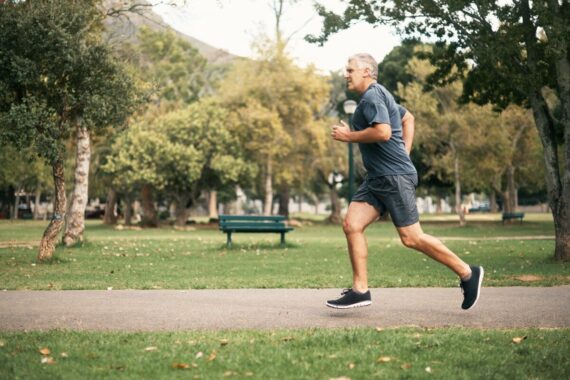


Updated UK guidance on physical activity has stressed the importance of even small amounts of exercise.
Recommendations from the four Chief Medical Officers repeat earlier advice to do at least 150 minutes of exercise a week.
But there is new focus on why small amounts of movement – such as taking the stairs or walking to the shops – add up and lead to physical and mental health benefits.
The UK-wide recommendations also include new warnings for people on GLP1 weight loss drugs to do resistance training to combat muscle loss.
And it includes advice on the importance of incorporating strength and balance activities for people as they get older to prevent frailty.
‘If physical activity were a drug, we would refer to it as a miracle cure, due to the great many illnesses it can prevent or treat,’ the report states.
It notes the biggest gains in health are in moving from inactivity to any level of activity and points to growing evidence of positive effects of physical activity in women, in particular.
The goal should be for people to build regular movement into everyday life with the 150 minutes not being an ‘absolute threshold’.
Activity does not need to take place in long or structured sessions to have a positive impact, it stresses, outlining a range of activities people can take part in including dancing, gardening, active play and household tasks.
Toddlers and pre-school children should be having at three hours of physical activity across a day.
For children and young people this should be at least 60 minutes a day including PE, active travel, play and sport.
Adults should be active every day and break up long periods of inactivity by moving around. Muscle strengthening activity should be done on at least two days a week, ‘but any strength activity is better than none’, the recommendations state.
The four CMOs also highlight the risks of sedentary behaviour and sitting for long periods with evidence showing it is associated with overall mortality and deaths from cardiovascular disease, as well as an increased risk of cancer.
Prolonged sitting is harmful even in people who achieve targets for moderate physical activity, it states.
Professors Chris Whitty, Michael McBride, Gregor Smith and Isabel Oliver, said: ’It is now clear that even small amounts of physical activity produce important benefits compared to none, and the benefits steadily increase up to the recommended 150 minutes a week.
To coincide with the publication, the Department of Health and Social Care has released updated resources, including infographics and communications materials, to help health professionals and other organisations promote the guidance consistently.
Public Health Minister Hodgson said: ’Being physically active is one of the simplest ways people can improve both their physical and mental health, and these refreshed guidelines provide clear, evidence-based advice to help everyone make movement part of everyday life.
‘Whether it’s walking to school, playing in the park, taking the stairs or getting active at home, small changes can add up to significant health benefits.’
Paul Farmer, chair of the Richmond Group of Charities and CEO at Age UK said: ’We are pleased to see that the revised activity guidelines emphasise that any activity is better than none.
‘This is so important to people with long term health conditions, who are one of the least active groups, yet have the most to gain in health benefits from physical activity.’
Physical activity recommendations
Visit Pulse Reference for details on 140 symptoms, including easily searchable symptoms and categories, offering you a free platform to check symptoms and receive potential diagnoses during consultations.