

Government won’t renegotiate ‘cast iron’ GP access changes, minister tells Pulse


Exclusive The Government will not be ‘unpicking or unravelling’ GP contract changes around online access that ‘both parties signed up to’, the primary care minister has told Pulse.
Stephen Kinnock said he was ‘mystified’ by the BMA’s dispute over the changes coming into force today and said that the mandate for online consultation tools to remain open during core hours was a ‘cast iron commitment’.
From today, GPs are contractually required to keep online systems open for patient requests between 8am and 6.30pm for routine enquiries.
The BMA GP committee said it had signed up to this policy only on the condition that ‘appropriate safeguards’ would be put in place, so that urgent requests cannot be sent online and potentially be missed. As of today, the union will be in dispute with the Government over the changes.
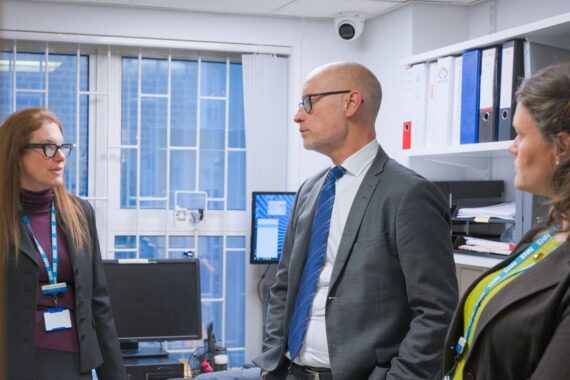
But speaking to Pulse at a west London GP surgery at an event to mark the changes, Mr Kinnock said he was confident necessary patient safeguards were in place ahead of the changes and that he thought the Government and the BMA ‘wanted the same thing’.
Mr Kinnock told Pulse: ‘Frankly, we agreed a contract with them back in February. The contract stated very clearly that by 1 October, every practice in the country should be offering online booking from 8am to 6:30pm, so one thing we will not be doing is unpicking or unravelling a contract that both parties signed up to.
‘We thought we all wanted the same thing. We can’t do that if we are agreeing contracts in February and then trying to unpick them in September, October – that’s simply not acceptable.
‘We are happy to get back to the table with the GPCE, to go through those issues and get back onto the same page, but we are absolutely clear that the commitment to online consultation is a cast iron commitment in the contract, and that will be our starting point.’
Asked if he was confident necessary patient safeguards were in place, the minister said every GP practice is ‘absolutely within its right’ to put a statement on its website saying the online booking system is for non-urgent requests.
Speaking to Pulse at the event on Friday, he said: ‘We made it very clear when we signed the contract with the GPCE back in February that every practice is absolutely within its right to put a statement on its website saying the online booking system is for non-urgent appointments – “if you have an urgent need, please use the telephone or come in”.
‘I think that’s the key safeguard, because as long as you’re very clear about that, that will give a very clear signal to your patients.
‘The other thing, of course, is you need a good triage system. But I don’t think there’s a single practice in the country that can function without effective triage. Triage is the lifeblood of any effective GP practice.’
Mr Kinnock said a ‘very large percentage’ of practices had already adopted the changes, which will help to ‘iron out the inconsistencies’.
When asked if the success of online systems could reasonably be expected of all practices in England, Mr Kinnock said the changes were ‘not at all a risk or a threat’ and will make practices ‘more effective and more productive’.
The NHS, he said, must modernise, and the Government ‘want to do that in partnership with general practice’.
It comes after the health secretary accused GP leaders of ‘conservatism’, saying that their dispute over access changes risks to ‘turn the NHS into a museum of 20th century healthcare’.
This week, Pulse launched a major GP access white paper at a Labour Party conference fringe panel event in Liverpool, where some panellists questioned if the vaunted increase in access for patients following the 1 October contract changes may have the opposite effect.
Despite the dispute, GPs must still comply with the contractual obligations but they will be working ‘under protest’.
Related Articles

READERS' COMMENTS [12]
Please note, only GPs are permitted to add comments to articles







Good news, working hard for pennies 🙂
we do under protest but there will be a reduction in capacity as the clinicians who would have seen patients are now triaging patients not managing them.
What was offered as part of the negotiation to bring in this new measure? It certainly wasn’t any additional funding was it
Remind me , where did MR Kinnock do his GP training? He seems to know an awful lot about how we work in primary care for someone with Mr not Dr in front of his name.
Doesn’t this show the lack of leadership at the BMA and decision making. Why did they signed a contract with a hope the Government will do itis part.
Another failure from BMA
Welcome to politicians once again acting openly in bad faith towards GPs – been happening in Scotland regularly since 2022.
Is easily dealt with, however, with the firm application of BMA Safe Workload Guidance.
cast iron rusts more rapidly, unless carefully looked after with plenty of resources.
I think we were hoping for more actual safeguards than ‘please don’t do this’ on a website people don’t read. Failure to actually provide any safeguards means the agreement if there are agreed and adequate safeguards to protect patient safety is null and void. I’m sorry the government appear to be being advised by people who are clueless about the reality of GP, perhaps that might be worth taking a look at if you don’t want you’re soundbite reforms with no actual substance to unravel when they hit reality
Total Triage which we undertook many years ago effectively reduced doctors to some extent to being medical call handlers drastically limiting the types of patient issues being seen, with progressive risks of deskilling in multiple areas. This did of course allow management of capacity, reduce stress for admin staff taking calls and allow easier same access but is not what I would have in the past called being a General Practitioner but rather a more qualified medical NHS 11 call handler/ triage practitioner.
Who wants total triage accross the board in General Practice? No evidence of benefit, staff and patients dislike it (or even hate it), worsening health outcomes for those who need medical care most. It does nothing to address finite capacity, just diverts resources. Finally to add insult to injury, many of the software packages are not even fully funded by this extremely disappointing reactionary Government devoid of any vision using healthcare as a populist expedient like all those before
Being Stephen Kinnock was involved, more likely it was a bit of a pig (iron) deal….
The BMA should make sure that every practice records every time that a clinician triages one of these online requests as a consultation. When the complaints come in that patients cannot get face to face appointments the BMA can then show the figures that GP’s and their other clinical staff are actually carrying out even more consultations than ever before. Productivity will appear to have massively increased.
It will not have made things any better for the patients though