

BMA demands ‘urgent’ discussions with Government over NHSE list-cleansing drive
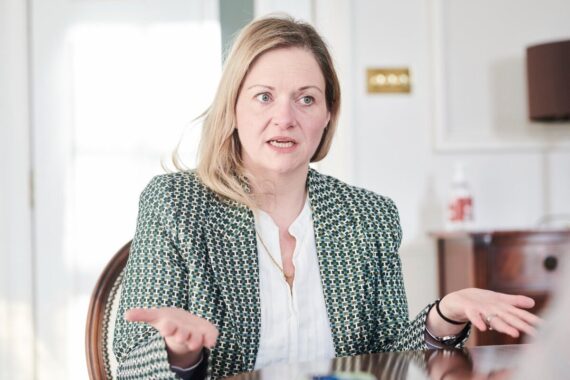


Exclusive The BMA’s GP committee has demanded ‘urgent discussions’ with the Government over NHS England’s recent list-cleansing drive, which has removed hundreds of thousands of patients from GP practices’ lists.
In a letter, seen by Pulse, the union’s GP committee chair Dr Katie Bramall told primary care minister Stephen Kinnock that the process is costing £40m in core funding for GP services ‘at a time when practices are more financially stretched than ever’.
It comes after LMCs warned that that practices worse hit seem to be in areas of high deprivation, particularly those practices who serve homeless patients, and said that patients will be distressed at being suddenly deregistered, and potentially come to harm through loss of follow up and recall systems.
NHS Digital data showed that 458,188 patients have been removed from practices’ lists in England since October last year.
Patient list sizes are part of the global sum funding allocation formula, meaning reductions in lists leads to a reduction in funding.
Typically, when NHS England believes a patient should be deducted from their practice list, they write to the patient and request them to confirm their registration within 30 days. If the patient does not respond, NHS England applies a flag (FP69) to the patient record. The practice would then have six months to confirm the patient’s identity, or the patient would be automatically removed.
However, due to an amendment in the GMS contract last year, since October 2025 the timeframe for practices to respond is now just three months.
Dr Bramall told Mr Kinnock that the union is ‘alarmed’ at the manner in which the current process has been implemented, particularly in terms of halving the time practices and patients are given to respond.
The letter said: ‘A programme of this scale and intensity impacts both patients and practices. For patients, it potentially sees them erroneously removed from their local GP practice if they fail to respond to communications from PCSE or the practice within the given timeframes.
‘There are many reasons that patients may fail to respond to such communications, but it is particularly risky for those populations that are most vulnerable; elderly patients, those with a learning disability, or for those whose first language is not English.
‘We are keen to understand what impact assessment may have been undertaken prior to the commencement of the list cleansing exercise, especially given the vulnerability of those patients likely to be most affected.’
Dr Bramall added that for practices this presents a ‘potentially serious cash-flow problem’, that could destabilise the entire practice, and that in some areas list-reductions are resulting in a drop in core income in the tens of thousands of pounds.
She requested ‘urgent discussions’ on the process and demanded answers on what the money saved through this exercise will be used for.
The letter added: ‘It would appear that the funding “saved” through this exercise is not being recycled back into Global Sum, which would allow it to be reallocated in line with the “corrected” list sizes, but is being set aside for as yet unknown purposes.
‘This is core GMS funding and it is a minimum expectation of the profession that it should be reinvested directly back into Global Sum.
‘Given the impacts outlined above we request urgent discussions on the process currently being undertaken, including whether impacts on patients, practices and health inequalities have been fully modelled and considered, and the use of the “savings” that arise from it.’
An NHS England spokesperson said: ‘It is important that funding follows patients, rather than practices receiving money for patients no longer registered or living in England.
‘NHS England has always worked with GP practices to regularly review their lists and improve their accuracy – with robust checks to ensure people are not removed inappropriately and patients contacted before any action is taken – ensuring money and staff time is not wasted on activity like unnecessary vaccination recalls.’
Pulse has contacted Capita, who run PCSE for NHS England, for comment. The Department of Health and Social Care has declined to comment.
Related Articles

 Oviva’s fully remote Tier 3 Weight Management programme
READERS' COMMENTS [1]
Please note, only GPs are permitted to add comments to articles







We had this cleansing exercise in N Ireland a few years back. For our practice this wasn’t really an issue. We found a few rogues from 1947 and some others who failed to respond but were soon corrected The main issue was the border and patients from the South registered in Northern practices Let’s be honest it really shouldn’t be expected that we get paid for patients that we shouldn’t 😂