
Effectiveness of exercise to ease osteoarthritis symptoms likely minimal, say researchers
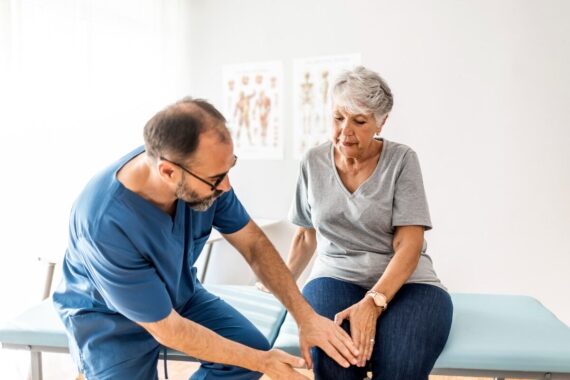


The effectiveness of exercise therapy to ease the symptoms of osteoarthritis is likely minimal, short lived, and probably no better than no treatment at all, researchers have said.
However, the new study published in the open access journal RMD Open acknowledged that some patients may consider exercise ‘worthwhile’ even if expected effects are small or absent, for example, to prevent worsening of symptoms.
Exercise is consistently recommended as an initial treatment for various types of osteoarthritis, but researchers have questioned the extent and durability of its effects, in a review and pooled data analysis of the available evidence.
Systematic reviews have previously been published but there has not been a comprehensive review of the available evidence comparing exercise with a range of different approaches – including placebo, usual care, nothing, drugs, other therapies, and surgery – the study said.
The researchers aiming to plug this gap looked at research databases for relevant systematic reviews and randomised clinical trials published up to November 2025.
They included five reviews, involving a total of 8631 participants, and 28 randomised clinical trials on knee/hip, hand, and ankle osteoarthritis, involving a total of 4360 participants, in the overarching review.
The researchers said they found ‘largely inconclusive’ evidence on exercise for osteoarthritis, suggesting ‘negligible or, at best, short-lasting small effects’ on pain and function across different types of osteoarthritis compared with placebo or no treatment, and that these effects appear less pronounced in larger and longer-term trials.
Comparing exercise with no intervention for knee osteoarthritis, they said: ‘When compared with no intervention, exercise therapy may result in a small effect in pain and physical function in the short term but the evidence is very uncertain.
‘Exercise may result in little to no difference in pain (low certainty) and function (moderate certainty) in the long term.’
They added that their findings question the ‘universal promotion’ of exercise as a first line treatment to ease pain and improve physical function in all those living with the degenerative joint disease, and highlight the need to revisit research priorities.
They concluded: ‘Evidence on exercise for osteoarthritis remains largely inconclusive, suggesting negligible or short-lasting small effects comparable to, or less effective than, other treatments.
‘These findings question its universal promotion and highlight the need to revisit research priorities and clinical discussions around its worthwhileness.’
NICE guidance updated in 2022 said GPs should offer all osteoarthritis patients tailored therapeutic exercise to help manage and reduce symptoms.
The committee said that supervised exercise was likely to have greater benefits for people with osteoarthritis because it may increase adherence and social support.
According to the study, clinicians and patients should weigh the worthwhileness of exercise effects on pain and function alongside secondary health benefits, safety, low-cost profile, care stage and alternative treatment options.
The study added: ‘Given that exercise seemingly yields comparable outcomes to many other treatments, doctors and physiotherapists could decide based on the preferences of patients, the possible harms of the treatment and their own expertise.
‘In this context, exercise may be preferable due to its safety, secondary health benefits and lower costs.
‘Further, we acknowledge that some patients may consider exercise worthwhile even if expected effects are small or absent, for example, to prevent worsening of symptoms.
‘However, exercise may not be pursued for everyone, as patients with osteoarthritis often face personal (eg, comorbidity) or social barriers (eg, lack of access) that prevent them from adhering to regular exercise.’
Visit Pulse Reference for details on 140 symptoms, including easily searchable symptoms and categories, offering you a free platform to check symptoms and receive potential diagnoses during consultations.