

Government’s current vaccination strategy is ‘a failure’ and must be replaced, say MPs
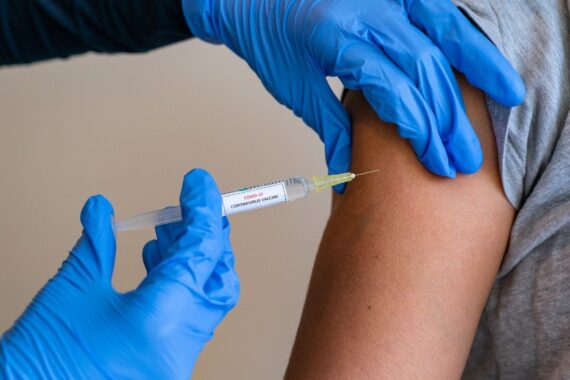


The Government’s current vaccination strategy is ‘a failure’ and should be replaced with a new plan focusing on vaccination uptake in early years, a group of influential MPs has said.
The Parliamentary health and social care committee said that the Government urgently needs a new strategy to turnaround the falling vaccination rates and should aim for 95% coverage throughout England.
NHS England recently announced that health visitors will be used to boost update of childhood vaccination from this year, and the committee said that this plan has ‘real potential’ to help achieve that vaccine target, and the pilot programme should be accelerated.
In a report focusing on the first 1,000 days of life, from conception to age two, the cross-party committee said that this period is ‘a critical window’ for shaping brain development and future mental and physical health.
A primary recommendation of the report was for ‘family hubs’, where parents can get expert advice and support, to be rolled out to more communities ‘where need is greatest’, and they should also offer improved perinatal mental health services to caregivers.
The report was critical of the current vaccination strategy, which was published in December 2023 and committed to devolving the commissioning of vaccination services to ICBs, which would be accountable for delivering vaccinations in a way that met the core priorities of the strategy.
The MPs pointed out that the ‘continuing decline’ in childhood vaccination levels since 2012 is ‘a national disgrace’.
The report said: ‘Children should not be dying of entirely preventable diseases. The continued failure to effectively grapple with this is a significant and ongoing public health crisis and will lead to increased costs for the health service in the longer term.
‘The Government should brand the currently strategy a failure and develop a new plan with a specific focus on improving vaccination uptake in early years settings.
‘As part of this new strategy, we recommend that the Department consider having a named individual in each ICB who is responsible for co-ordinating the vaccine offer across ICB services.’
The last decade has seen a collapse in the number of health visitors meaning they can’t help everyone who needs it because of ‘excessive caseloads’, the committee added.
The Government must commit to recruit at least 1,000 more and every parent and infant should receive a minimum of six health visits during the early years.
A Government spokesperson said: ‘This Government is giving every child the best possible start in life – regardless of their background. We’ve put them at the heart of our 10 Year Health Plan with a range of preventative initiatives from obesity to dentistry, so we can help raise the healthiest generation of children.
‘This month we announced a new £2 million pilot that will see health visitors reach families facing barriers to vaccines, to ensure even more children are protected. Parents are now also able to protect their children from chicken pox through the MMRV vaccine, which is for free for the first time ever.
‘We’re also backing our Best Start Family Hubs with an extra £500 million, giving families access to joined up health and children’s services right in their own community.’
The vaccination strategy proposed for ICBs and PCN-level teams to take over the responsibility of vaccinations, with NHS England maintaining overall accountability for vaccination services.
The commissioner will delegate the majority of these services to ICBs on 1 April 2026, to ‘support’ ICBs’ role in population health and prevention.
When the strategy was published at the end of 2023, there were suggestions that it could bring an end of the current GP practice enhanced services and QOF targets.
NHS England launched 12 ‘demonstrator sites’ to test new models for delivering vaccinations, including health visitors taking on catch-up jabs for children, as part of the strategy.
Health visitors are set to offer vaccinations to children who have not taken up the offer from a GP practice, as part of a one-year pilot programme, and the Government has unveiled plans for a £2m pilot where health visitors will work to reach families facing barriers to vaccines.
Visit Pulse Reference for details on 140 symptoms, including easily searchable symptoms and categories, offering you a free platform to check symptoms and receive potential diagnoses during consultations.
Related Articles

READERS' COMMENTS [3]
Please note, only GPs are permitted to add comments to articles







This should always be a priority of HV: care of children and their immunisation and entering the homes of struggling families whenever necessary, (not just social workers.) So what on Earth have they been doing up to now? Also, what have the Parliamentary Health and social care committee and influential MPs been doing up to now? Delays cost lives.
Didn’t the HVs take a step back from being involved with baby clinics and childhood vaccination in general practice to focus on the hard to reach and at risk in the community when they rewrote their “raison d’etre” several years ago? Decamping from co-location with many practices to the end of a telephone line/email address/electronic task etc and in doing so detaching themselves from the main haunts of their target audience and close cooperative work with GPs and practice Nurses? So that’s clearly worked well as these needs still arent being met and families not quite bad enough are slipping through the net. I used to love it when I could just nip upstairs and talk about Baby X or Mum Y or chat about any concerns after baby clinic . Heaven forfend that we should return to this productive multiprofessional working for the good of our patients!
Removal of HVs from GP practice buildings, from vaccination roles, and from HV jobs, was a Government /NHS strategy which GPs did say was a bad idea at the time. “We told you so”.
I welcome the return of HVs to family practice and the HealthCare scene, but this will not happen overnight, nor by 1st April 2026 !
Potential HVs will need to be assessed/interviewed, then trained, then offered jobs, interviewed, and be offered suitable Contracts and locations that suit them, before they can start.
We do not have a stack of them in storage at GP premisses in the closet.
And don’t forget that it is no longer enough to have a Professiona qualification and training in being a Doctor or a HV in order to be authorised to give jabs :- you now have to go on specific training for each jab you wish to give, which is why I can no longer give flu jabs!
So maybe some of our silly LHB regulations also need changing first too.
And while they are at it, there are lots of NHS managers who have too much free time in wchich to come up with silly regulations, so let’s remove some of them too : the saving on salaries might be available to boost HV resource funding!
And don’t forget the role GPs used to have in jabbing, which has been eroded through constraints on time and access imposed by Government/DHS