
PSA screening may prevent more deaths than previously thought, study finds
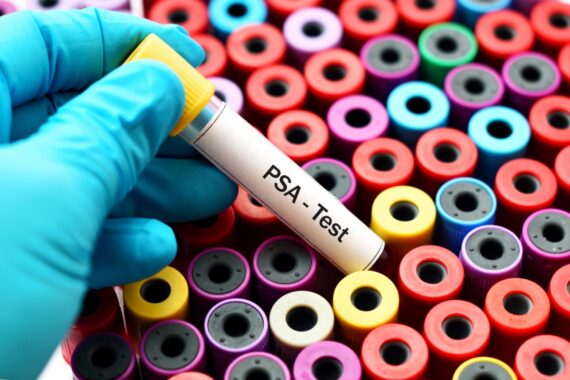


PSA-based population screening results in a reduction in deaths due to prostate cancer by approximately 13%, a long-term analysis of a large European study has reported.
Analysis of data across 23 years from more than 162,000 men aged 55 to 69 years found 12 diagnoses and one death from prostate cancer was prevented for every 456 men screened.
Some experts said it was the best evidence yet to make the case for a UK screening programme, but others countered the problem of overdiagnosis remained a key issue.
Writing in the New England Journal of Medicine, researchers leading the European Randomized Study of Screening for Prostate Cancer said the figures showed more deaths were prevented by screening than had been reported after 16 years.
They concluded that ‘future screening strategies should adopt risk-based approaches to minimise overdiagnosis while maintaining clinical benefits’.
It comes amidst heightened speculation over updated recommendations from the National Screening Committee (NSC) expected later this year.
NSC members have been looking at modelling of a range of options, including a more targeted approach, but The Times had reported that they are expected to conclude that the harms still outweigh the modest benefits.
The NSC said it had come under increased pressure in recent months to reconsider PSA testing policy, particularly after Sir Chris Hoy’s announcement that he had been diagnosed with terminal cancer.
Experts expect that the £42m TRANSFORM trial launched last year to test different screening approaches including genetic testing, fast MRI scans and PSA, will provide more clear answers but results will not be available for a couple of years.
Commenting on the latest study, Professor Derek Rosario, consultant urological surgeon and clinical advisor to the UK NSC, explained that if PSA screening had been introduced in the UK two decades ago, instead of having 12,000 men a year dying of prostate cancer the figure would be 10,400.
For every death prevented it would mean diagnosing and treating 18,000 men, he added.
He said: ‘This is clear evidence of benefit, but perhaps not as much as we might have anticipated. It is important to note that alongside this, there was no discernible difference in the overall all-cause mortality, i.e, approximately 50% of men died in each arm, whether screened or not.
‘The challenge therefore is how to improve on the reduction in deaths whilst at the same time reducing the number of men being unnecessarily treated.
‘Newer technologies such as MRI might well reduce the harms done, but we do not have any outcome data yet to show that they actually can replicate the reduction in mortality, let alone improve on it.’
Mr Veeru Kasivisvanathan, associate professor of urology at University College London, said the updated figures showed an improved risk-benefit balance but overall the results are broadly consistent with their previous reports.
He said: ‘The magnitude of benefit in reduction of cancer-specific mortality is now similar to the benefit seen from established colon cancer screening programs and near to the benefit seen from breast cancer screening programmes.’
But he added the major drawback of their screening approach, as acknowledged by the researchers, includes the substantial overdiagnosis of many prostate cancers that may not have offered benefit to patients.
Mr Kasivisvanathan added: ‘Many of the cancers found may not have benefitted from treatment, but patients would have been subjected to treatments and treatment-related side effects, which can include life-changing effects such as erectile dysfunction.
‘Further, there are substantial organisational and resource implications for setting up and maintaining an organised screening programme to make it feasible, which would need to be considered but are not the subject of this paper.’
Professor Nick James, professor of prostate and bladder cancer research at The Institute of Cancer Research, London, said the latest analysis further strengthens the evidence base in favour of PSA-based prostate cancer screening with numbers needed to treat in line with other diseases.
He said: ‘The well-known harms of screening, of over diagnosis and over treatment, can be substantially mitigated with technologies such as MRI pre-biopsy and for monitoring.
‘The side effects of treatment, such as incontinence, are substantially less with modern surgery and radiotherapy than the rates documented in the trial, further strengthening the case for screening.’
Visit Pulse Reference for details on 140 symptoms, including easily searchable symptoms and categories, offering you a free platform to check symptoms and receive potential diagnoses during consultations.