

Burnham sets out plans to devolve power outside London
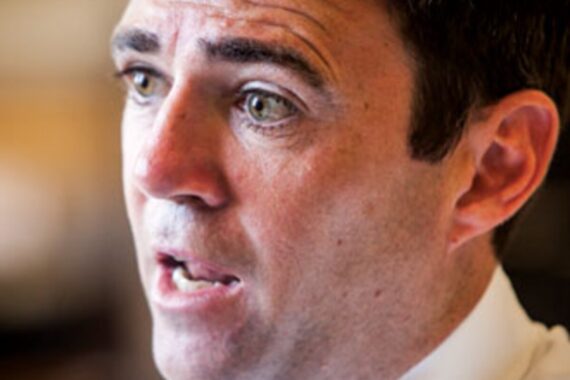


The Labour leadership frontrunner has set out plans for devolution of power to local areas, as part of a 10-year ‘mission to raise living standards’ across the country.
Andy Burnam said that the plans ‘will bring about the biggest rebalancing of power our country has seen’, with devolved powers for local areas and a ‘Number 10 in the North’.
Mr Burnham, who has overseen devolved health in Manchester whilst serving as mayor, but is also a former health secretary and shadow health secretary, confirmed last week that he will put himself forward for leadership after Sir Keir Starmer resigned.
In his first speech since winning the Makerfield by-election and becoming an MP, he said that the change will bring ‘good growth in every postcode’ and will be driven through the Prime Minister’s office in ‘an extended operation’ based in Manchester – Number 10 North, which he said would be the ‘nerve centre of a rewired Britain’.
The plans were light on details of what this would mean for the NHS, but Mr Burnham linked good housing to a ‘sustainable’ health service.
During the speech in Manchester today, he said: ‘The days of Whitehall fighting the devolution power into the regions and nations are over for good.
‘I have had 10 years of fighting the Whitehall machine, blocking this place’s progress, the progress of people here, and I am simply not prepared to accept the same for any area coming after Greater Manchester.
‘The whole of Whitehall will now be required to get behind our places and work together with them to make quicker, more joined up decisions.
‘Ours will be a 10-year mission to raise living standards across the land. To do this, Number 10 North will support the regions on three clear tasks: reform of essential utilities, reindustrialisation and the regeneration of places.’
He added that Britain’s housing crisis is having ‘a ruinous impact on its public finances’, so working with local areas, Number 10 North will oversee ‘the biggest council house building programme since the post war period’, using vacant public land to reduce costs.
He said: ‘If you don’t give people a good home, what chance have they got of having a good life?
‘What chance of making the health service sustainable if people are not living in good accommodation or getting a good education for kids? Everything starts with a good home, and this country finally has to put that at the top of its priority.’
Should no other candidate put their name forward for the leadership contest, Mr Burnham will become leader of the party on 17 July and Prime Minister on 20 July.
Last week, former health secretary Wes Streeting, who had been touted as a potential contender in the leadership contest, backed Mr Burnham as the next leader of the Labour party.
Mr Burnham already ran for Labour leadership in 2015, when he was shadow health secretary, losing to Jeremy Corbyn.
He was a key member of the Labour election bid at the time, emphasising the party’s plans to repeal the Health and Social Care Act and stop what he saw as the creeping privatisation of the health service.
As shadow health secretary he also proposed to re-introduce 48-hour guaranteed GP appointments for patients.
Related Articles

READERS' COMMENTS [1]
Please note, only GPs are permitted to add comments to articles






Burnham? He ‘s just a very Naughty Boy, as something like Monty Python once said in a film. Once he’s back in the Parliament system, as say in a Cabinet, will anything really change? We’ll probably still have huge Excess Deaths figures in hospitals ( far outstripping USA Excess Deaths for instance) and nobody seems concerned about the death rate arising from long delays in A and E and the undignified so-called ‘Corridor Care’: that’s the real Emergency. Also, excess deaths can be, every week in the NHS, ten times greater, yes 10X greater, than your chances of dying from the recent heatwave (and yet the heatwave recently, appears to have created much more of a stir); so, will Andy Burnham be just a Naughty (useless) Boy? (and yet so topical, and fancying himself as a Prime Minister): he’s supposed to be more of a Communicator than Starmer, but it’s action as well as communication, that’s needed, to make some serious improvement to NHS excess deaths and corridor care when we obviously don’t have enough beds, hospitals, and workers. Can Naughty Boy fix an NHS tragedy? Build up Britain and hospitals (GPs will then be able to do more for our patients)