

GP appointed to NHS England board will ‘help shape neighbourhood health’
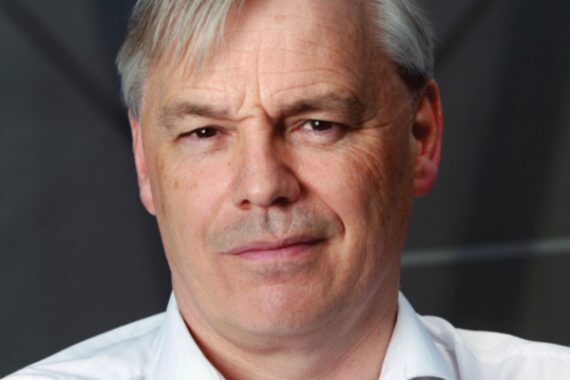


A well-known GP, who is currently honorary vice president of the BMA, has been appointed as a non-executive director on NHS England’s board.
Professor Sir Sam Everington, a GP in East London and former BMA chair, as well as clinical lead at Tower Hamlets CCG, joined the board on 1 August, the Government announced yesterday.
He told Pulse he is ‘passionate’ about the Government’s ambition to shift more care into the community and that he hopes to help shape neighbourhood health as part of this role.
Speaking to Pulse in March, Sir Sam welcomed the planned scrapping of NHS England in the wider context of what he perceived as the Labour Government’s focus on primary care as ‘the solution’.
The appointments, which will run until 2027 or until NHS England is abolished, require a time commitment of two-to-three days per month and are remunerated at a rate of £7,883 per year.
Sir Sam, who trained as a barrister before becoming a GP, has practised at the Bromley By Bow Centre in East London since 1989 and has previously been a national adviser for NHS England. He is also a champion of GP social prescribing and a member of the RCGP council.
In 1999 he received an OBE for services to inner city primary care and in 2015 a Knighthood for services to primary care.
The Bromley By Bow Centre has over 100 projects under its roof ranging from art and garden therapy to financial and jobs advice.
Sir Sam told Pulse: ‘I’m passionate about good quality care and social prescribing, and neighbourhood schemes. We in Tower Hamlets have been doing social prescribing for many years and virtual wards, a whole raft of things that really fit in with the neighbourhood health project.
‘I think we are a good example of what neighbourhood health can be – which is holistic care for patients beyond the biomedical, actually supporting them with employment, or further education.
‘Neighbourhood health will be very different in different settings, I suspect, because it will depend very much on the local community and the needs and the resources available – but that’s what makes it very exciting. The aim to shift more care out of hospital and into the community presents a lot of opportunities.’
The chair of pathology services provider Synnovis Dr David Bennett was also appointed as non-executive director at the same time. The company was the ‘victim of a high-profile ransomware cyber attack’ last year which disrupted its pathology services and caused 1,700 elective procedures and over 10,000 outpatient appointments in south east London to be postponed.
However Dr Bennett also worked for Prime Minister Tony Blair as head of the Number 10 policy unit and the Prime Minister’s strategy unit in 2005, to drive the public sector reform agenda begun earlier in the Government’s tenure, with a focus on healthcare.
In addition to Synnovis, he has chaired a number of healthcare businesses providing services to the NHS, including private provider Virgin Healthcare.
Healthwatch England chief executive Louise Ansari, who is also a former non-executive director at Sussex ICB; Paul Corrigan, former health policy adviser to then Prime Minister Tony Blair; and Ravi Gurumurthy, the chief executive of Nesta and a governor at the Health Foundation, were also appointed to the board.
The appointments come after the Government revealed that the first step in the abolition of NHS England will be to combine the headquarters of the NHS and the Department of Health and Social Care, with integration of teams beginning ‘in the coming months’, and the process of abolishing NHS England ‘will be complete within the next two years’.
It will also abolish 201 NHS organisations, bodies and entities, including Healthwatch England, Health Services Safety Investigations Body and the National Guardian’s Office and also close Commissioning Support Units, set up as part of the 2012 Lansley reforms, as well as Integrated Care Partnerships.
Related Articles

READERS' COMMENTS [4]
Please note, only GPs are permitted to add comments to articles







Sorry, but an NHSE NED, happy to watch General Practice in SEL – the thin end of the wedge – be taken over by Trusts, is neither “GP-led” Neighborhood Health, nor a recipe for care closer to home; the specious future of which appears to be Chatbot-care, remote care, and the odd peripatetic KPMG van staffed by PAs. I’ve experienced care quietly falling apart as a GP and as a patient and, believe me, it’s falling further apart. We are developing industry-centred care, not patient-centred or GP centred.
Roll on, McKinsey.
Has Sir Sam yet made the link that Bennett, Kibasi, Roberts, and Dash are all McKinsey and are not only responsible for the long-game drift into a US-driven ACO capture of the NHS, but are also incumbents leading it?
As CEO of Monitor/TDA/TSA under Cameron, Hunt, and Ali Parsa’s Hinchingbrooke project, David Bennett helped in large part to drive NHS Trusts into deficit, whilst also investimg and involving himself personally in billion-dollar private sector deals.
Why does no-one ask why a director at NHS England is allowed to directly benefit from being Chair of Viapath pathology services, thereby also receiving NHS funding. The blinding of such egregious conflicts of interest is deeply, deeply, worrying. However, in the McKinsey business, it’s de rigeur : Bennett as corporate mogul, NHS regulator, and policy decision maker.
Bennett et al have shown not the slightest attention to the inexorable demise of the NHS, except as a key figure as an architect of its demise. The deafened call to save emergency care and general practice.
No amount of platitudes vaunting ‘care closer to home’ etc replaces what is urgently required for patients to mitigate the wholesale loss of adequate and acceptable NHS function.
McKinsey would have you believe that technology and AI will save the NHS, that sticky fingers in Viapath is wholesome, and that the plan is working. The cognitive dissonance of our ‘leaders’ who have indulged this 25yr spin, whilst only benefiting the industry itself are either useful idiots or complicit.
NHS senior management has become a charade. How does Sir Sam feel about being run by McKinsey?
….and he works in London!!??
As usual, all very agreeable comments by Nick Mann.
I once admired Sir Sam’s gutsy approach to the Establishment – so all I’d caution is that he may think he’s entering the House of Prayer(‘s for the success of general practice) But Beware it may be a Den of Thieves…
Perhaps, the ivory tower isn’t entirely clueless. Perhaps…But expertise doesn’t erase conflicts of interest or the fact that austerity, not just management, gutted resources. There is a disconnect and no amount of PowerPoint slides from McKinsey can replace the GP who knows their patients’ names.
I have decades of countless patient interactions and it seems to me that the ivory tower misses the human cost. When trusts take over GP practices or push remote care, it’s not just “efficiency”; it’s patients losing their trusted doctor, or elderly folks struggling with apps. Push for transparency (e.g., public scrutiny of conflicts like Bennett’s), advocate for GP-led models, and keep calling out the gap between rhetoric and reality. The ivory tower needs to hear from the wards, surgeries, and clinics. If they’re serious about “care closer to home,” they’d fund GPs properly, not outsource strategy to firms with their own agendas.