Grassroots GPs urge new administration to prioritise family doctor model
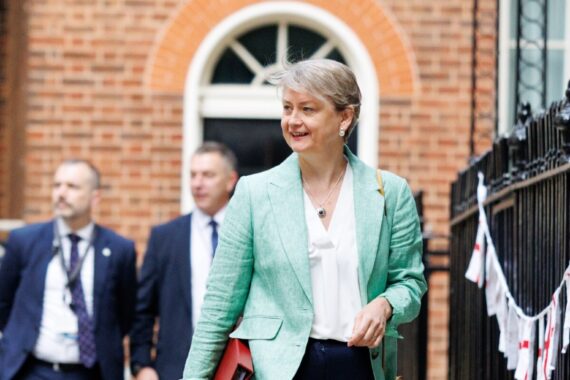


Making GP practices ‘the foundation of neighbourhood health’ and ‘rebuilding the family doctor model’ should be main priorities for the new health secretary, grassroots GPs have said.
GP campaigning group Rebuild General Practice and the Doctors’ Association UK, a non-profit campaigning organisation led by frontline doctors including GPs, both set out priorities for the new administration and Yvette Cooper specifically in her new role.
On Monday, Number 10 confirmed that the former foreign secretary and MP for Pontefract, Castleford and Knottingley will serve as health secretary in the new administration.
Following Ms Cooper’s appointment, the Government also confirmed new ministerial appointments to the Department of Health and Social Care:
- Dame Diana Johnson as minister of state
- Alison McGovern as minister of state
- James Frith as parliamentary under-secretary of state
- Karin Smyth will remain as minister of state
However, DHSC has not yet confirmed who will take on the primary care brief after former primary care minister Stephen Kinnock was appointed as Wales secretary.
Rebuild General Practice requested a meeting with the new health secretary in a letter seen by Pulse, and stressed that GPs are ‘ready to help deliver reform’ but that they must be ‘heard, trusted and given the resources and freedom to do so’.
The letter, which set out a list of priorities for the new administration (see box), said: ‘The Government’s ambition to move more care out of hospitals and closer to people’s homes is the right one.
‘But neighbourhood health will succeed only if it is built on strong, properly resourced local general practice.
‘GP surgeries are already rooted in every neighbourhood, understand the populations they serve and provide the continuity that is particularly important for older people and those with complex or long-term conditions.’
Similarly, DAUK said that the new administration should commit to ‘properly fund’ general practice to provide timely access, continuity and safe clinical decision making, and pause ‘unfunded or unsafe’ access requirements until they have been ‘independently safety tested and properly resourced’.
They also said that the Government should set national standards so that patients urgently referred by a GP, and patients with undifferentiated symptoms in hospital, are assessed by a doctor or have discharge approved by one.
With GPs in dispute with Government and pressures across the system, it is important that the new health secretary ‘understands the challenges ahead’, the DAUK said.
Dr Matt Kneale, DAUK co-chair, said: ‘These are practical, deliverable reforms that would improve patient safety, retain skilled clinicians and demonstrate that the Government is listening to those delivering care every day.
‘We would welcome an early meeting with you and your team to discuss how frontline clinicians can help shape and deliver this programme.’
Pulse has contacted DHSC for comment.
Pulse has looked at the CV of the new health secretary to see what her appointment could mean for general practice.
The demands in full
Rebuild General Practice are asking the health secretary to prioritise these actions:
- Make local GP practices the foundation of neighbourhood health, with the funding, workforce and premises needed to lead care in their communities, protecting the family doctor model and making continuity of care a central measure of NHS reform.
- Put rebuilding general practice at the heart of the revised NHS Long Term Workforce Plan, addressing both workforce shortages and the inability of practices to employ available doctors.
- Deliver on the Labour Party’s manifesto commitment to ‘shift resources to primary care and community services’, bringing forward new investment in core services, staff and surgery buildings.
- Protect patient confidentiality during NHS modernisation, with meaningful consent, clear accountability and robust safeguards governing access to sensitive health information. After all, recent commitments from the new Prime Minister have underscored the importance of ensuring that health data is handled safely, transparently and in ways that give patients confidence that their information is protected.
DAUK has asked Ms Cooper and new Prime Minister Andy Burnham to make five commitments to healthcare:
- End the medical training bottleneck. Publish specialty by specialty training numbers, fund a credible expansion to meet medical school output and NHS need, and guarantee fair progression for doctors already serving the NHS, including SAS doctors and locally employed doctors.
- Guarantee doctor-led assessment where it matters most. Set national standards so that patients urgently referred by a GP, and patients with undifferentiated symptoms in hospital, are assessed by a doctor or have discharge approved by one. Non-doctor roles should complement doctors, never replace medical assessment.
- Rebuild the family doctor model. Properly fund general practice to provide timely access, continuity and safe clinical decision making. Pause unfunded or unsafe access requirements until they have been independently safety tested and properly resourced.
- Restore fair and independent medical regulation. Remove the GMC’s separate power to appeal decisions of its own tribunal, protect the independence of the MPTS and ensure independent oversight sits with the Professional Standards Authority. A regulator cannot credibly be investigator, prosecutor and appellant.
- Treat the climate and nature crisis as an urgent health crisis, ensuring health infrastructure is adapted to be safe in extreme heat by introducing enforceable maximum safe temperatures for healthcare facilities, delivering a public awareness campaign on the relationship between climate change and health, and supporting an accelerated program of decarbonisation and nature restoration for health.