

Health secretary urges GPs not to take collective action
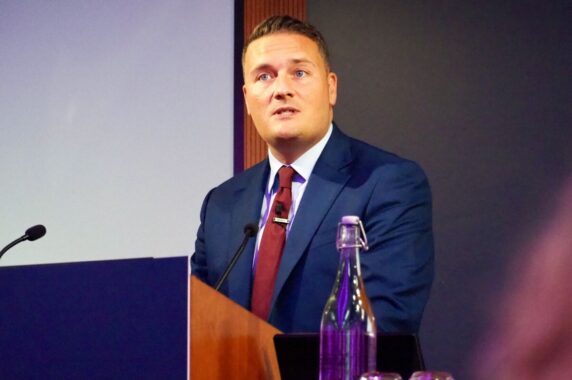


Health secretary Wes Streeting has written to the BMA’s GP Committee England, urging them not to go ahead with threats of collective action.
In the letter, sent this morning, Mr Streeting said the Government ‘remain committed to working constructively and collaboratively to reform the GMS contract’.
A referendum of BMA’s English GP members concluded yesterday with 98.9% voting to ‘reject’ 2026/27 contract changes ‘and its approach to making them’, and to ‘call upon the Government to return to direct negotiations with GPCE to jointly develop a new GMS contract’.
GPC England is meeting today to decide on next steps, which it had previously said could include collective action starting as early as 1 April.
The health secretary’s letter, addressed to GPCE chair Dr Katie Bramall, marked a significant shift in tone from the end of last year, when the two parties accused each other of being ‘liars’ and negotiations over contractual terms broke down.
Mr Streeting said: ‘I am under no illusions about the challenges we face but, ahead of your committee meeting, I wanted to write formally in response to your proposed approach to joint working, which I welcome.
‘As we look ahead to the 2027/28 contract and longer-term reforms, I want to reassure you and your members of the GPCE’s prominent role as the primary partner in the process to reform the GMS contract. You will remain the sole party for the financial elements of the contract and matters related to remuneration will be discussed bilaterally with GPCE.’
He went on to say that his officials would be touch to organise for ‘scoping talks’ aiming to begin ‘in April post Easter recess’, with the focus of agreeing ‘principles, scope and timeline’.
‘I recognise the important role of your committee and suggest a period of bilateral negotiations before consulting with wider stakeholders. We are in broad agreement with the timeline set out by GPCE and I am keen to make inroads quickly on GMS reform.’
In the letter, which followed a meeting with the GPCE’s executive last week, Mr Streeting also suggested its goals ‘chime with what this Government wants to see for the future of general practice’ and he urged Dr Bramall to see that they have ‘common aims on the outcome for this process’.
But he went on to say the promised talks would become ‘difficult’, should the GPCE decide on the route of collective action.
‘While it would be difficult to undertake such a process in the event of collective action, I am hopeful that such action can be averted and that we can have productive talks,’ Mr Streeting wrote.
The BMA’s GP Committee is expected to vote on whether or not to enter collective action in today’s GPCE meeting, with wordings of a motion being subject to debate.
Mr Streeting’s letter further revealed that he is expecting to ‘shortly be receiving independent advice from the NIHR on options to reform the Carr-Hill formula’. He had recently said the amendments could come into force by April 2027.
And he also said that the Government is planning to ‘consult publicly’ on ‘ow multi-neighbourhood providers (MNP), single neighbourhood providers (SNPs), General Medical Services (GMS) and the Primary Care Network Directed Enhanced Service (PCN DES) will work together, including how primary care networks might evolve into SNPs’.
He moved to ensure Dr Bramall that GPCE ‘will have an important part to play here too’. And he concluded the letter by stressing that the Government ‘wants to work constructively with the profession in genuine partnership’.
‘Given our common aims and interests, I’m confident that we can work together so that the spirit of our partnership reflects our shared goals.’
The BMA recently urged local GP leaders not to wait for national guidance and set in place written plans for how they wish to lead neighbourhood health. However, in the meantime, the Government opened up for hospitals to take on GP practices premises and contracts.
Related Articles

READERS' COMMENTS [5]
Please note, only GPs are permitted to add comments to articles






“The Government ‘wants to work constructively with the profession in genuine partnership” BUT unilaterally imposes an unworkable contract.
Yeah, OK Wes.
Wouldn’t worry Wes.
Vast majority of GPs couldn’t be bothered to vote.
“Collective action” about as threatening as Ken Dodd with his tickling stick.
Since the last round of Colelctive action, the Government has taken an axe to ICBs. In typical NHS fashion, the chop has fallen disproportionately on the most competent in the Primary Care teams that manage the day-to-day functioning and understand the mechanics of contracting and commissioning.
Without these people, further rounds of Collective Action will expose the soft underbelly of the NHS and all its commissioning gaps. It will be chaos. The people inside the M25 will (as usual) be the last realise this though.
Recent statements from government suggest a desire for “partnership” with general practice, yet the actions taken so far paint a very different picture. While the language of collaboration is repeatedly emphasised, the pattern remains familiar: decisions are made centrally, imposed unilaterally, and only afterwards presented as part of a consultation process.
This approach understandably leads many GPs to feel that the direction of primary care reform is being driven by a pre‑determined agenda — one that prioritises structural change over the immediate, critical needs of the GP workforce and the sustainability of practices.
If there were genuine commitment to rebuilding general practice, the priorities would be clear and unambiguous:
Increase the number of fully trained GPs
Primary care cannot be stabilised without expanding the workforce. Recruitment promises are meaningless without retention, and retention is impossible without safe workload, fair remuneration, and supportive working conditions.
Provide adequate, long‑term funding
Practices are being asked to deliver ever‑increasing volumes of care with real‑terms funding that has been eroded for over a decade. Sustainable primary care requires investment that matches the scale of demand, not short‑term redistributions or formula tweaks that create winners and losers.
Allow GPs meaningful governance and control over neighbourhood‑level care
If multi‑neighbourhood providers (MNPs), single neighbourhood providers (SNPs), or any restructured model is meant to work, GPs must not be sidelined. Giving general practice a genuine leadership role, backed by a stable 10‑year contract for MMP/MNP/SNP structures, would demonstrate real trust and create the foundation for continuity, accountability, and innovation.
Until these core issues are addressed, many in the profession will understandably view government messaging as inconsistent with the lived reality of general practice. Calls to avoid collective action ring hollow when the contractual environment remains unstable, the workload unsafe, and the workforce depleted.
If reform is truly intended to be collaborative, the first step is simple: listen to GPs, address the fundamentals, and act accordingly.
the problem is that there is now no point in negotiating with the government as our contract is now being negotiated with patient voices, the RCGP and the NHS confederation. They now all need to be there for general practice to be heard. I don’t want a situation whereby we say something to government and we are then subsequently countermanded. the key stake holders now need to be present and take responsibility for what happens subsequently. Unfortunately we now live in a world where negotiation becomes meaningless unless followed up by action. we are also at a point where there is low trust between negotiating partners. Dave – 55% came out. 98% said no – I agree but the profession has spoken and we are thankful as this has allowed us to be at the table.