

GPs incur no tax increases in Autumn Budget
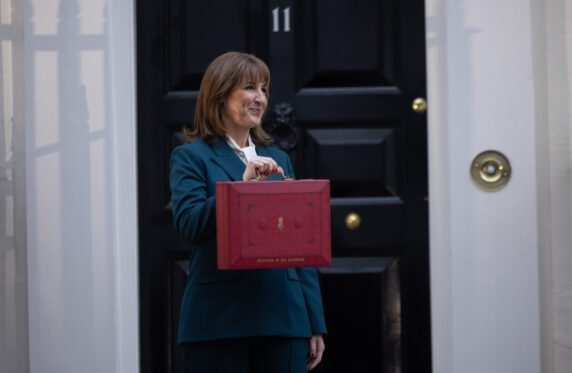


The Government will not be increasing the headline rates of income tax and National Insurance contributions, the chancellor has announced in the Autumn Budget today.
In the months leading to the Budget, there were rumours that chancellor Rachel Reeves was considering a 2p rise in income tax, which experts warned could leave most GPs worse off overall.
The Treasury had reportedly also been considering new tax on limited liability partnerships (LLPs), which caused uncertainty for GPs as reports in the national media suggested that this would represent a ‘tax raid on GPs’ or that the tax rise would ‘target GPs’ specifically.
But in her speech in the House of Commons today, Ms Reeves confirmed there will be no increases in national insurance or income tax, nor a tax on LLPs.
The chancellor said: ‘Today, I can confirm that I will not be increasing national insurance, the basic higher or additional rates of income tax or VAT.
‘I have kept everyone’s contributions as low as possible through reforms to make our tax systems stronger, closing loopholes, ensuring that the wealthiest pay their share, and building a tax system that is fairer for the future as our economy changes.’
The Government will maintain income tax thresholds and the equivalent NICs thresholds for employees and self-employed individuals at their current levels for a further three years from April 2028 to April 2031.
The budget documents released today said: ‘The Government is asking everyone to contribute to support economic stability and protect public services. However, the government is not increasing the headline rates of income tax, National Insurance contributions (NICs) or VAT.’
However, GP practices’ pay bills will increase again as the National Minimum Wage and the National Living Wage will go up from April.
This will see a full-time worker on the National Living Wage getting an increase in pay of £900 a year, while someone on the National Minimum Wage will see a £1,500 increase.
And GP accountants have previously told Pulse that the rise needed to be accompanied by funding increases for GP practices to cover the increased costs.
Alec Collie, head of medical at specialist financial services mutual Wesleyan, said: ‘Doctors will be relieved to see no rise in the income tax rate. However, a further freeze on thresholds is a stealth tax that’s quietly reducing take-home pay, and adds to the feeling that this is a tax system that is stacked against medics trying their hardest for their patients.
‘Medics – in both hospitals and on GP tracks – lose their child benefit rights as early as 27 years of age due to the child benefit charge, and are very quickly drawn into the 60% tax trap. This means they face the prospect of taking on extra hours and responsibility, but only being paid for a fraction of their additional work.
‘For GP partners, the overall pressure is made worse by ever-rising practice costs. Against this backdrop, GPs at the start of their career will be forgiven for wondering what incentive there is at all to pursue partnership.
‘This is pressure that risks deepening recruitment and retention challenges at a time when our health system needs stability most.’
The Treasury said its Autumn Budget has also earmarked £300m for investment into digital technology for automating work like administrative tasks – to ‘improve productivity’ and give staff ‘more time to care’.
The chancellor also confirmed the commitment to opening more than 100 new neighbourhood health centre sites by 2030, with funding to include private finance – although she did not provide specific funding details.
The Government had previously reaffirmed it will explore private finance to fund neighbourhood health centres, trialling ‘construction delivered by a dynamic new approach’ between the public and private sector.
The King’s Fund chief executive Sarah Woolnough said: ‘The use of public private partnerships at a large scale in the NHS should be treated with caution given the repeated challenges previously.
‘Ministers must prove they have learnt from the mistakes of schemes like PFIs by implementing appropriate checks and balances to design schemes more carefully to ensure value for money.
‘Delivering neighbourhood health requires more than new or upgraded buildings. So that care is delivered in these new ways, rather than simply shifting old models out of hospital to community facilities, we need to expand diagnostic capacity, improve digital infrastructure and build a truly sustainable workforce.
‘And a drive for improved coordination of healthcare, including with social care, which was notably absent from the chancellor’s remarks, will be necessary to improve the experience for many patients.’
Related Articles

READERS' COMMENTS [1]
Please note, only GPs are permitted to add comments to articles







I’m not quite so sure about this one Anna.
This page presents itself to me as item 5 in a list of recent news.
Item 4 in that list is the annoucemement that GP’s are having to pay more, of a kind of tax, from the budget, viz :
“https://www.pulsetoday.co.uk/news/practice-personal-finance/gp-practices-pay-bills-to-increase-again-as-minimum-wage-to-rise-from-april/”