

Poor representation of working class people in doctor profession persists
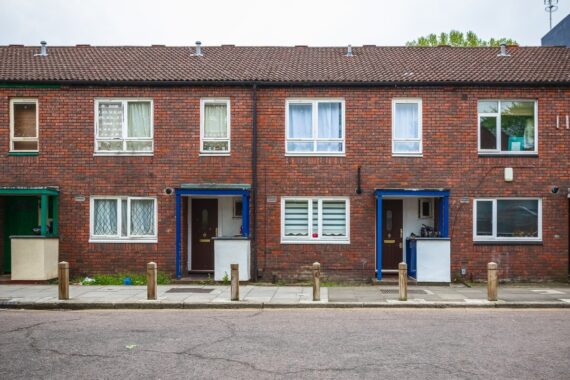


People coming from families with a ‘professional background’ are six times more likely to become a doctor than those from a working class background, according to a new study on social mobility.
Researchers from King’s College London used 10 years of data from the ONS Labour Force Survey of 358,934 respondents including 2,772 who were doctors.
Analysis of the data showed 1.6% of survey respondents from a professional background were doctors compared to 0.3% of those from working class backgrounds and 0.5% from ‘intermediate’ backgrounds.
The report concluded: ‘Doctors from professional backgrounds are highly overrepresented within medicine, in particular those coming from households where the main earner was also a doctor, resulting in a workforce of doctors that is highly unrepresentative of the general population in terms of socioeconomic background and occupation.’
The proportion of surveyed doctors from professional backgrounds was more than double the overall rate (69% compared to 32%), while the number of working-class doctors was significantly lower than overall (13% vs 43%).
The survey captured information on a respondent’s household composition, main wage earner, their occupation when the respondent was 14, and the respondent’s own current occupation.
Respondents whose main earner worked as a cleaner, home carer, security guard, fork-lift truck, taxi, or bus driver, or in a warehouse were among the least likely to be doctors, with adjusted average probabilities of doing so only around 1-in-500 to 1-in-1,500.
The study also explored how social mobility in the profession has changed over time, observing the prevalence of class groups among doctors according to the year they turned 18.
This analysis ‘suggested socioeconomic inequalities remained highly stable’ between the 1960s and 2000s, ‘followed by weak evidence of increasing socioeconomic inequalities between 2010 and 2018’.
The report argued greater efforts were needed to boost social mobility of medical school applicants.
It said: ‘More affluent doctors may be more susceptible to the implicit bias against less affluent patients that has been previously observed.
‘This is particularly pertinent given the growing focus on holistic care that takes into account social and economic circumstances that impact health, echoing earlier reports by less privileged groups on what makes a good GP consultation … If this hypothesis is true, increasing the number of less privileged doctors as well as giving further training to current doctors may lead to improved care.’
The previous Government’s long-term NHS workforce plan, published in 2023, highlighted creating a workforce ‘representative of the communities we serve’ as an aim.
It called on ICBs to work with ‘system partners to maximise how the NHS works as an anchor institution to expand access routes into training in the NHS’.
The BMA’s ‘Fix our Funding’ campaign advocates for medical students to retain their entitlement to full student finance maintenance funding throughout their years of study.
Henry Budden and Dr Sophie Mitchell, deputy co-chairs (finance) of the BMA’s medical students’ committee, said: ‘Graduates are leaving university with tens of thousands of pounds of debt and despite this they’d rather see their student loan increased than be left with so much less in their final year.
‘This situation isn’t sustainable and does nothing to help those from poorer backgrounds or improve participation in medicine.
‘Medicine is longer than many other degrees for good reason; because we want to ensure doctors working in the NHS have the best possible training. It is only right then that they should receive the appropriate funding to see them through the entirety of their course.’
Related Articles

READERS' COMMENTS [6]
Please note, only GPs are permitted to add comments to articles







I did medicine in the day of grants.
I could not have in the current world.
Want working class doctors?
You need to pay for their training.
Majority of registered UK doctors non-white, despite 82% of the population identifying as white; poor representation of white people in the profession.
Majority of medical students are female; poor representation of male people in training.
We can have all sorts of fun and games with identity politics.
1) We need to not focus too much on the cost of medical training as the barrier which stops the working classes studying medicine. We need to look at all the factors which result in poor social mobility in this country. Even the term ‘working class’ is outdated and misleading. What about the lower class?
2) to belittle this article on a statistical basis shows how little understanding the population has of this important issue. It should be front page on every national newspaper. Perhaps if the doctor population was more well represented by other socioeconomic classes we would have more doctors that actually cared about having a job and being a pillar of society than the current crop who whinge about being overworked and underpaid.
It really helps if you have medical parents
Universities will often let students simply flounder and go and do it yourself
Never mind working class
what about those smart kids whose parents are on long term benefits
Bring back grants
In the current gp unemployment crisis
your kids will get less support
and the support gets less for second third kids
They assume that as a professional you can help your kids
so they get less and less
sometimes you may not be in the privileged position of helping
even though things may look good on paper
so kids of professionals have to work harder to make ends meet
Medical professional parents can also help guide along
post graduate goals and aspirations
People from a lower socioeconomic background are underrepresented in other professions too, not just medicine. I don’t think the cost of medical education is the main issue, and is more likely related to lower expectations, lack of opportunities, and poverty at an early age. Poverty has a significant impact on cognitive development. This has nothing to do with genetics, but is due to social and environmental factors including poor nutrition, reduction in educational opportunities, and reduced access to healthcare.
By the age of 10, there is a significant widening gap in cognitive development between socioeconomic groups, making it less likely for poorer children to attain the educational requirements for entry into medical school. Expectations will also vary from families, communities, and educators.
To really reduce inequality, and improve social mobility, the government needs to tackle child poverty at the earliest stages in life, to increase opportunities for both physical and mental nourishment.
The closure of libraries has also made pleasant, heated, well lit places to study, out of reach for many pupils of families living in poverty.