

Pressure on GPs to complete death certificate without knowing cause has increased
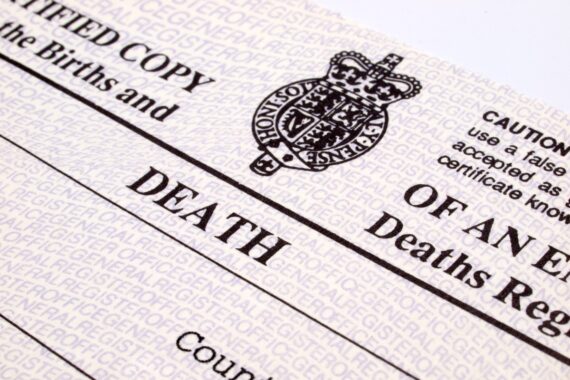


Exclusive More than one-third of GPs are under greater pressure to complete a death certificate when they are unsure of a patient’s cause of death, a Pulse survey has found.
Of 972 respondents, 37% said that pressure to fill out Medical Certificates of Cause of Death (MCCDs) despite not knowing why a patient died has significantly or slightly increased, since changes to the process were brought in last year.
Under the new system, GPs are required to engage with local medical examiners to agree death certificates for all non-coronial deaths. NHS England hailed the process as having ‘improved accuracy’ of recorded causes of death through greater scrutiny, after some areas trialled the process before its statutory implementation last September.
But GPs told Pulse of incidents where medical examiners have put pressure on them to state a specific cause of death they know or suspect is inaccurate. In other cases, medical examiners have questioned GPs’ hesitancy to propose a cause of death or sent forms back to practices with erroneous changes.
One GP said: ‘We frequently get emails back saying, “Are you really sure you can’t provide the cause of death?”’
Another described the system as ‘terrible’, causing ‘major issues with coroners’ officers and medical examiners bouncing patients back and forth’.
‘We had a patient where no GP was able to complete the cause of death because the last to see the patient was on maternity leave,’ the GP said. ‘The medical examiner told us to contact the coroner, but the coroner said this wasn’t needed and the medical examiner should write a cause of death.
‘By the end of the process it had been several weeks after the patient died.’
As a result, GPs are faced with additional unfunded workload and families are left in limbo, unable to register their loved one’s death or make funeral arrangements.
‘This is the worst thing ever for relatives, especially those from faith groups, like Muslims, as it is made a long-winded process,’ commented one respondent. ‘Having to wait to plan a funeral for three weeks is unacceptable in some cases.’
Commenting on Pulse’s survey findings, the RCGP said the issue of GPs feeling pressured to complete a death certificate without a clear cause ‘needs addressing urgently’.
Professor Kamila Hawthorne, the College’s chair, said: ‘When a patient passes away, GPs want to be able to support their families to the best of our abilities. Whilst as a College we are largely supportive of the new system for death registration, prior to its roll out we did express concerns about the potential challenges of the changes.
‘We are now seeing some of these concerns play out, and we are hearing reports that some families are facing delays in the death registration of their loved ones as a result.
‘We know many GP practices are finding ways to make the new system work, but what we need to see is clearer guidance on the respective roles and responsibilities of GPs and medical examiners to ensure the system can be implemented smoothly and compassionately.’
Some survey respondents also reported instances where medical examiners have refused requests for deaths to be referred to a coroner.
One GP said: ‘None of us had seen a patient for over seven years and I was asked to write they died of myocardial infarction. I refused and thought the patient should go for a postmortem, but this was declined.
‘It’s complete guesswork in some cases. It’s an unsafe shambles.’
Nick Grundy, a GP in southwest London, called the MCCD system ‘a disaster’ adding that often, medical examiners ‘fundamentally don’t know what they’re doing’.
‘Our experience of the MCCD system is that it’s largely protocol-driven, and although the people looking at the forms have been through training they are, perhaps understandably, nervous about taking decisions,’ he said.
‘What this means in practice is that entirely expected deaths in palliative care patients are being bounced around where they want repeated changes to forms for bureaucratic reasons.
‘These add nothing at all to the situation beyond letting them tick a few more boxes to say stuff has been filled in.’
However, earlier this year a London coroner accused GPs of holding up death certification because they ‘simply do not understand the medical examiner process’. He criticised GPs’ inability to determine a cause of death despite the ‘very low evidential threshold’ doctors must meet when suggesting one.
Fewer than 10% of respondents to the Pulse survey said the requirement to engage with medical examiners had decreased pressure to offer a cause of death when it wasn’t known, and around one-third said it has stayed the same.
A GP in Cornwall said the changes have in fact ‘improved confidence and consistency in certifying deaths’.
‘The new MCCD system has brought clarity and structure to the process, making it more streamlined and easier to navigate,’ he commented.
‘It supports clinicians in making informed decisions and helps ensure documentation is completed more efficiently and accurately.’
LLR LMC chief executive Dr Grant Ingram said that despite a few early teething problems he has seen few issues, but that England-wide, LMCs’ experience of the system is varied.
‘In LLR we have two very approachable senior coroners and we did a lot of work prior to the new system going live to make implementation as smooth as possible,’ he said.
‘The process was designed to try and reduce the number of people who have died of natural causes requiring an inquest. There should not be any ping-ponging.
‘Our Lead ME wrote to all MEs around December 2024 advising them that unless the cause of death given on the MCCD is incorrect to accept it rather than asking for minor amendments.’
He added that although the new system increases unfunded workload for GPs, relatives have welcomed the new process overall and that most comments have been complimentary.
A Department of Health and Social Care spokesperson said: ‘Last year’s reforms have enhanced patient safety and offered greater clarity to grieving families.
‘GPs were also responsible for filling in the medical certificate of cause of death before the reforms and should only certify the death if they feel able to do so. We have made this more flexible and have removed associated time limits.’
This survey was open between 2 July and 21 July 2025, collating responses using the SurveyMonkey tool. The survey was advertised to our readers via our website and email newsletter, with a prize draw for a £1,000 John Lewis voucher as an incentive to complete the survey. The survey was unweighted, and we do not claim this to be scientific – only a snapshot of the GP population.
Related Articles

READERS' COMMENTS [7]
Please note, only GPs are permitted to add comments to articles







Medical examiner system was unnecessary , pointless and expensive and as examples prove making a system that was working well begin to fail.
Why fix it ,if it ain’t broke?
I didn’t think GPs were asked to ‘suggest’ a COD for the MCCD, but required to provide factual statements !
It seems many places are working hard to make the new system work well, but some are not doing so well, some MEs and Coroners not understanding the old or new system, and some of the supposedly experienced doctors appointed as MEs lacking confidence and understanding of the processes.
It is NOT true that Moslems (or any other faith group) are discriminated against by delays :- delays are of no lesser distress to anybody of any faith at all. Pointless delays are unacceptable to everybody, regardless of faith. Stop picking out some faiths as needing special treatment, it could result in civil unrest.
It’s not ideal: does it really matter if RIP in Hospice from metastatic lung cancer & make change to add squamous cell?? Another had 96 S1 Dx and argued which one of 96 it should be. Finally reported one to Coroner, accepted my offer on a MCCD but ME didnt & wanted changed.
It would seem that legally, the General
Medical Practitioner retains the responsibility, and does not need the Medical Examiner’s agreement or assent to report a death to HM Coroner. So it seems to behove the Medical Examiner to be extra tactful! .
Since the ME gets to say whether the GP documentation is satisfactory, surely the responsibility should pass to them?
GP to give their opinion, ME to decide if it correct or not
ME to issue certificate, either saying what the GP said (with their own preferred wording) or saying something different.
As I have said before on this hot topic, and comments re medical examiner variability aside (ours have seemed good enough to me):
I’d love to be able to issue MCCD where I do not know the cause, if only I were allowed to say on it “Natural causes suspected, family don’t want a PM and nor do I believe PM will benefit anything other than satisfying the law that says everyone must have a cause of death stated.”
Everyone will die, and almost all will be natural, though ‘natural causes is not a permissible 1a. If the aim is to ensure reasons for death are accurately recorded for sake of national records, it makes a mockery of the whole process if such a system demands that – for the expediency of others – one person (GP) put their name to something specific but entirely unevidenced, and which they themselves do not know, nor believe to be more likely than any of a half dozen causes!
Coroners will keep needing to do PMs unless system is reformed to allow:
1) Coroner to provide MCCD without a postmortem (just as GPs are apparently expected by this coroner to do on the self same lack of proof!)
2) GP can state ‘Natural causes suspected, nobody wants a postmortem’ without reference to a specific 1a
3) GP can state several reasonably possible causes for 1a where they have no way of knowing which is more likely to have been the cause
Unless/until any of these things happen, I will continue to decline the invitation to supply a specific cause when I simply do not know the cause to be the likely cause and therefore cannot in good conscious state I ‘believe’ it to be so. And… I invariably find when these cases go to PM, the cause found is NOT the one coroners office euphemistically repeatedly told me the coroner and family would ‘support’ me to offer!