

‘Why approaching death doesn’t frighten me as a GP’
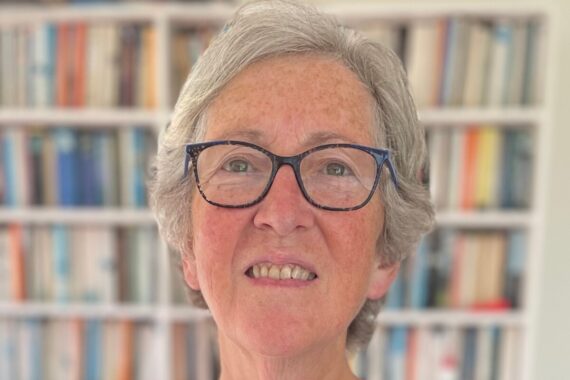


Dr Jill Millar, a retired GP living with terminal cancer, argues that we need to stop using euphemisms and start talking plainly about death
Two years ago, I was diagnosed with cancer. Initially the diagnosis was stage 4 endometrial cancer. I was told that it was incurable, but the consultant said he hoped that chemotherapy and surgery would give me a few years of good quality life. Six months later (following my first six cycles of chemotherapy and a hysterectomy), the diagnosis was changed to Fallopian tube cancer.
Shortly after that there were signs of further growth and I had second-line chemotherapy. Again, I had a brief reprieve but then recurrence, and third-line chemotherapy was ineffective. After discussion with the oncologist, we stopped treatment. There were no further options that were likely to make me feel better and to me, it felt as if quality of life was much more important than quantity.
It was obviously upsetting to get a diagnosis of incurable cancer – but I was not surprised as I already had symptoms suggesting that things were serious. It was more upsetting for my husband and family who will live on without me.
I was a GP for 30 years, retiring clinically at the end of 2014. My career took me pretty much from top to bottom of the country; I trained and started practicing in Newcastle, then moved to Devon in 1992. I held a variety of roles within that time. In Newcastle I joined a surgery as their first woman partner and got involved with teaching at the local medical school. After a few years, I began to feel constrained in the practice, so I applied to set up a new practice from scratch in Devon to ‘spread my wings’. It was in a housing estate on the edge of Newton Abbot, with a lot of social housing, poverty, unemployment, and multi-parent families. As the practice grew, I became a GP trainer, started teaching undergraduates and also became clinical governance lead in what was then the PCT and then set up GP appraisal in the area.
All that is to say; it has been a long, rewarding and varied career in general practice, which has really impacted how I have approached my diagnosis and death. I think having medical knowledge and experience has made the experience of dealing with terminal illness much easier for me. Although I have not worked in oncology and was not so familiar with the drugs used in chemotherapy, I could understand what was happening. I feel familiar with disease and dying and am not frightened of what must be ‘unknown’ to many people.
Death is going to happen to us all. In some ways I feel privileged to have a diagnosis of an incurable disease as it has given me time to prepare for death and see as much of my family and friends as possible. I feel many people are frightened to face the possibility of dying (even though it is an inevitability) and do not feel comfortable talking about it.
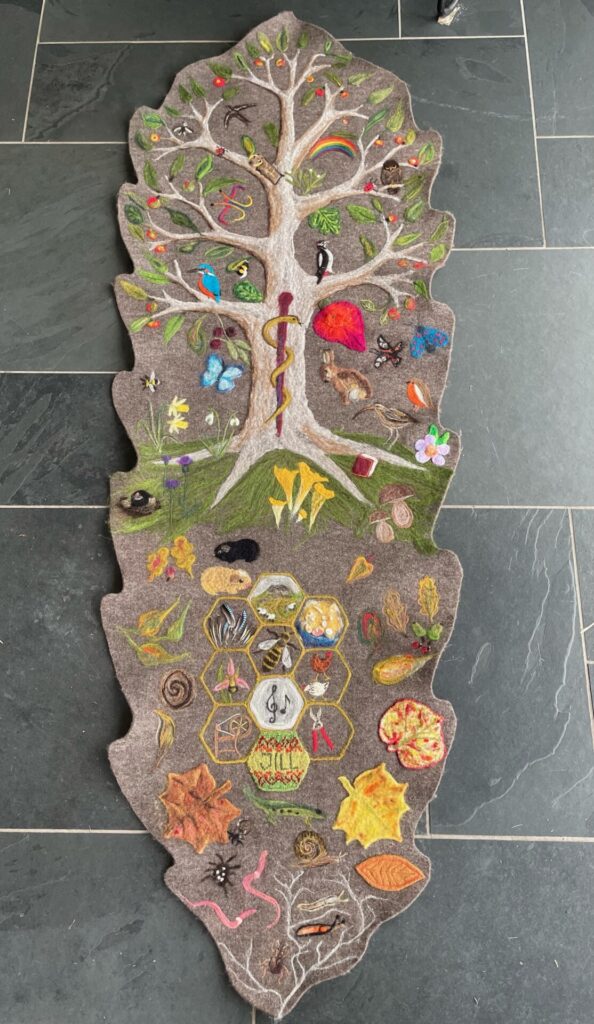
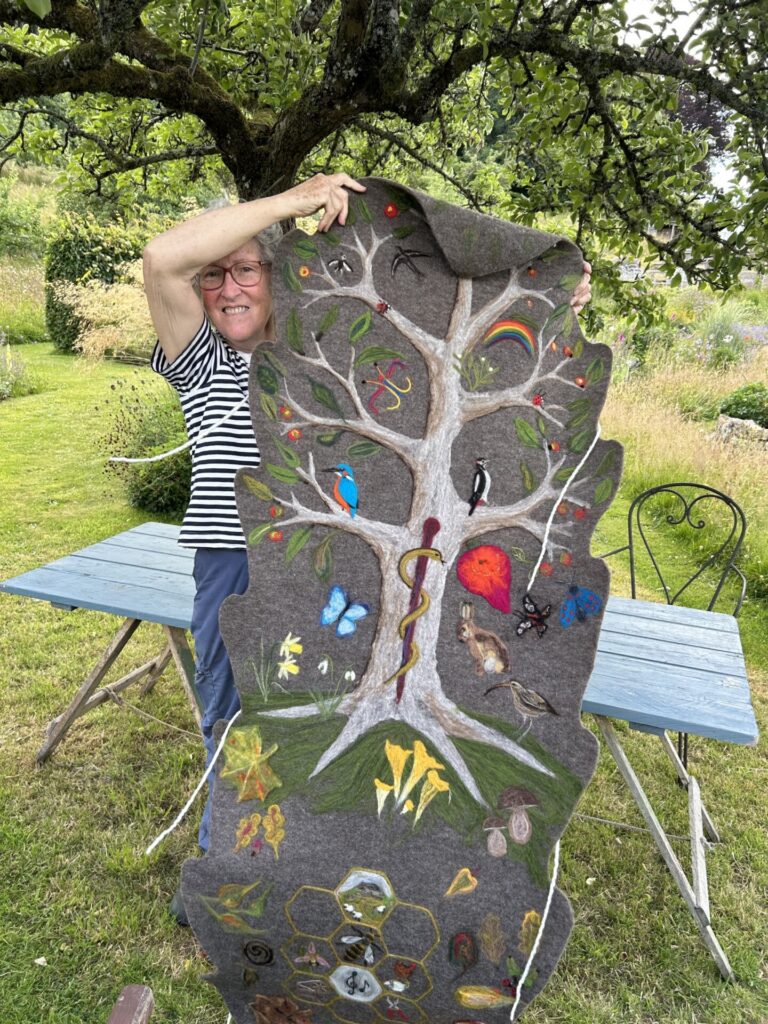
That’s something that I have tried to challenge throughout my journey. I am currently in the process of creating my own burial shroud; a project with which I have got friends and family to help me. It was something I had considered prior to my diagnosis; the idea of a biodegradable woollen shroud feels much more natural than a wooden box. I am also keen on a ‘green burial’ – getting buried less than ‘6 feet under’ – so I will compost more quickly than a traditional burial, with minimal carbon emissions.
We have decorated the shroud with symbols that represent my life and what is important to me. The central motifs are a tree of life representing my family connections; the Aesculapius rod for my medical career; and honeycomb for my beekeeping. I invited friends and family to help – some embraced the opportunity immediately, while others were initially hesitant (but later became enthusiastic participants). I have lost count of how many people have helped; some people have sent material contributions from far and wide, and we have done collaborative sessions with half a dozen people felting at the same time.
It has been very lovely and affirming to have so many people coming to contribute and spend time with me, creating the shroud. Most of the time it has been a very joyful experience. It has also allowed me to create and facilitate conversations about death – something which is still so sensitive and taboo with people.
There are so many euphemisms for dying. The most popular now seems to be ‘passing’ which to my mind is a bit meaningless. Dying is such a natural process that I would like to encourage people to think about their own death and make sure their wishes are known, to make life easier for the people that are left afterwards. Ultimately it is the people left that make the definitive decisions. They do not have to do what the dying person asked but knowing what the dying person would have liked can be very helpful! That cannot happen without open conversations about death.
Good end of life care involves good communication and teamwork – with professionals as well as with family and friends. Good preparation and anticipation are also paramount. It may seem macabre but I already have my ‘just in case’ bag and TEP form ready, even though for now I am still up and about and reasonably active.
I feel that I have had a good life – I have had more than ‘3 score years and 10’. The thing I feel most sad about is not being able to see my grandchildren grow up; in particular my youngest grandchild probably won’t remember me as she is only two and half years old. But beyond that, I do not feel frightened. Having seen so many patients through their last illness, the idea of death is not scary or mysterious – although I don’t expect the dying process to be very lovely.
If I had any advice to give GPs treating patients approaching death I think keeping in contact with patients who have a terminal illness (even just the occasional phone call) would never go unappreciated. Although my treatment has been managed very well by the oncology team, and the specialist cancer nurses have always been really helpful and available while I was having chemo, I would have appreciated a bit of contact from the primary care team from time to time – particularly now that I am off active treatment. Having been on both sides of the doctor-patient relationship I know how much it means simply to feel seen and remembered. As I approach the end, I hope my story helps others feel more comfortable facing what we all must one day face.
Dr Jill Millar is a retired GP in Devon
Have you got a view you want to share with Pulse?
We’re always open to first-hand pieces and opinions from GPs.
Email your piece for consideration to be published on our site.
Visit Pulse Reference for details on 140 symptoms, including easily searchable symptoms and categories, offering you a free platform to check symptoms and receive potential diagnoses during consultations.
Related Articles

READERS' COMMENTS [9]
Please note, only GPs are permitted to add comments to articles






Jill I think I worked with you at the Grove in Gosforth in 1987 ? I was a trainee working with the Practice under John Charliewood . I remember your fantastic bedside manner and back to basics approach, quite inspirational. Interesting reading this and good to know you are facing this with wisdom and calmness . I wish you all the very best . I have just retired myself!!
A fantastic thought provoking article. Thank you Jill for these useful insights and all the best
That is a truly beautiful piece of work. I hope you enjoy your remaining time and that your death is painless, comfortable and fast. I agree that ignoring death makes it much harder to deal with and euphemisms like going to a better place, at rest, being with the angels, crossing the rainbow bridge, passing, lost, and fatal are best retired in favour of death and dying.
Thank you Jill, you’ve always had a very inspiring and sagacious approach – to medicine, to how you managed the practice, your approach to patients and training. This is a fantastic continuation of your wise pragmatism.
Wow! we need more honesty and bravery like this. Having had two malignancies myself I too have thought about my own death which i am relaxed and comfortable about, and what a release that is.
I noticed with my patients, that those with the most active lives and most to lose, were the most accepting. You certainly fit that group.
I am a supporter of dignity in dying and I hope we will have more control over our end. That would bring relief for us at a time when we tend to have no control.
I loved the shroud- what a beautiful idea.
Very powerful article, so open and honest. Thank you very much, Jill. Admirable approach to death and a great example for all. Definitely having more publicity about death and in wider sources would help a great deal to combat myths and misconceptions so patient will be more ready to open up to the issue. It will come to everyone!
Such an inspiring story, Thank you so much Jill for sharing it .
I shall take your advice on calling more often on our palliative patients, workload often subdues our family doctor instinct.
We all go through a path to death, but unfortunately not many will walk it with your serenity, strength and positive attitude. I wish you all the best on your next steps. Thank you again.
As a doctor we ease suffering in this world
but if you got your religion wrong
then you may be facing eternal suffering
GMC Guidelines etc rightly or not keeps religion out of medical care
The best of humans are thye who look at all options and choose the best
Youtube Quran the final testament 31 and 32
Make up your own mind
before it is too late
thank you for writing this. It’s incredibly touching — I’m honestly a bit speechless.