

‘Without a minister for men, GPs are left to pick up the pieces’
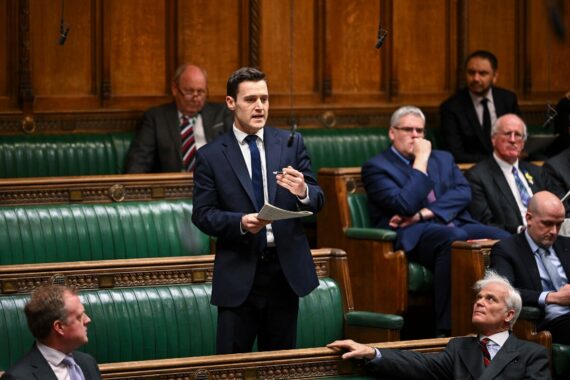


Former GP and Conservative MP for Hinckley and Bosworth Dr Luke Evans argues that the UK needs a minister for men and boys to join up the dots in their care and lead the charge of the Men’s Health Strategy
We have all been there.
The patient you refer to orthopaedics with severe knee pain needs a joint replacement. But they also have heart failure. Chronic kidney disease. Significant pitting oedema. The surgeon is worried about the fluid, while the anaesthetist is worried about the anaesthetic risk. The cardiologist wants to use diuretics, but renal are worried about pushing the renal function off.
And the patient is left stuck in the middle.
This will be a familiar scenario for you. As a GP, I had countless variations of care being siloed in practice. All the different healthcare professionals looking at their part of the puzzle, but no one joining it together.
Since stepping into politics six years ago, I’ve seen first-hand the machinery of Government, and I can tell you it is very similar.
In 1997, Tony Blair created a minister for women to address the structural inequalities facing women and girls. It was a recognition that Government sometimes needs clear leadership across multiple departments to tackle complex, cross-cutting challenges.
Today, nearly three decades on, I believe we must ask a necessary question: Do we now need a minister for men and boys too?
On a number of critical metrics, boys and men are falling behind.
Start with health. Suicide is the leading cause of death for men under the age of 50. It is three times more common in men than in women. Among teenagers aged 15 to 19, for every girl who takes her own life, three and a half boys do the same. Prostate cancer remains the most common cancer in men. More than two-thirds of liver disease deaths are male. These are not marginal gaps. They are stark and persistent.
Consider the rise of image and performance-enhancing drug use. Research suggests that between 500,000 and one million people are now using steroids and related substances to alter their physique, a tenfold increase in a decade. In some areas of the North of England, over 80% of clients at needle exchanges report the use of image and performance enhancing drugs (IPEDs), with steroids now the third most common drug in prisons. One in ten gym goers is believed to experience muscle dysmorphia. These are overwhelmingly male issues, yet responsibility is scattered across departments. Health points to Sport. Sport points to the Home Office and Justice. No one owns the problem.
That same fragmentation appears in education. The Centre for Social Justice’s Lost Boys report last year showed that boys achieve on average half a grade lower than girls at GCSE across every subject. At A-level, girls outperform boys by more than a grade and a half across their best three subjects. Women now outnumber men in university admissions by three to two. Boys are significantly more likely to be suspended or excluded from school.
If we translate that into employment, the picture remains troubling. There are around one million working-age men without jobs. Youth unemployment among young men has reached levels not seen since 2014. More young men than young women are not in education, employment or training.
These consequences echo through the justice system. Around 96% of prisoners are male. The vast majority of victims and perpetrators of serious youth violence are boys and young men. Nine in ten boys in custody report having been excluded from school. These are not isolated statistics. They are connected.
All these issues often find themselves on a GP’s desk in some form or another. Yet it is often unclear where responsibility sits, or how the system should come together to address them.
Returning to health, the Conservative Government published a Women’s Health Strategy in 2022, and the current Labour Government followed up with a Men’s Health Strategy last year. Both have been broadly welcomed. But the difference between them is instructive.
The women’s strategy has a dedicated minister to drive it forward. The men’s strategy does not.
I should add that none of this diminishes the ongoing need for a minister for women and girls. The case for that role remains strong. The question is whether balance now demands complementary leadership focused on men and boys. Not to compete. Not to divide. But to coordinate.
A minister for men and boys could examine cross-departmental blind spots, from male participation in teaching to mental health access, from fatherhood to employment pathways. Most importantly, it would signal that the Government recognises the whole picture.
In the consulting room, when every speciality is looking at a different problem, the GP is often the one left trying to hold the bigger picture together.
I believe that the Government faces the same challenge. And if boys and men are falling through the gaps between departments, perhaps it is time someone was responsible for seeing the whole patient?
Dr Luke Evans is the Conservative MP for Hinckley and Bosworth
Have you got a view you want to share with Pulse?
We’re always open to first-hand pieces and opinions from GPs.
Email your piece for consideration to be published on our site.
Visit Pulse Reference for details on 140 symptoms, including easily searchable symptoms and categories, offering you a free platform to check symptoms and receive potential diagnoses during consultations.
Related Articles

READERS' COMMENTS [2]
Please note, only GPs are permitted to add comments to articles







Hmm
How much diference have the ministers for women made? They are never just ministers for women eg the current minister is Bridget Philipson who is secretary of state for education. I may be cynical but i suspect most of her effort and time is spent on education. I think this is pretty half-hearted and another similar post for men wouldnt help. Now if ot were a proper post, ghe only office held. That cpuld be different
Now a lot of the vicars are women too, Men have fewer sources of informal emotional support than ever.
The problem is not a lack of a Minister for Men, its lack of a secular cultural ‘ministry’ (small m) for men.