

‘Don’t you forget about me’ – an argument for the GP ‘Breakfast Club’
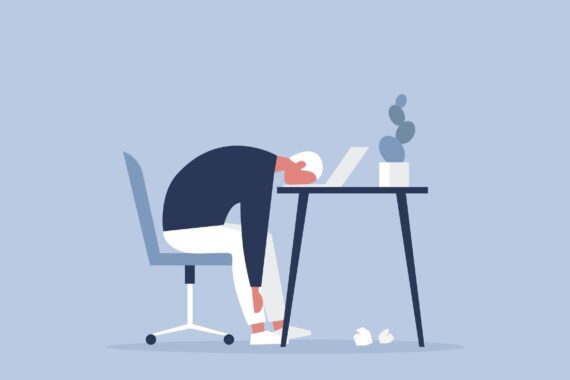


Dr Burnt Out says general practice has become a lonely profession – can ‘breakfast clubs’ modelled on Swedish fika help?
2025 marks the 40th anniversary of the best ‘brat pack’ film: the Breakfast Club. The film follows five very different teenagers forced to spend a Saturday detention together. By the end of the day, through conversation, humour, conflict, and vulnerability, they come to understand one another in ways they never expected. They leave less alone than when they arrived.
I find that there is something strikingly familiar about this story for those of us working in general practice.
GPs work side by side with colleagues of very different personalities, backgrounds, and working styles. We share the same building, the same pressures, and often the same patients. Yet increasingly, we do so in near-silence. Many of us now spend 12-hour days largely alone, staring at computer screens, moving from online consultations to phone calls to face-to-face appointments, with barely a human interaction that isn’t clinically charged.
General practice has quietly become one of the loneliest professions in medicine.
Seeing patients all day does not protect against this. These encounters are complex, emotionally demanding, and sometimes risky – they drain cognitive and emotional reserves. Without opportunities to share the load with colleagues, the result is predictable: exhaustion, depersonalisation, and burnout. Many GPs finish the day depleted, having missed lunch, barely left their chair, and not spoken to another colleague except via instant message. Something important has been lost.
Older models of general practice placed value on collective reflection and support. Balint groups, informal corridor conversations, and regular meetings allowed GPs to process difficult encounters and remind each other that the emotional weight of the job was not theirs alone. In the efficiency-driven, tech-heavy primary care of the 2020s, much of this has quietly disappeared.
Locuming across practices, the contrast I see is stark. Some surgeries feel bleak and atomised: clinicians arrive, log on, work in isolation, and leave exhausted. Others feel different; lighter, more human. The difference is rarely funding, workload, or patient demographics. It is culture.
The best practices I have worked in all shared one simple feature: a regular, face-to-face morning coffee meeting. A GP Breakfast Club, if you will permit..
Typically, it lasted around 20 minutes. It wasn’t compulsory; but there was good coffee. People came because they wanted to. There were jokes, stories from the weekend, shared frustrations, and occasional moaning. There was also something quietly vital: informal clinical discussion, practical problem-solving, and checking in on one another as human beings: ‘I saw Mr Miggins last week – watch out for…’ or ‘I’m struggling a bit at the moment.’ Information that would otherwise generate multiple emails or messages was exchanged naturally and efficiently.
In Sweden, this has a name: fika. It is a shared coffee break that prioritises connection as much as refreshment. It is not seen as wasted time, but as an essential part of working life.
These meetings are not indulgent nostalgia. They improve morale and reduce isolation. Personally, they remind me why I came into general practice in the first place. They allow us to share not just workload, but emotional load. They make difficult days more bearable and good days better.
Many practices claim there is ‘no time’ for this. Yet the same practices often lose far more time to fragmented communication, low morale, sickness absence, and staff turnover. A brief morning meeting can change the tone of an entire day.
The Breakfast Club worked because the characters were forced to sit together, talk, and be honest. By the end, they were still different, but no longer alone.
General practice needs its own Breakfast Club.
If your practice doesn’t have one, start it. Invite colleagues for coffee before morning surgery. Keep it informal. Keep it human. You may find that the long, relentless days of digital isolation begin to soften, and that the joy of general practice, long thought lost, is not quite as gone as we feared.
Go on.
Join the Breakfast Club.
Dr Burnt Out is a GP locum in London
Have you got a view you want to share with Pulse?
We’re always open to first-hand pieces and opinions from GPs.
Email your piece for consideration to be published on our site.
Related Articles

READERS' COMMENTS [5]
Please note, only GPs are permitted to add comments to articles







Over many years, I have worked on and off with one Practice which used to have a full team meeting ‘breakfast club’ before morning surgery, especially useful on Mondays, when the weekend Doctor and DN team would provide handover to rest of the team ready to tackle the day, including quick review of cottage hospital inpatients, A&E attendances, EOL care, deaths, emergency admissions, etc. A shorter similar meeting every other weekday, along with checking of test results and signing of repeat prescriptions. They also met in the staff room at lunchtimes, but this was rather more haphazard, due to differing timetables and locations. The cooperation was fantastic, and we streamlined a number of functions, like cremation forms and EOL care. This practice still does this, but attendance is lower, partly due to changes in District Nurse Office location arrangements, which removed them from the surgery ‘for efficiency’ (Trust no longer pays rent!) I worked another surgery longer ago where there were usually 2 GPs plus student or Trainee, and often a consultant from OPD have lunch at the cottage hospital together, but that practice decided it did not want to be involved in hospital care, which was very sad for the community.
Another lovely reminiscence about the golden age of primary care? In a profession increasingly populated with female colleagues, child care might provide a significant drag. (Hey, maybe we should all adopt hours comparable with judges which when I was obligated to jury service as a single handed practitioner, turned out to be 10.00 – 16.00. At least we measure our waiting lists in days not years!)
We have a brief morning check in meeting and a longer pre lunch time meeting every day. Couldn’t imagine not having it.
To be honest, I’d rather be having breakfast with my family who I already see precious little of.
Even if I locked myself in my room all day I’d say hello to people I walked past on the way to a home visit and wouldn’t feel lonely. CQC said our lunchtime meeting every day was “Outstanding”. I was astonished. Are GPs really locking themselves in their rooms all day? Why???