Top ten advice and guidance requests in dermatology


Specialty doctor and GPwER in dermatology Dr Anjali Pathak describes ten frequent requests received by her advice and guidance service and explains how they should be managed
Note all requests feature hypothetical cases created for illustrative purposes
1. Is this actinic keratosis or Bowen’s disease?
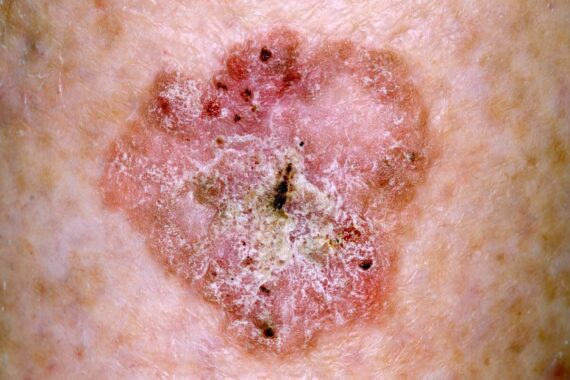
Q: A 72-year-old female patient has this persistent, red, scaly patch on the lower leg measuring around 1.5cm (see image). It has not improved with emollients. Could this represent actinic keratosis or something more concerning?
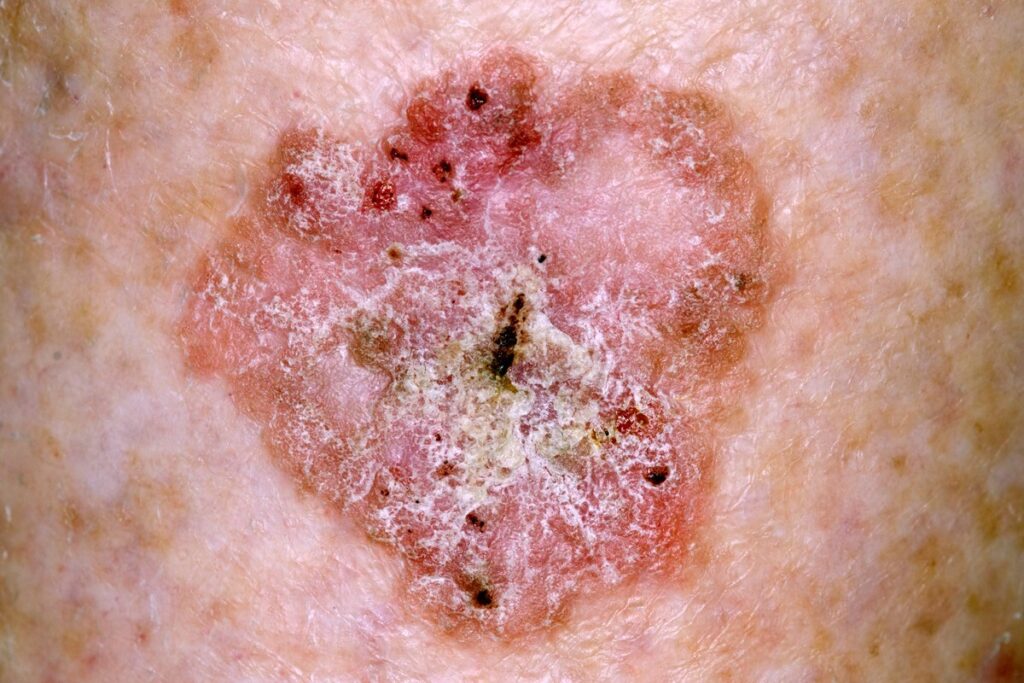
Image: Case 1 – persistent, red, scaly patch on lower leg of 72-year-old female patient
A: Actinic keratoses are common premalignant lesions on chronically sun-exposed skin. They are often multiple and typically feel rough on palpation. Bowen’s disease (squamous cell carcinoma in situ) usually presents as a solitary, well-demarcated erythematous scaly plaque that slowly enlarges.
When a lesion is solitary, persistent (as in this case) or clearly circumscribed (as in the image), Bowen’s disease should be considered rather than a simple actinic keratosis. Referral should be considered if there are concerning features such as induration, ulceration, bleeding, tenderness or rapid growth, as these may indicate invasive squamous cell carcinoma.
2. Management options for actinic keratoses
Q: This 76-year-old male patient has several actinic keratoses on his hand (see image) that have not responded to topical diclofenac gel. What are the next management options in primary care?
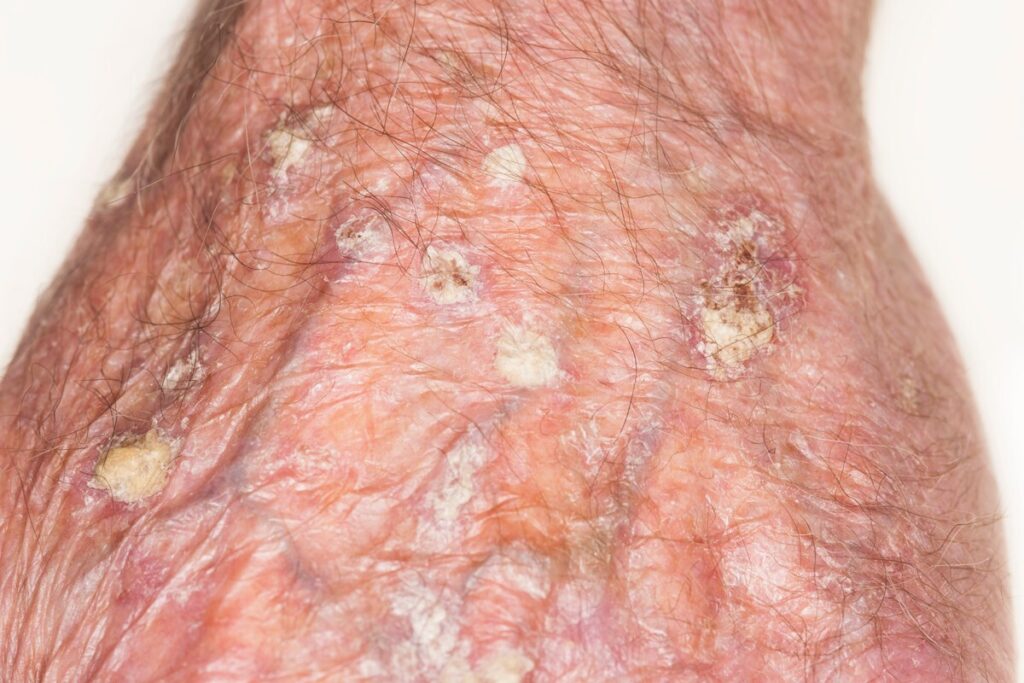
Image: Case 2 – actinic keratoses on hand of 76-year-old male
A: If actinic keratoses persist despite diclofenac gel, escalation to other topical therapies is appropriate. Fluorouracil creams, such as Efudix (5%) or Tolak (4%) are typically applied once or twice daily for 2-4 weeks. Other options in the recommended treatment pathway include tirbanibulin, imiquimod, or 5-fluorouracil combined with salicylic acid, depending on lesion thickness, site and whether there is field change.
Patients should be warned that significant erythema, soreness and crusting commonly occur during treatment. If the reaction becomes very uncomfortable, treatment can be paused briefly and restarted once the skin settles. Lesions that fail to respond to treatment or develop concerning features such as ulceration, induration or rapid growth should be referred to exclude invasive squamous cell carcinoma.
3. Facial and eyelid eczema
Q: A 23-year-old female patient has recurrent eyelid eczema and is needing repeated courses of topical steroids. What is the safest longer-term approach, and when should I consider patch testing?
A: The eyelids are particularly vulnerable to steroid-induced skin thinning, so repeated or prolonged steroid use should be avoided where possible. Topical calcineurin inhibitors are useful steroid-sparing treatments. Pimecrolimus is often better tolerated than tacrolimus on delicate facial skin, although both can cause initial burning or stinging. This usually settles within the first week, and storing the tube in the fridge can help.
Topical calcineurin inhibitors are usually initiated by specialists in line with BNF guidance, but GPs may be asked to continue prescribing once treatment has been started.
A short course of mild topical steroid may still be used for acute flares, but recurrent disease often benefits from calcineurin inhibitors used for maintenance, sometimes twice weekly once control is achieved.
Patch testing should be considered if eyelid eczema is persistent, treatment resistant, predominantly facial, or when allergic contact dermatitis is suspected, for example from cosmetics, fragrances, nail products, hair dye or ophthalmic drops.
4. Treatment options for adult female acne
Q: A 32-year-old woman has persistent acne affecting the jawline and chin despite topical treatments and oral antibiotics. She is reluctant to consider isotretinoin. Are there hormonal options I can discuss in primary care?
A: This pattern is typical of adult female acne and often has a hormonal component, particularly if it flares around menstruation. If standard topical therapy and oral antibiotics have not worked, spironolactone may be considered in women with hormonally driven acne, although it is currently an off-label treatment in the UK. The SAFA trial, conducted in UK primary care, showed that spironolactone significantly improved outcomes for women with acne.
Treatment typically starts at 50mg daily and may increase to 100mg depending on response and tolerability. As it is anti-androgenic, it should not be used in pregnancy and contraception should be discussed.
The combined oral contraceptive pill can also improve acne, particularly if symptoms worsen cyclically. Pills containing anti-androgenic progestogens may be most beneficial. Co-cyprindiol can be effective but is usually reserved for shorter-term use because of venous thromboembolism risk.
5. Antihistamines for urticaria
Q: This patient (age 48, male) has had recurrent itchy wheals for several weeks with no obvious trigger (see image). He is taking cetirizine but symptoms continue to flare most days. What should I do next?
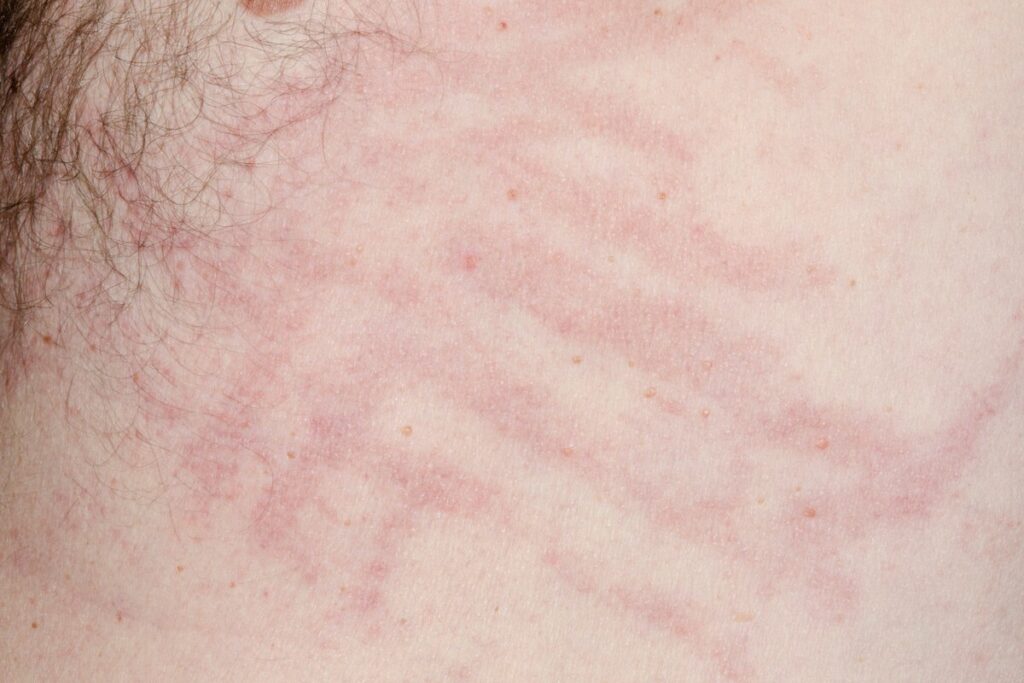
Image: Case 5 – itchy wheals on chest of 48-year-old male
A: Chronic urticaria is defined as urticaria occurring on most days for more than six weeks. In many cases it is spontaneous and no clear trigger is identified.
A focused history should explore common triggers such as recent infections, new medications (e.g. NSAIDs), and physical triggers. Inducible urticarias should be considered, for example delayed pressure urticaria from tight clothing or straps, cold urticaria, cholinergic urticaria triggered by heat or exercise and solar urticaria. Extensive investigations are usually unnecessary unless there are systemic symptoms or atypical features.
Management is centred on regular second-generation antihistamines. Typical starting doses include cetirizine 10mg daily, loratadine 10mg daily or fexofenadine 180mg daily. If symptoms persist, doses can be increased gradually up to four times the usual licensed dose, although this is off-label.
Patients should be reassured that chronic urticaria is common and often self-limiting, although symptoms may persist for months or occasionally years. Referral to dermatology or allergy services should be considered if symptoms remain uncontrolled despite high-dose antihistamines, if angioedema is prominent, or if there are atypical features, such as duration of greater than 24 hours, or systemic symptoms which may suggest an alternative diagnosis such as urticarial vasculitis.
6. Is this acne, eczema or perioral dermatitis?
Q: This 18-year-old female patient has papules and redness around the mouth and nose (see image). She has previously been treated with emollients, hydrocortisone and acne creams, but it keeps flaring. Could this be perioral dermatitis?
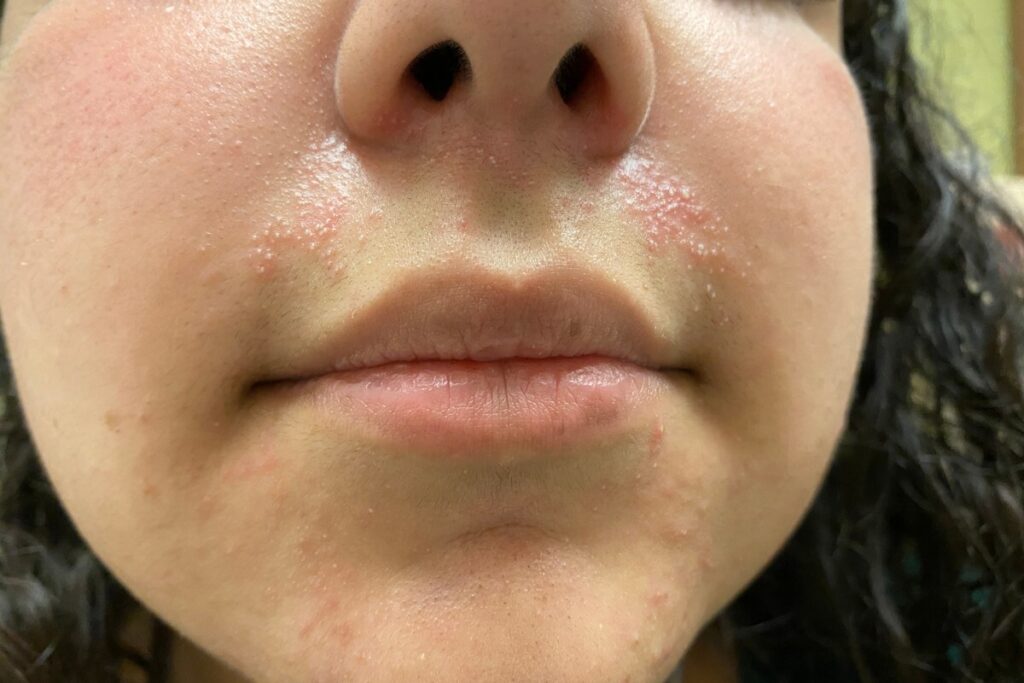
Image: Case 6 – papules and redness around mouth and nose of 18-year-old female patient
A: Perioral dermatitis is a common diagnostic trap in primary care and is often mistaken for acne, rosacea or eczema. It typically presents with small inflammatory papules around the mouth, nose and sometimes eyes. Unlike acne, comedones are usually absent.
Topical steroid use, heavy facial products and occlusive cosmetics can perpetuate the condition. Management involves stopping topical steroids and simplifying skincare. Depending on severity, treatment options include topical metronidazole or an oral tetracycline such as lymecycline or doxycycline.
7. Recurrent ‘boils’ in the axilla
Q: A 38-year-old male patient has recurrent painful boils in the axilla (see image) and groin that improve temporarily with antibiotics but continue to recur. Could this represent hidradenitis suppurativa?
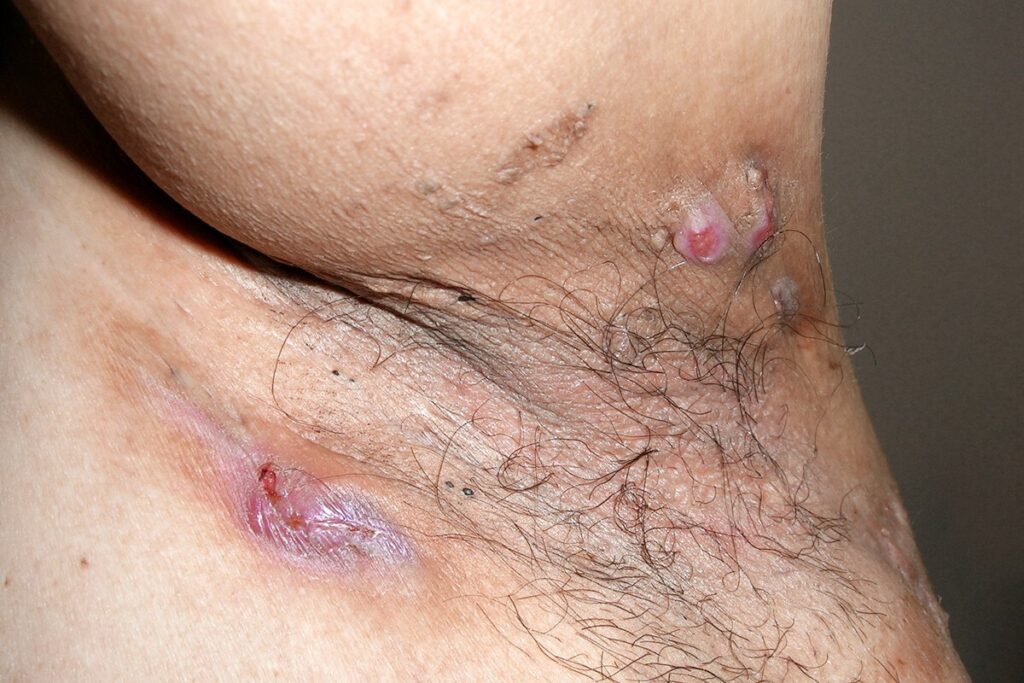
Image: Case 7 – boils in axilla of 38-year-old male patient
A: Recurrent inflammatory lesions in flexural areas should raise suspicion for hidradenitis suppurativa (HS). Early disease is often mistaken for recurrent bacterial infection.
Clues include recurrent painful nodules, abscesses or draining lesions in characteristic sites such as the axillae, groin, inframammary folds or buttocks, particularly when episodes recur over months or years.
Initial management in primary care may include topical clindamycin twice daily for milder disease and a prolonged course of tetracycline antibiotics for more established inflammatory disease. Typical oral options include lymecycline 408 mg or doxycycline 100 mg which can be taken once or twice a day, usually for around 12 weeks. Patients may also benefit from conservative measures including weight management, smoking cessation advice, regular antiseptic washes and avoidance of friction in affected areas.
Patients who develop scarring, sinus tracts or persistent disease despite adequate antibiotic therapy should be referred to dermatology, as biologic treatments such as adalimumab are now available for more severe HS.
8. Is this eczema or psoriasis in the flexures?
Q: A 44-year-old female patient has a persistent rash affecting the groin and under the breasts (see image). It has been treated several times as eczema or fungal infection but keeps recurring. Could this represent flexural psoriasis and how should it be managed?
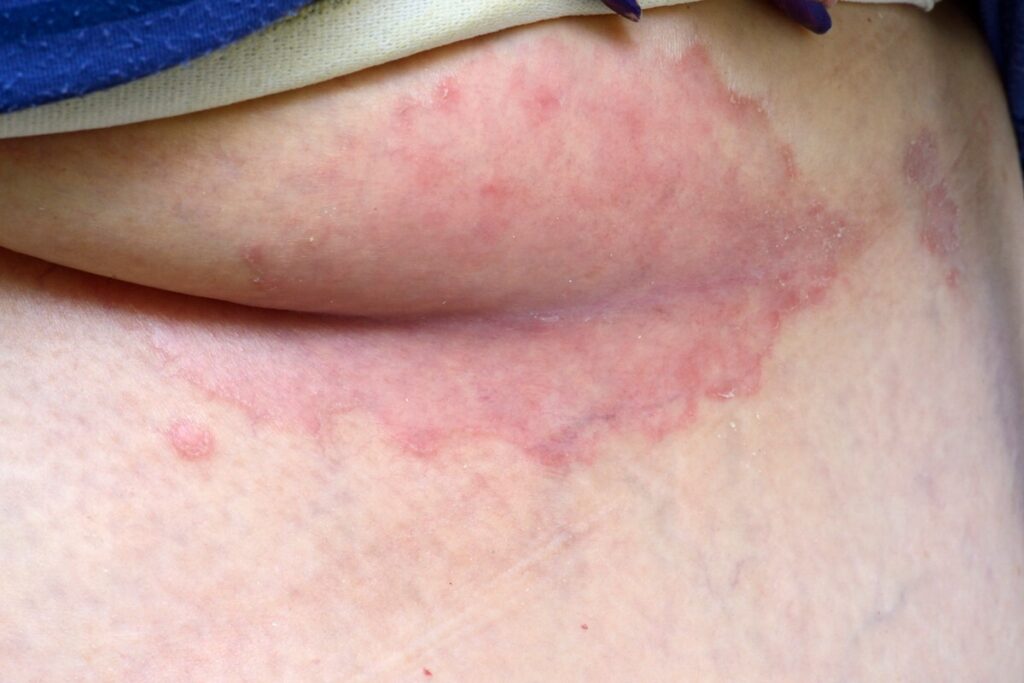
Image: Case 8 – persistent rash under breast of 44-year-old patient
A: Flexural or inverse psoriasis commonly affects skin folds such as the groin, axillae, inframammary folds and natal cleft. Unlike classical plaque psoriasis, lesions are often smooth, shiny and erythematous with minimal scale, which can make the diagnosis difficult.
It is frequently mistaken for eczema, candidiasis or intertrigo. Helpful clues include symmetrical involvement, well-demarcated erythema and a history of psoriasis elsewhere on the body or scalp.
Short courses of mild to moderate topical steroids may help during flares, but prolonged steroid use should be avoided in flexural areas. Topical calcineurin inhibitors can be useful steroid-sparing treatments once initiated by a specialist.
If disease is persistent or diagnosis remains uncertain, referral to dermatology may be appropriate.
9. Persistent scabies despite treatment
Q: A patient (age 63, male) has ongoing itching several weeks after treatment for scabies (see image). They have already used permethrin twice. Could this represent treatment failure, and what should I do next?
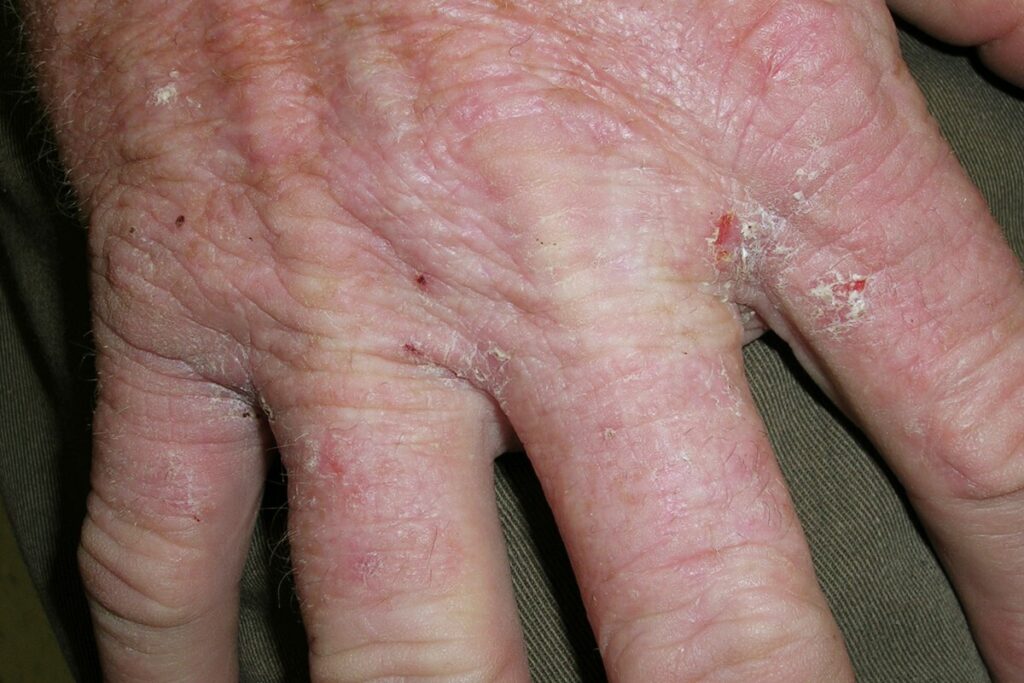
Image: Case 9 – scabies infection on hand of 63-year-old male
A: Persistent itching after scabies treatment is common and does not necessarily indicate treatment failure. Post-scabetic itch can last several weeks to months due to ongoing hypersensitivity to mite antigens.
Ongoing infestation should be suspected if new burrows, papules or nodules appear, or if symptoms continue to spread within a household.
If symptoms persist after two correctly applied treatment courses of permethrin, oral ivermectin may be considered. Ivermectin for scabies is off-label and prescribing may depend on local ICB guidance or specialist advice.
10. When should a suspected basal cell carcinoma be referred urgently?
Q: This 40-year-old female patient has a lesion that looks like a basal cell carcinoma above their lip (see image). Should this be referred urgently on the two-week wait pathway?
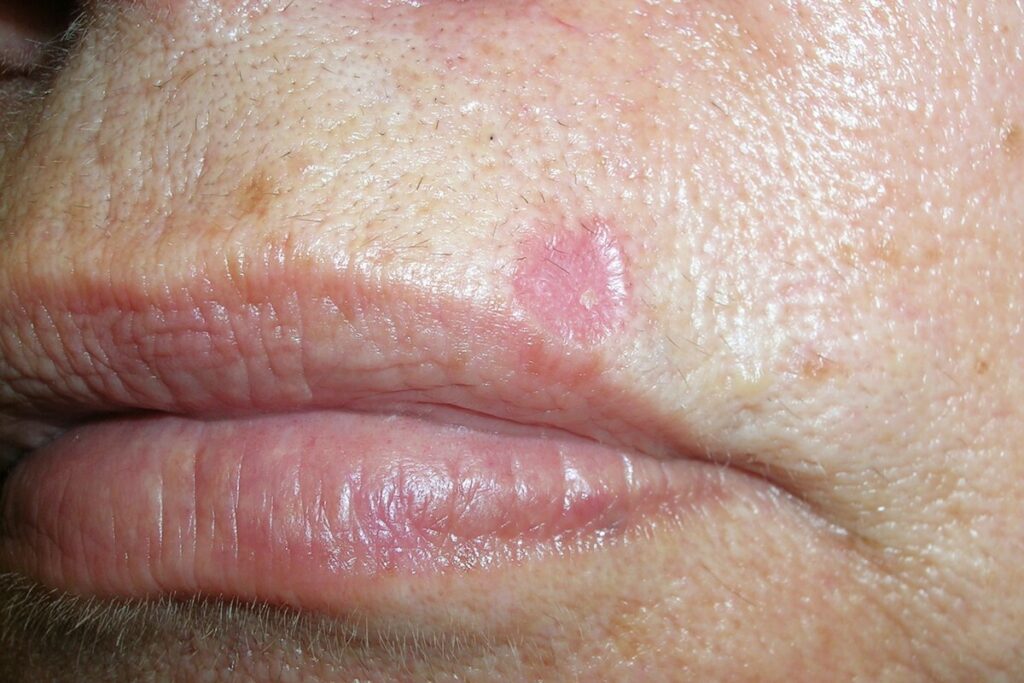
Image: Case 10 – basal cell carcinoma-like lesion above lip of 40-year-old female
A: Most suspected basal cell carcinomas do not require urgent cancer pathway referral. In the UK, routine referral is appropriate for most lesions suspicious for BCC.
However, an urgent suspected cancer referral should be considered if delay could cause significant morbidity. This may apply to lesions in high-risk, cosmetically or functionally sensitive sites on the face, such as around the eyes, nose or ears, or lesions that are large or rapidly growing or likely to cause functional or cosmetic complications if treatment is delayed.
Dr Anjali Pathak is a specialty dermatology physician and GPwER in dermatology based at West Hertfordshire Teaching Hospitals NHS Trust
Sources and further reading
- Primary Care Dermatology Society (PCDS). Actinic (Solar) Keratosis – Primary Care Treatment Pathway. Last updated 2025
- PCDS. Hidradenitis Suppurativa – Primary Care Treatment Pathway. June 2023
- PCDS. Urticaria – Primary Care Treatment Pathway. 2024
- Santer M. Effectiveness of spironolactone for women with acne vulgaris (SAFA) in England and Wales: pragmatic, multicentre, phase 3, double blind, randomised controlled trial. BMJ 2023;381:e074349
Visit Pulse Reference for details on 140 symptoms, including easily searchable symptoms and categories, offering you a free platform to check symptoms and receive potential diagnoses during consultations.