

Challenges in management of hypothyroidism in primary care
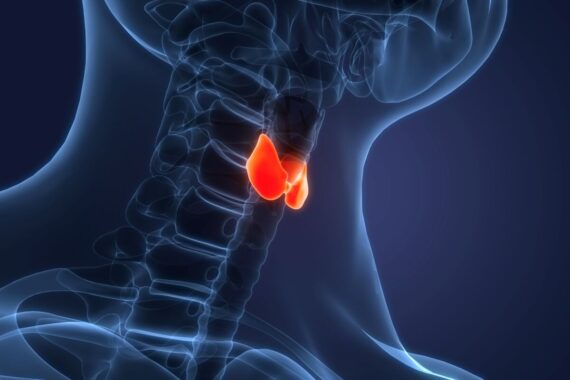


In our latest eLearning CPD module, consultant endocrinologists Dr Peter N Taylor and Professor Kristien Boelaert share their insights on key challenges in hypothyroidism management, including diagnostic thresholds, persistent symptoms, appropriate use of liothyronine and treatment in special circumstances such as in those planning pregnancy.
Complete the full module on Pulse 365 today.
Learning objectives
This module will support your knowledge and confidence in managing hypothyroidism, with a focus on:
- How to interpret thyroid function tests and decide when to treat subclinical hypothyroidism.
- How to support patients who remain symptomatic despite normal biochemistry.
- When thyroid pain or goitre changes the diagnostic or management approach.
- How and when liothyronine can be considered.
- How to manage hypothyroidism caused by or complicated by other medications.
Hypothyroidism is one of the most common chronic endocrine disorders, affecting around 2% of the general population and up to 5% of those over 60 years.1 It is ten times more common in women and prevalence increases with age.
The majority of cases are autoimmune in origin, but drug-induced and iatrogenic causes are increasingly recognised.2 Symptoms are diverse, often subtle and overlap with other chronic conditions such as anaemia, depression and fatigue syndromes, contributing to diagnostic and therapeutic uncertainty.
Over 1 million people in England are prescribed levothyroxine, making it one of the most common repeat prescriptions in the NHS. Yet surveys reveal that around 10-15% remain dissatisfied with treatment3 and a substantial proportion have abnormal thyroid function as measured by a Thyroid Stimulating Hormone (TSH) concentration outside the reference range years after diagnosis.4
There has also been a trend for clinicians to initiate levothyroxine at more marginally raised TSH levels.4 This as well as widespread thyroid function testing in the general population and a growing interest from patients regarding the use of liothyronine and dessicated thyroid extract, have all impacted clinical consultations.
In this article we review five challenging areas, each highlighting the tension between biochemistry, clinical judgement and patient expectation.
Although this article focuses on primary hypothyroidism, it is important to distinguish it from secondary (central) hypothyroidism, which usually results from pituitary dysfunction rather than intrinsic thyroid disease. In secondary hypothyroidism, TSH levels are low or inappropriately normal despite a low free thyroxine (FT4), and reliance on TSH alone for diagnosis or monitoring can be misleading. Common causes of secondary hypothyroidism include pituitary adenomas, pituitary surgery, cranial irradiation, or infiltrative disease. Management requires prompt endocrinology input, with levothyroxine dose adjustments guided by FT4 rather than TSH levels, and assessment of other pituitary hormones to ensure adequate adrenal replacement before thyroid hormone therapy is initiated. Recognising this distinction is essential to avoid delayed diagnosis or inappropriate titration of treatment in patients with central causes of hypothyroidism.
1. What is the current consensus on how we should manage patients with an elevated TSH but normal FT4?
Subclinical hypothyroidism (SCH) is defined by an elevated TSH with circulating thyroid hormones FT4 and free iodothyronine (FT3) within the reference range.5 It affects 4–10% of adults, but most will never progress to overt disease characterised by an elevated TSH with low FT4.
The challenge lies in recognising who should be treated and who should simply be observed. NICE,6 alongside the European and American Thyroid Associations,7,8 recommend that treatment decisions should take into account patients’ age, symptom burden, comorbidities and the presence of thyroid autoantibodies.
Persistent elevation of TSH should always be confirmed with repeat testing after three months, as values can normalise spontaneously in up to half of patients.
Current guidance supports offering levothyroxine to adults with TSH levels of 10 mIU/L or higher on two separate occasions three months apart, as such elevations are unlikely to revert to normal.
For younger adults under 65 years, a six-month therapeutic trial with levothyroxine (L-T4) may be considered when TSH is above the reference range but below 10 mIU/L – particularly in the presence of typical hypothyroid symptoms, positive thyroid peroxidase antibodies (TPOAb) or cardiovascular risk factors. Even mild thyroid dysfunction can adversely affect lipid profiles, endothelial function and blood pressure, thereby contributing to long-term cardiovascular disease. Subclinical hypothyroidism, particularly in younger adults, is associated with high LDL cholesterol and a modestly increased risk of ischaemic heart disease.9 Treating SCH in those with raised baseline cardiovascular risk may therefore offer metabolic benefit, and observational evidence suggests that individuals under 65 years may gain the greatest cardiovascular risk-reduction from levothyroxine therapy.9
It is reasonable to review treatment and consider stopping if symptoms persist despite normalisation of TSH and seek alternative diagnosis. In older individuals, particularly those over 70, mild TSH elevation is often physiological and should not prompt treatment; in this age group, the threshold for intervention is generally higher. Data from recent population studies suggest that the upper limit of normal may rise to approximately 7 mIU/L in adults aged 80 years or above.
Table 1 provides a summary of which groups to treat at different TSH thresholds.
The health benefits of treating SCH remain uncertain. Randomised trials have not demonstrated consistent improvements in mood, fatigue or cognitive outcomes,10 and there is no clear evidence of benefit in those over 65 years at modest TSH elevations (<7.0 mU/l). In contrast, overtreatment in this group may increase the risk of atrial fibrillation and osteoporosis.2,11,12 Observational data show a modest cardiovascular advantage from treatment in younger individuals (<65 years),13 supporting an age-specific, personalised approach.
Table 1. Proposed treatment thresholds if two elevated TSH levels.2
| Age group | TSH range (mIU/L) | Key modifiers | Suggested management | Comments |
| <70 years | >10 | – | Treat with levothyroxine | High likelihood of persistence and adverse outcomes |
| <70 years | 7-10 | Symptoms, TPOAb+, cardiovascular risk, pregnancy plans | Consider trial of LT4 | Shared decision; reassess after 6 months |
| <70 years | 4.5-7 | None of the above | Observe and recheck in 6-12 months | Treat only if TSH rising or new symptoms |
| ≥70 years | >10 | Persistent or symptomatic | Consider LT4 treatment cautiously | Start at low dose; monitor cardiac status |
| ≥70 years | 7-10 | Asymptomatic | Observation preferred | Mild rise often; age-related |
| ≥70 years | Up to 7 | – | No treatment | Monitor, high-normal TSH may be protective |
| Any age | Planning pregnancy or IVF | – | Consider treatment if TSH >4.0 mIU/L | Aim TSH <2.5 mIU/L pre-conception |
When treatment is not initiated, monitoring remains important with annual thyroid function tests at least if SCH persist. In women planning pregnancy or undergoing assisted conception, lower thresholds for intervention are appropriate given the potential impact of mild hypothyroidism on fertility and fetal development.14
In summary, SCH management requires nuance: treat at higher TSH thresholds, individualise decisions below 10 mIU/L based on age and symptoms and avoid overtreatment in older adults. Women of reproductive age and TPOAb-positive individuals represent subgroups in whom earlier intervention is more likely to be appropriate.
Click here to complete the full module on Pulse 365 and log 2 CPD hours towards revalidation
Dr Peter N Taylor, consultant endocrinologist at Cardiff University, and Professor Kristien Boelaert, Professor of Endocrinology and Consultant Endocrinologist at University of Birmingham
References
- Taylor P et al. Global epidemiology of hyperthyroidism and hypothyroidism. Nat Rev Endocrinol 2018;14(5):301-16
- Taylor P et al. Hypothyroidism. Lancet 2024;404(10460):1347-64
- Peterson S et al. An Online Survey of Hypothyroid Patients Demonstrates Prominent Dissatisfaction. Thyroid 2018; 28(6):707-21
- Taylor P et al. Falling threshold for treatment of borderline elevated thyrotropin levels-balancing benefits and risks: evidence from a large community-based study. JAMA Intern Med 2014;174(1):32-9
- Biondi B et al. Subclinical Hypothyroidism: A Review. JAMA 2019; 322(2):153-60
- NICE. Thyroid disease: assessment and management. [NG145] 2023
- Pearce S et al. 2013 ETA Guideline: Management of Subclinical Hypothyroidism. Eur Thyroid J 2013; 2(4): 215-28
- Jonklaas J et al. Guidelines for the treatment of hypothyroidism: prepared by the american thyroid association task force on thyroid hormone replacement. Thyroid 2014; 24(12): 1670-751
- Razvi S et al. Levothyroxine Treatment of Subclinical Hypothyroidism, Fatal and Nonfatal Cardiovascular Events, and Mortality. Arch Intern Med 2012
- Stott D et al. Thyroid Hormone Therapy for Older Adults with Subclinical Hypothyroidism. Nat Rev Endocrinol 2017; 376(26): 2534-44
- Evron J et al. Association of Thyroid Hormone Treatment Intensity With Cardiovascular Mortality Among US Veterans. JAMA Netw Open 2022; 5(5): e2211863
- La Vignera S et al. L-thyroxin treatment and post-menopausal osteoporosis: relevance of the risk profile present in clinical history. Minerva ginecologica 2008; 60(6): 475-84
- Razvi S et al. The influence of age on the relationship between subclinical hypothyroidism and ischemic heart disease: a metaanalysis. J Clin Endocrinol Metab 2008; 93(8): 2998-3007
- Korevaar T et al. Thyroid disease in pregnancy: new insights in diagnosis and clinical management. Nat Rev Endocrinol 2017; 13(10): 610-22
Visit Pulse Reference for details on 140 symptoms, including easily searchable symptoms and categories, offering you a free platform to check symptoms and receive potential diagnoses during consultations.
Related Articles

 Oviva’s fully remote Tier 3 Weight Management programme
READERS' COMMENTS [1]
Please note, only GPs are permitted to add comments to articles







Levothyroxine doses cannot be adjusted for serum T4 levels, because serum T4 testing is not permitted in any patient taking any dose of levothyroxine supplements.
More importantly is to emphasise to everyone, including hospital doctors, that a ‘normal’ TSH level in any patient taking T4 supplements indicates that supplements should eb continued, never ‘stopped because your TSH is normal’ as is happening far to often in recent year (3 instances I know of, and I should know of NONE.)
Secondly, GP practices should have a system to review medications which highlights whenever a patient has ceased collecting T4 supplies from the Chemist. Dessicated thyroid extract is not indicated for treating anything at all on NHS or privately.
And patients taking T3, especially if also T4, need very careful monitoring with T3/4 levels as well as TSH, and if TSH is low, they should be restricted on prescriptions to avoid causing AF and killing them.