
Casebook: Childhood orthopaedic conditions
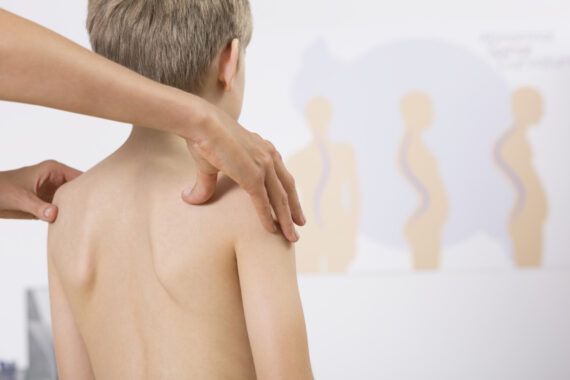


GP with paediatric specialism Dr David Capehorn discusses four orthopaedic presentations in children, advising on assessment, referral and management within primary care. Complete the full module on Pulse 365 today
Paediatric orthopaedic presentations are common in general practice and are a frequent source of parental anxiety. The majority of musculoskeletal problems seen in children are benign and self‑limiting, or represent normal variants of growth and development.
However, a small but important proportion reflect serious underlying pathology where early recognition, appropriate investigation and timely referral can be limb‑ or life‑saving.
This case-based module provides a structured, pragmatic framework for the assessment of some common childhood orthopaedic presentations, including examination techniques, age‑specific red flags and referral thresholds, drawing on current NICE and UK paediatric orthopaedic expert guidelines.
Learning objectives
This module will support and update knowledge of:
- How to assess a child or adolescent with suspected scoliosis, and determine when imaging and urgent or routine referral are indicated.
- Assessment of infants for possible developmental dysplasia of the hip (DDH), identifying key risk factors and age-specific clinical signs, and appropriate imaging modality and referral urgency.
- Diagnosing and managing common causes of activity-related knee pain in adolescents, including making a confident clinical diagnosis of Osgood–Schlatter disease, advising evidence-based conservative management, and recognising features that should prompt investigation or urgent cancer referral.
- How to assess the limping child safely in primary care, differentiating transient synovitis from septic arthritis and applying principles of observation, investigation, safety-netting and referral.
- Identify age-specific ‘never-miss’ paediatric orthopaedic diagnoses, including early-onset scoliosis, developmental dysplasia of the hip (DDH), septic arthritis, slipped upper femoral epiphysis (SUFE) and bone malignancy, and initiate timely referral pathways to reduce the risk of limb- or life-threatening outcomes.
Case 1: Suspected adolescent scoliosis
A 13-year-old girl attends with her concerned parents. The mother explains that her daughter has occasionally complained of some mild back ache, that her spine ‘looks odd’ and that her ‘body doesn’t seem straight’. They have done some background research and are wondering whether she might have a scoliosis.
1. How does a scoliosis usually present and what examination should the GP make of the patient? Should leg lengths be measured to rule out leg length inequality as a cause?
Adolescent idiopathic scoliosis (AIS) is most commonly detected incidentally. Parents, teachers, or children themselves may notice:
- Uneven shoulders or scapular prominence.
- Waist asymmetry or trunk shift.
- Clothes hanging unevenly.
- A visible spinal curve when bending forward.
Pain is not a typical presenting feature in AIS. While mild mechanical back ache may occasionally be reported in adolescents, significant, persistent, or nocturnal pain should always prompt concern for non‑idiopathic causes.
Risk of progression is closely linked to remaining skeletal growth. In girls, the highest risk period is around the pubertal growth spurt and the 1–2 years following menarche. After skeletal maturity, progression is much less likely.
Certain curve patterns are atypical and clinically important: left‑sided thoracic curve, early onset (under 10 years), or rapidly progressive deformity carries a higher association with underlying neurological pathology.
Examination in primary care
1. Inspection (standing)
This is to look for:
- Shoulder height and scapular symmetry.
- Waist creases and trunk shift.
- Iliac crest height (pelvic obliquity).
2. Adam’s Forward Bend Test
This is the key screening test for scoliosis in primary care. A demonstration of Adam’s Forward Bend Test is available online and a summary of the process outlined in box 1. Ask the child to bend forward at the waist with arms hanging freely. Observe from behind at eye level. Look specifically for rib hump or lumbar prominence.
Box 1. Adam’s Forward Bend Test
Equipment: None. (Optional: scoliometer to measure angle of trunk rotation).
Position the patient: Ask the child to stand upright with feet together, knees straight, and arms relaxed by their sides.
Forward bend: Instruct the child to bend forward at the waist to about 90°, letting the arms hang loosely toward the floor, palms facing each other.
Examiner’s viewpoint: Stand directly behind the child and observe the contour of the back from head to pelvis.
Look for asymmetry. Note any unevenness in:
- Ribcage height (rib hump)
- Lumbar paraspinal muscle bulk
- Shoulder blade height or prominence
- Waistline creases
Optional measurement: Place a scoliometer horizontally across the back at the point of maximum asymmetry; an angle ≥5–7° warrants further assessment.
No asymmetry: Suggests there is unlikely to be a clinically significant scoliosis, but mild curves can be missed; monitor if symptoms arise.
Asymmetry present: Suggests consider spinal X-ray to measure Cobb angle, especially in a growing child.
Tips: Best performed with the with back exposed. Observe from behind and, if possible, also from the side to spot sagittal profile changes.
Always consider growth status and risk of progression when deciding on referral. In adolescent girls, remember that risk of scoliosis progression is greatest during the rapid growth phase around menarche.
Note a smartphone spirit‑level app can be used if a scoliometer is unavailable. However, it is not essential. Some orthopaedic teams increasingly use serial clinical photographs (including parent smartphone images) taken during forward flexion to document rib prominence and progression over time, as visual change is often more meaningful to families than numerical measures alone.
Neurological and skin examination – assess:
- Tone, power, reflexes, coordination and gait.
- Look for midline cutaneous stigmata (hair tufts, dimples, lipomas).
Should leg lengths be assessed?
Yes. Apparent scoliosis may be caused or exaggerated by pelvic obliquity secondary to leg length discrepancy. A simple functional assessment is usually sufficient. First, observe the pelvis in standing to identify any tilt. Then ask the child to sit.
In sitting, the effect of leg length discrepancy is removed, so the examiner is looking to see whether the pelvic tilt and spinal curvature correct. If the asymmetry resolves, this suggests a functional scoliosis related to leg length inequality rather than a structural spinal deformity.
Alternatively, placing a block under the shorter leg in standing should similarly level the pelvis and reduce the apparent curve.
In summary:
- Resolution of asymmetry suggests functional scoliosis.
- Persistence of asymmetry suggests structural scoliosis.
Formal millimetre measurements are not required in general practice; the clinical question is whether a discrepancy is functionally relevant.
2. If scoliosis appears to be a possibility, what investigations should the GP undertake – or should we simply arrange referral? If scoliosis is suspected, or proven by X-ray, how urgent is the referral?
Imaging
- X‑ray: Local pathways vary, but in many areas standing spinal radiographs may be arranged directly from primary care. However, in some areas these are deferred until after referral. Standing (weight‑bearing) posteroanterior spinal radiograph is the standard investigation to confirm scoliosis and radiologists will measure the Cobb angle. A Cobb angle >10° confirms scoliosis.
- MRI: Not routine for typical AIS. Indicated if red flags are present, including: neurological signs; left thoracic curve; significant or night pain; rapid progression; age under 10 years old.
Urgency of referral
Urgent referral is required for: neurological abnormalities; severe or nocturnal pain; rapidly progressive deformity; early onset scoliosis (<10 years); atypical curve patterns.
Routine but timely referral is appropriate for suspected or confirmed AIS in a child who is still growing, as the window for effective bracing is time‑limited.
3. How would a case like this be managed by the orthopaedic team? And are there associated abnormalities that they or the GP should bear in mind?
Management is determined by Cobb angle, skeletal maturity (as indicated by Risser stage – see box 2 below) and rate of progression.
In general, observation is suitable for small, stable curves. Bracing is suitable for moderate curves in skeletally immature children. Surgery is required for larger or progressive curves (often >45–50°).
Associated considerations include neuromuscular disorders, connective tissue disease, congenital vertebral anomalies, and psychosocial impact including body image, school participation and sport.
Note that for many families, decision-making around intervention involves balancing the cosmetic impact of the deformity against the cosmetic and functional implications of major spinal surgery, including scarring.
Box 2. Risser staging to determine skeletal maturity
Risser staging (or the Risser sign) is a radiographic method used to estimate skeletal maturity in adolescents, based on ossification of the iliac crest apophysis. In practice, it helps clinicians estimate how much growth remains, which is crucial in conditions such as adolescent idiopathic scoliosis (AIS) because curve progression risk is driven by remaining growth.
In scoliosis:
- Curve size + Risser stage = management decision
- The same Cobb angle means very different things depending on skeletal maturity
Bracing only works if:
- The child is still growing
- Typically Risser 0–2 (sometimes 3)
Once Risser 4–5 is reached, bracing is usually ineffective. GPs do not need to stage Risser themselves but it’s helpful to understand why urgency differs. It explains why orthopaedics may act quickly in a younger adolescent but reassure an older, skeletally mature teenager. Explaining that ‘the curve matters, but how much growth remains matters just as much,’ can help when counselling older patients or parents.
Click here to complete the full module on Pulse 365 and log 2 CPD hours towards revalidation
Dr David Capehorn is a GPSI in Paediatrics and Honorary Associate Specialist, Bristol Children’s Hospital. With thanks for helpful comments and editorial input from Mr Martin Gargan, Clinical Chair and Consultant Paediatric Orthopaedic and Trauma Surgeon, University Hospitals Bristol NHS Foundation Trust
Visit Pulse Reference for details on 140 symptoms, including easily searchable symptoms and categories, offering you a free platform to check symptoms and receive potential diagnoses during consultations.