

Key questions on pulmonary fibrosis and interstitial lung disease
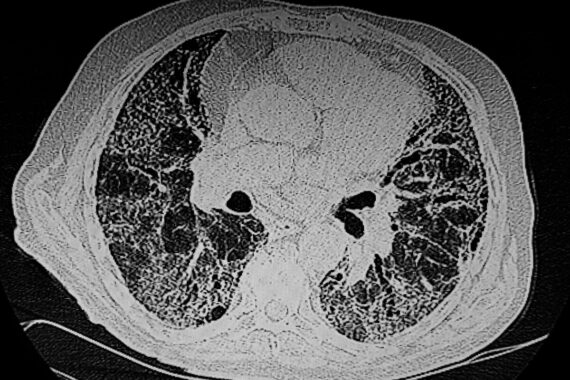


Consultant respiratory physician Professor Peter George answers key questions on the diagnosis and management of pulmonary fibrosis and interstitial lung disease. Complete the module on Pulse 365 today.
Pulmonary fibrosis and interstitial lung disease represent a complex and often under-recognised group of conditions that can have profound consequences for patients’ respiratory health and overall prognosis.
Despite their severity, these diseases can be misdiagnosed in primary care due to their insidious onset and overlap with more common conditions such as asthma, chronic obstructive pulmonary disease and heart failure. Early identification is therefore critical, particularly as advances in treatment mean that timely intervention can significantly alter disease progression and improve quality of life.
In this module, Professor Peter George, consultant respiratory physician and clinical lead for interstitial lung disease, addresses key questions on the definition, causes, diagnosis and management of pulmonary fibrosis and related disorders.
The article highlights the importance of recognising hallmark symptoms such as persistent dry cough and unexplained breathlessness, as well as the role of high-resolution imaging and specialist referral in confirming diagnosis. It also explores current therapeutic options, including antifibrotic and immunosuppressive treatments, alongside supportive and palliative care strategies.
Learning objectives
This module will enhance knowledge of pulmonary fibrosis and interstitial lung disease, including:
- The definition and features of pulmonary fibrosis and interstitial lung disease and the main causes.
- How to spot signs of pulmonary fibrosis and the importance of early diagnosis.
- What investigations to do and when to refer.
- The treatments and supportive care available to patients and how the disease is likely to progress.
- When to consider palliative care and what can be offered at this point.
What is the definition of pulmonary fibrosis and how does it relate to interstitial lung disease?
The term interstitial lung disease refers to the broad group of conditions where the interstitium of the lung, the area between the alveoli and their surrounding capillaries, becomes diseased and abnormal cells accumulate. In healthy individuals, oxygen diffuses freely and efficiently across the interstitium from the alveoli into the capillaries. However, in patients who have interstitial lung disease, an accumulation of abnormal cells between the alveoli and the capillaries interferes with this process.
Pulmonary fibrosis refers to scarring of the interstitium which is often irreversible and can be progressive leading to stiffening of the lungs, declining lung function, worsening symptoms such as breathlessness and cough and eventually a reliance on supplementary oxygen. Interstitial lung disease should therefore be considered as an overarching diagnosis which encompasses several fibrotic (scarring) and non-fibrotic diseases of the lung parenchyma.1
Some interstitial lung diseases can be either fibrotic or non-fibrotic. For example, hypersensitivity pneumonitis, a condition that is often triggered by an environmental or occupational exposure such as mould or feathers, is an example of an interstitial lung disease which can be non-fibrotic, manifesting with accumulation of inflammatory cells within the lung, or fibrotic where the inflammation transitions into scar tissue. Other examples are seen in patients who also have connective tissue disease, such as systemic sclerosis, and rheumatoid arthritis.
On the other hand, idiopathic pulmonary fibrosis (IPF), the commonest interstitial lung disease, can only be fibrotic and is progressive and irreversible.
What are the main causes of pulmonary fibrosis, and how common is it? What are other common interstitial lung diseases?
It is estimated that there are over 250,000 patients with interstitial lung disease in the UK.2 Within that category, IPF has the worst outcomes and around 9,000 new patients are diagnosed with this condition every year.3 It is associated with a life expectancy that is worse than many cancers. However, historical estimates of three to five years for survival from diagnosis are now considered unduly pessimistic in the light of approval and use of antifibrotic therapy.
IPF typically presents in men over the age of 60 with a smoking history. Patients are frequently misdiagnosed as having COPD or heart failure due to the demographic it affects, and the insidious and overlapping symptoms it presents with. This is a particular issue given the dismal life expectancy it carries and the opportunities which antifibrotic therapies offer.
Pulmonary fibrosis can run in families and in cases where there is a genetic predisposition, the condition can present in younger patients. Some signs of a genetic basis for pulmonary fibrosis include early greying of the hair and features
of bone marrow abnormalities such as lymphopenia or thrombocytopenia. Any first-degree family members of patients with pulmonary fibrosis who have respiratory symptoms should be referred for early assessment.
Aside from IPF, the commonest interstitial lung diseases are hypersensitivity pneumonitis, sarcoidosis and autoimmune driven interstitial lung disease – for example secondary to rheumatoid arthritis, systemic sclerosis, myositis, Sjögren syndrome, and other connective tissue diseases. In systemic sclerosis, the commonest cause of death is interstitial lung disease.
Around 10% of patients with rheumatoid arthritis have interstitial lung disease and so it is important that patients with autoimmune conditions who may have multiple causes for dyspnoea and cough are evaluated. Updated rheumatology guidelines now recommend screening for interstitial lung disease in certain patients with these autoimmune conditions.4
Some drugs can be associated with interstitial lung disease and pulmonary fibrosis. For example, nitrofurantoin and amiodarone are two commonly used drugs which can cause interstitial lung disease. Patients with new onset or progressive respiratory symptoms should have their medications reviewed and this diagnosis considered. Pneumotox is a good resource for a list of medications which can cause interstitial lung disease.
What symptoms should prompt the GP to consider pulmonary fibrosis?
The commonest presenting symptoms are a persistent dry cough and breathlessness. The dry cough often predates exertional limitation. Some patients may have finger clubbing.
Patients with pulmonary fibrosis at diagnosis often have a normal oxygen saturation and at the earliest stages of the disease can have a normal chest X-ray and spirometry. The diagnosis is confirmed with a high-resolution CT scan of the thorax.
In patients with high-risk autoimmune conditions such as systemic sclerosis, rheumatoid arthritis, myositis or Sjögren Syndrome, respiratory symptoms of cough or dyspnoea should alert GPs to the possible diagnosis.
Due to overlapping clinical symptoms, many patients with pulmonary fibrosis may have been mislabelled initially. Pulmonary fibrosis should be considered in patients with a presumed diagnosis of COPD, asthma or heart failure who re-present with persistent symptoms despite treatment.
There are specific features in the history which should heighten the index of suspicion. Occupational or environmental exposures such as bird feathers – for example, pigeon fanciers, those with pets such as parrots or indeed people who work in an environment where they are frequently exposed to pigeon feathers or droppings can cause hypersensitivity pneumonitis. Historical exposure to asbestos can also be a relevant factor.
Click here to complete the full module on Pulse 365 and log 2 CPD hours towards revalidation
Professor Peter George is a consultant respiratory physician and clinical lead for interstitial lung disease at Royal Brompton Hospital
References
- Ryerson C, Adegunsoye A, Piciucchi S et al. Update of the international multidisciplinary classification of the interstitial pneumonias: an ERS/ATS statement. Eur Respir J 2025;66(6):2500158
- Whittaker H, Kramer Fiala Machado A, Hatam S et al. Incidence and prevalence of asthma, chronic obstructive pulmonary disease and interstitial lung disease between 2004 and 2023: harmonised analyses of longitudinal cohorts across England, Wales, South-East Scotland and Northern Ireland. Thorax 2025;80(7):466-477
- Gupta R, Morgan A, George P, Quint J. Incidence, prevalence and mortality of idiopathic pulmonary fibrosis in England from 2008 to 2018: a cohort study. Thorax 2024;79(7):624-631
- Antoniou K, Distler O, Gheorghiu AM et al. ERS/EULAR clinical practice guidelines for connective tissue disease-associated interstitial lung disease. Eur Respir J 2026;67(1):2402533
Visit Pulse Reference for details on 140 symptoms, including easily searchable symptoms and categories, offering you a free platform to check symptoms and receive potential diagnoses during consultations.







