Top ten advice and guidance requests in neurology
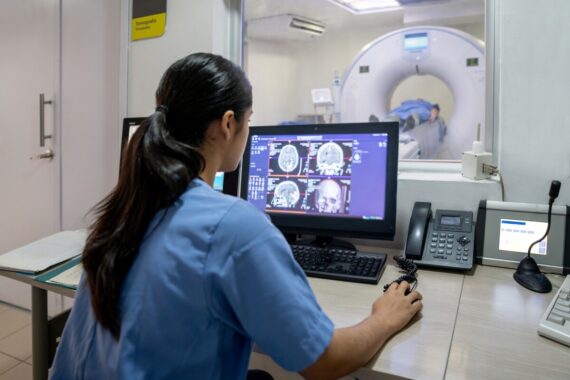


In the next in our series, consultant neurologists Dr Kirstie Anderson and Dr Naomi Warren and GP Dr John Nicholls describe ten typical advice and guidance requests in neurology and explain how to manage them
Note all 10 requests are hypothetical and developed for educational purposes
1. Can this mid-40s woman with comorbidities be prescribed novel migraine therapy?
This 45-year-old woman with treated hypertension, depression and hypothyroidism has seen various members of the surgery with worsening migraine. She has had typical migraine since school days although episodes have been infrequent.
For the last few months, she is having multiple headaches a week and has taken time off work in the last month. We have trialled amitriptyline which was not tolerated and propanolol which was ineffective. Current medication is sumatriptan 50mg prn, levothyroxine, lisinopril and citalopram. She recently started private Mounjaro.
Is this patient suitable for one of the novel migraine therapies – and if so, which would be best?
Answer: Typical migraine waxes and wanes over time but is often worse with irregular routine, sleep disorders or additional mental or physical health problems. Make sure she has had a recent optician’s check. Given the Mounjaro and her age being over 40, ask about loud snore and any markers of obstructive sleep apnoea (OSA). OSA will aggravate migraine and requires specific therapies.
NICE guidelines require three or more headache preventatives to have been tried before one of the new anti-calcitonin gene-related peptide (CGRP) monoclonal antibody drugs, such as erenumab and fremanezumab, so she is not eligible for one of these. However, switching her lisinopril to candesartan wouldn’t add to tablets and it can be an effective and well-tolerated drug for migraine (typical dose range 4 to 16mg daily).
In terms of acute therapy, this is a low dose of sumatriptan and oral triptans may not work well if people are nauseated early in the attack. Soluble aspirin is underused and could be tried at 900mg right at the start of pain build up. Alternatively rizatriptan 10mg wafers are rapidly absorbed, more effective and longer lasting than sumatriptan.
A headache diary is helpful to check attack frequency if any new preventative is started – review 6-8 weeks after starting. The Migraine Trust have helpful patient advice.
2. Anti-anxiolytic treatment in patient with epilepsy
This 29-year-old man has epilepsy but was discharged 2 years ago as he had been fit-free for a year. He has significant anxiety and I want to start sertraline – is this safe or will it lower seizure threshold?
Answer: This is a common concern, but we can reassure patients that none of the antidepressants used within primary care at standard BNF dosing lower seizure threshold. Research studies show that untreated anxiety and depression have a higher risk of worsening epilepsy in themselves. Therefore, starting the antidepressant that you feel is best is appropriate in this situation.
3. Intermittent limb numbness/tingling and burning pain
Does this woman need to see you or to have further investigations such as imaging? She has seen us several times over a few months with a tingling numb feeling that started in her right hand and tends to come and go over minutes but sometimes hours. It can wake her from sleep. In the last fortnight she has developed a patch of numbness and burning over the right leg, worst at the top although she now feels the whole leg is a little odd.
Our first contact physiotherapist found no back pain or signs of spinal disease. I have seen her myself today and the neurology exam is normal in terms of speech, eye movements, power and gait. Light touch over the arm and leg feel less on the right compared to the left. Her concern is that her mother had multiple sclerosis (MS) and she wonders if this is the same sort of problem.
Answer: The essentially normal neurology examination is reassuring, although light touch is not as helpful as pinprick and it may be worth checking this.
The history is key. In the arm, this is most likely to be carpal tunnel syndrome (CTS) as it comes and goes and can wake her. It is worth asking if she wakes and shakes the hand (the flick sign) which is more sensitive than Phalen’s and Tinel’s tests for possible CTS.
In the lower limb, if this is outer thigh then meralgia paraesthetica can be the cause and weight gain or loss or prolonged sitting can cause or aggravate.
However, we often see people who develop a variable tingling that comes and goes in the arms or legs as a benign sensory disturbance, and reassurance is key if the examination is otherwise normal. We often explain this as a bit like tinnitus with the brain tuning in to internal sensory noise. Her understandable anxiety about MS may play a part here.
Thankfully the majority of those with a family member with MS will not develop the condition. MS affects 1 in 500 in the UK. A first-degree family member does increase the risk 5-10 fold but this still means that over 95% of people with a family member with MS will not develop the condition in their lifetime. We avoid imaging for reassurance given about 1 in 5 people will have benign incidental findings that may still cause concern such as pineal cyst or non-specific white matter hyperintensities. Typical MS relapses evolve over days with a fixed sensorimotor deficit and abnormal examination and then resolve partially or completely over days and weeks.
4. Alternative to levetiracetam for seizures post-stroke
This man is on levetiracetam 750mg bd after having 2 seizures post stroke. He has made a good recovery from the stroke but has developed significant depression. We have referred to talking therapies, but he feels the low mood is caused by the levetiracetam. Can you advise on alternatives? His last fit was 6 months ago.
Answer: Levetiracetam is now widely used in hospital as it’s effective for all seizure types with very few drug-drug interactions. However at least 15% of people develop anxiety, depression or rarely psychosis when taking it. One option is an immediate switch to brivaracetam – about 50% of people will feel better on this. It can be switched directly so simply stop the levetiracetam and start brivaracetam 75mg bd the same day.
The other option is to switch to lamotrigine starting 25mg at night and increasing by 25mg every 2 weeks until he reaches 75mg bd as maintenance. Levetiracetam can then be decreased by 500mg a week to stop. Lamotrigine can help mood and is well tolerated; risk of serious rash is very low with slow titration. Antidepressants are safe if needed and do not lower seizure threshold at standard doses.
In terms of driving, the DVLA require those with epilepsy to be one year fit-free and switching anticonvulsants does not affect the DVLA decision which remains determined by the date of last fit.
5. Worsening peripheral pain and numbness in older male with diabetes
This 73-year-old with type 2 diabetes has had at least a year of painful burning in his feet and numb toes. This has got slowly worse and he now feels numb up to the ankles. Does he need nerve conduction studies or any further tests or do you need to see him? His diabetes is under fairly good control and his last HbA1c was 54, routine blood tests including B12 and folate were normal.
Answer: At least 5-7% of the UK population over the age of 65 will have a sensory neuropathy with either numbness or burning in feet. About 30% of the time, we do not find a cause beyond ageing itself and this is very slowly progressive over time. Diabetes, smoking and poor cardiometabolic health are common risk factors. In addition to standard blood tests, we recommend serum electrophoresis and immunoglobulins on a single occasion to screen for MGUS (monoclonal gammopathy of undetermined significance).
Beyond this, key advice is good foot care with regular podiatry, shoes rather than barefoot and maintaining walking and time and pressure on feet.
We want to see those with rapid progression of sensory loss, asymmetry, gait instability or weakness to consider other causes of neuropathy. So, if the neuro exam is normal –including gait, ability to stand on heels and toes and intact reflexes including intact pinprick above ankles – then nerve conduction studies are unlikely to change management.
Neuropathic pain medications can help if, for example, sleep is significantly disturbed, but they have a relatively high side effect profile. Low-dose duloxetine has the fewest side effects. Both gabapentin and pregabalin can cause sedation and dizziness in older patients so should be used with caution.
6. Mid-30s male with worsening tremor in both hands
This 35-year-old man is worried about a tremor in his hands that he has had for 2-3 years, it is now causing difficulty at work as a teacher when he is using the whiteboard. On examination he has an obvious shake of his outstretched hands but no other problem and he is otherwise fit and well doing regular Parkruns. He takes no medication. He is worried as his grandmother had Parkinson’s disease. I had considered propranolol. Do you need to see him or can we manage this as an essential tremor?
Answer: This does sound most like an essential tremor which is usually fairly symmetrical, hands rather than head or legs and often younger onset. Red flags would be: worst at rest; much worse on one side; rapid progression over months; and any added slowness or stiffness. It doesn’t sound as if he has any of these.
It is worth checking thyroid function if not done and also caffeine dose – advise cutting down if high. For those who smoke or vape, nicotine can aggravate all causes of tremor.
You could consider propranolol starting at 10mg increments and increasing as required, although the side effects in a younger man who enjoys running may be fatigue, poor sleep and decreased ability to hit maximum heart rate. We are happy for you to manage this in primary care if he is happy to be reassured, but the best diagnostic test is time and seeing him yourself to repeat examination in 6 months can be helpful.
7. Late-40s male with fasciculations in calf muscles
I saw this 47-year-old man who has noticed flickering movements in his calf muscles, he has looked this up and is worried about motor neurone disease (MND) and wants to see a neurologist. He is well otherwise with previously treated sciatica. Looking at him today, I could see occasional fasciculations in his left calf. Power and sensation in the legs seem normal and there is no pain. Previous blood tests including FBC, U&Es, TSH and CK were unremarkable. Do you need to see him or investigate further?
Answer: An understandable concern from the patient but this sounds like benign fasciculation. People notice them most in calf muscles and resting after exercise. It is common and if the muscle is strong and not wasted then this is very unlikely to be a neurodegenerative problem (MND is rare, with a lifetime risk of 1 in 400 people, and the biggest risk factor is age, with majority of those affected being over 70). I would make sure muscles are strong with normal bulk and if they are then you can reassure. If there is weakness or wasting, then we are happy to see him.
8. Mid-50s female on multiple medications with dizziness and recent fall
This 55-year-old has longstanding dizziness. She saw ENT last year who ruled out inner-ear cause with a normal MRI head including internal auditory meatus (IAM). She has a background of fibromyalgia, osteoarthritis, GORD, depression, NAFLD and hypertension for which she takes pregabalin, lisinopril, duloxetine, codeine and lansoprazole. She describes a permanent sensation of feeling unbalanced but worsening recently, with times when she feels much more unsteady, with headache, and she has been off work recently due to a fall. Opticians review was normal. There is no excess alcohol.
On examination she had an arthritic gait, normal upper limb coordination, reflexes were difficult due to body habitus but power was 4/5 throughout due to pain. She sways on Romberg’s testing. She remains worried about a structural cause and is now bothered about leaving the house.
Answer: Dizziness has a wide differential, but the normal ENT assessment and normal brain imaging is reassuring and important to explain to the patient.
Consider the side effects of sedative drugs that often cause dizziness, and possibly a migraine associated vertigo (vestibular migraine). Pregabalin has little evidence for joint pain and at least 1 in 6 feel unsteady on it; review and consider reducing pregabalin, and ensure codeine is intermittent only.
Check for postural drop in BP and look at physiotherapy to improve range of movement and balance. Ensure depression is well treated and ask about duration of any worse bouts of dizziness.
Typical vestibular migraine is worse in busy visual environments such as a supermarket and people describe feeling unsteady for 20-30 minutes at a time, sometimes with headache but not always. You might consider switching lisinopril to candesartan (recommended by NICE as an option for migraine prophylaxis) or increasing her dose of duloxetine (often prescribed off licence by neurologists for migraine prevention, due to its improved side effect profile compared with other NICE-recommended migraine preventatives), but explain that controlled movement and strengthening exercise, under guidance of a physiotherapist, are important to help reduce symptoms. The Migraine Trust have a helpful patient website.
9. Mid-30s female with severe pain on left side of face and head
This 36-year-old has seen her dentist who thought she had trigeminal neuralgia and has excluded dental causes but asked us to refer to neurology. She has had severe bouts of pain over the left side of the face and head for the last 2 months. At times it has woken her from sleep. To date this has not improved with amitriptyline and we are now trying duloxetine, but should we start carbamazepine, and does she need to be seen in neurology or scanned? Her examination is normal with no facial droop. She remembers having something similar 2 years ago but did not consult as things settled spontaneously. She takes no regular medication apart from OCP.
Answer: It is worth just checking that the history is typical of trigeminal neuralgia as this is rare compared to other causes of headache and can be overdiagnosed. Trigeminal neuralgia presents as an exclusively unilateral, typically lower facial pain (V2 and V3 distribution) with frequent, brief, shock-like stabs of pain triggered by touch, cleaning the teeth, eating or cold weather/wind on the face. More prolonged bouts of pain lasting hours or pain further up face or head are more likely to be migrainous. Also check for any autonomic features such as ptosis, eye watering or nasal blockage which would suggest alternatives such as cluster headache.
If the history is typical and this is her second bout of it with otherwise normal examination, then it is reasonable to try carbamazepine which can be very effective provided you discuss the need to stop if a rash develops, and the initial potential for sedation, and advise regarding interactions with her OCP. However, if pain does not resolve promptly, we should see her as dedicated imaging around trigeminal nerve is needed to look for any neurovascular compression. Secondary causes are otherwise rare, particularly when recurrent.
10. Late-30s woman with typical migraine concerned about MRI findings
This 39-year-old woman was seen with typical migraine but was anxious about a brain tumour as a close friend had this. She was seen by a colleague who gave amitriptyline and sumatriptan, but booked an MRI brain for reassurance as we have direct access. This has been reported as showing several white matter hyperintensities likely to be small vessel disease, but neurology referral has been recommended and the patient is now concerned about the scan result.
Answer: Key for migraine diagnosis is the history and we do not recommend brain scans for those with episodic, severe headache with associated light, noise or movement sensitivity but normal examination and normal high street optician’s review. We all accumulate normal ageing changes on MRI brain scans and we expect to see white matter hyperintensities (little white dots), with a rule of thumb being a dot per decade.
Therefore, in a healthy 39-year-old, we would expect at least 3-4 white dots. There will be more with hypertension, past or current smoking, obesity and there is also a slight increase in number in those with migraine.
This is a reassuring scan in excluding tumour and I would discuss this with her. You might suggest home blood pressure monitoring to support her to reduce cardiovascular risk and improve long-term health.
Be mindful of anticholinergic burden, and that around half of people stay in remission if you stop their migraine preventive medication. If amitriptyline has worked for her, then discontinue it once she has been in remission for 3-6 months. Either paracetamol, aspirin or triptan can be used (alone or combination) for acute therapy if migraine is less than weekly.
Dr Kirstie N Anderson and Dr Naomi Warren are consultant neurologists at Newcastle upon Tyne NHS Hospitals NHS Foundation Trust and Dr John Nicholls is a GP and joint clinical lead at Derwentside PCN
Visit Pulse Reference for details on 140 symptoms, including easily searchable symptoms and categories, offering you a free platform to check symptoms and receive potential diagnoses during consultations.