

‘Disband’ ARRS and redirect money to core GP funding, says then-RCGP chair
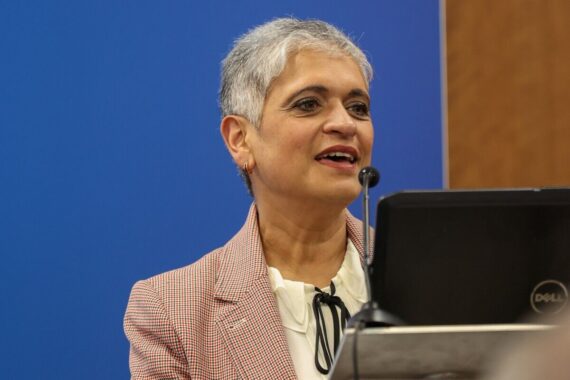


The additional roles reimbursement scheme (ARRS) ‘needs to be disbanded’ and the money redirected to core GP contract funding, the then-chair of the RCGP argued at the end of last month.
Giving evidence to the Health and Social Care Committee on 26 November, Professor Kamila Hawthorne – who was then still chair of the college – said the move would give practices and neighbourhood teams greater powers to employ GPs.
The RCGP is set to be an important voice in negotiating the next GP contract, following the Government’s decision to consult a wider range of stakeholders beyond the BMA’s GP committee.
It has said it will ‘stand ready’ to contribute to negotiations, but that it was ‘not the role’ of the college to negotiate terms and conditions.
Giving evidence, Professor Hawthorne said there was ‘no doubt’ the ARRS scheme was necessary when it was set up as ‘we were desperately short of staff in primary care’.
‘For a long time, we weren’t able to determine whether we could employ more GPs or more nurses through that scheme. Now you can, but that’s only been in the last year or so, and that’s been a learning point,’ she said.
‘I personally think that for practices, it needs to be through core funding now, and that the scheme needs to be disbanded and that money moved into core funding, so that practices and their neighbourhood teams can decide who and what they need to employ depending on what their community needs.’
Professor Hawthorne made the comments during her final week as college chair, with Dr Victoria Tzortziou Brown assuming the role on Monday last week.
Asked if Professor Hawthorne’s comments aligned with the college’s, an RCGP spokesperson said: ‘While we would like to see urgent improvements to the GP roles in ARRS – including widening the narrow eligibility criteria and increasing the generally low pay scales – ultimately, sufficient core funding for practices is essential.
‘The college has called for practices to have the funding to hire the GPs they need, something many practices are telling us isn’t currently the case. This is key to ensuring there are enough GP roles across the country, that GP to patient ratios are brought down to safe levels, and that patients can promptly access the care they need.’
Last year, ARRS was extended to newly-qualified GPs with an £82m addition to the £1.4bn ARRS fund.
But BMA leaders have told Pulse ARRS roles were being funded below the market rate which have led to the union ‘bartering’ to secure uplifts. Last month, LMC leaders voted through a motion demanding greater transparency to ensure ARRS does not ‘exploit early-career doctors’.
Professor Hawthorne previously penned a joint letter to the health secretary – signed by more than 8,000 GPs, according to the RCGP – demanding ring-fenced funding for unemployed and underemployed GPs ‘at all career stages’ as part of the updated 10-year NHS workforce plan.
Related Articles

READERS' COMMENTS [8]
Please note, only GPs are permitted to add comments to articles






So she wants to fire thousands of ARRS? No. In order to grow general practice both need to happen. Nobody is turning back time
Disbanding ARRS and redirecting money to core funding may be the one thing that saves general practice.
Patient satisfaction has dropped dramatically since Covid, even though record numbers of patients are being seen daily. Why? I believe this is because most appointments are no longer with an actual GP. Although some excellent ARRS, on the whole not cost effective. We need to employ all the GPs trained at vast expense as a top priority. GP unemployment is a scandal. We need GPs who are trained in holistic all round care back at the heart of general practice. Spread the workload even if that means reduced pay for partners. Bring back continuity of care, cost effective and increases patient and dr satisfaction. I don’t believe ARRS should trump GPs in employment stakes, Newer GPs are no longer able to even get the experience needed to support ARRS in the future and this needs to be addressed. We still need CPs and social prescribers etc. but they should be added on alongside GPs as needed by individual practices, not instead of.
Redirecting the funding to core will mean getting rid of the ARRS staff, at great expense to either GP federations or GP practices, depending on who hired them. Result: the worst of all worlds, no ARRS and no extra money to practices, as well as a huge amount of bad feeling. I agree that more money goes into core, but it will have to be as well as ARRS, if primary care is to flourish. The why she didn’t speak out while she had actual influence…
ARRS was an emergency measure in 2019 to support primary care. It prevented the collapse of GP practices who could not recruit GPs, sometimes for years.
It did it’s job: The widespread collapse didn’t happen.
Now we have achieved a good supply of UK trained doctors and new GPs, who are facing unemployment. But practices have little incentive to employ them and improve the quality of their service. I think patients will benefit if practices go back to competing to grow their list sizes and offer a better service, which hasn’t been true in the PCN era. Funding directed to practices sounds good to me. Like all these ideas, it probably needs to be tried in an area before rolled out nationwide. Maybe smart GPs will pocket it instead!
Ian Owen is spot on.
Shelling out endless millions in redundancy payments would be madness, and would leave a massive short term vacuum.
Current ARRS staff must have their contracts honoured.
Of course, you could stop employing new ARRS and gradually redirect funds to Practices, but let’s not throw out the baby with the bath water.
Of course the funding should be moved back to core.
For those practices that went big on ARRS staff, you can continue to use this money to employ your ARRS staff – so no change for you.
For those of us that didn’t we can employ some excellent and high quality GPs.
Reading comments I see some sense across all. My concern about our leaders pronouncements are they lack one key element- what is best for patients. ARRS staff and others work more in areas of greatest need ( no RCGP committee reps there!). There are reasons for that and good luck employing doctors to take on the more challenging workload, history tells us they don’t want to. We need large teams of all skills to help the dedicated GPs there and to care for the elderly demographic ahead. This will need more listening/ formulating care plans and talking to families- doctors, as we are told relentlessly by the BMA, are far too stressed and specialised to do this.
That would be another big fat redundancy payment to find to go with that for NHS England and ICB staff.