

RCGP calls for ring-fenced funding to hire unemployed GPs at all career stages
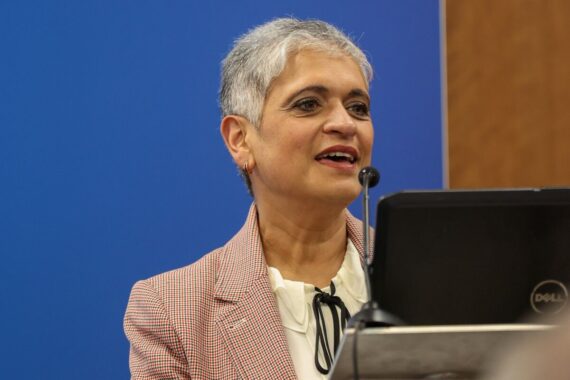


The RCGP has urged the Government to ring-fence funding for unemployed and underemployed GPs ‘at all career stages’ as part of the anticipated new 10-year workforce plan for the NHS.
The demand forms part of an open letter, signed by more than 3,000 GPs and GP registrars, from RCGP chair Professor Kamila Hawthorne to health secretary Wes Streeting.
The letter, which is still gathering signatures, asked that the refreshed plan includes a ‘clear roadmap to train, recruit and retain’ sufficient GP numbers.
And it sees Professor Hawthorne call on Mr Streeting to ‘guarantee additional ring-fenced funding for practices to hire newly qualified and currently under/unemployed GPs at all career stages as practice-based GPs’.
The college’s demand echoes the BMA GP registrar committee’s campaign to secure ring-fenced funding for newly qualified and under/unemployed GPs, while the BMA’s GP Committee has asked for ARRS funding to be handed directly to practices instead of PCNs.
The letter also called for the Government to accelerate the pledge in the 2023 Workforce Plan to increase GP specialty training places to 6,000 by 2031/32, bringing it forward to an earlier date.
This target would also require the Government to ‘expand training capacity by increasing the number of GP trainers as well as providing the space in practice buildings needed to meet future demand’.
The RCGP also reiterated its calls for the health secretary to commit to a Primary Care Investment Standard to ensure the Government and ICBs increase their spending on general practice each year.
The Government has promised a ‘refreshed’ plan to replace the 2023 Long Term Workforce Plan will be published this year.
The 2023 plan was criticised for its projected 4% increase of fully-qualified GPs by 2036/37, compared to a 49% increase in hospital consultants.
The refreshed plan will result in ‘fewer staff than projected’ but they will be ‘more motivated’ and receive ‘better training’, the Government has said.
Commenting on the letter, Professor Hawthorne said: ‘With the number of patients per GP way too high, we really need to increase GP numbers – by training more and ensuring every GP who qualifies is able to work as much as they want to.
‘We are hearing about significant blockages in the system right now. Despite growing numbers of GP registrars due to complete their training, practices are telling us that they don’t have the funding to employ more GPs, even though patient demand for our care and services is increasing.
‘This is causing widespread concern amongst the GP registrar community that once they qualify, there won’t be appropriate roles in the NHS – and it’s leading to worrying numbers to consider roles outside general practice, outside the NHS, or even outside the UK. This would be a huge loss for the health service, general practice and our patients.
‘The 10-Year Workforce Plan is the best opportunity the Government has to tackle these challenges; to increase training places, to bolster retention initiatives, and to providing ring-fenced funding to allow practices to employ the GPs they desperately need.’
Responding to the letter, a Department of Health and Social Care spokesperson said: ‘GPs are at the heart of our 10 Year Health Plan and will be central to neighbourhood health services; as we shift more care out of hospital and into the community.
‘We are backing GPs with an additional £1 billion, cutting red tape so doctors spend more time caring for patients and recruiting 2,000 more GPs. As a result of our support, patient satisfaction with GP services is rising and August 2025 saw the highest ever headcount of fully qualified GPs.
‘At the end of September we also launched a call for evidence for the 10 Year Workforce Plan, seeking views of patients and GPs, and we encourage the RCGP to submit their evidence.’
Last month, GPs were invited to share their views to inform the new workforce plan’s development. The Government has launched a call for evidence, open until 7 November, from healthcare organisations and those with expertise in workforce planning.
This followed a joint letter from more than 70 health organisations, including the RCGP and BMA, urging Mr Streeting to involve them in developing the new workforce plan.
Pulse has spoken exclusively to the BMA GP registrar committee about the GP unemployment crisis.
RCGP letter in full
Dear Secretary of State,
We 3259* GPs and GP registrars across England are writing to urge you to ensure that the upcoming 10 Year Workforce Plan commits to a clear roadmap to train, recruit and retain the GPs needed to deliver the care our patients deserve. We are pleased to see that the 10 Year Health Plan promises ‘1000s more GPs’, but this intention needs to be clearly reflected by commitments the forthcoming 10 Year Workforce Plan. We cannot keep expecting general practice to provide timely, safe care for patients if we simply do not have the means to do so.
We know that when it comes to the NHS, access to GPs is the top priority for patients, and it’s our priority as GPs too. Growing concern around GP access comes as no surprise given practices across the country cannot afford to hire enough GPs to keep up with demand. Our latest research revealed that although 61% of practice managers say they need to expand the GP workforce to meet their patient’s needs, 92% say that the lack of funding in general practice is preventing them from hiring the number of GPs they need. We feel the pressure mounting every day, and we cannot keep up if we don’t have enough boots on the ground.
At the same time, many GPs are looking for more work – our recent surveys tell us so. With a record number of GPs qualifying this year it is important that practices have the resources to employ them. Our survey found that 66% of final year GP registrars who have looked for work found it difficult. Of those who have been unable to find work, 67% said that there are not enough suitable jobs anywhere in the country, and 62% are considering leaving the UK to find work. Over one in four of all GPs said that they have been looking for work in the past year but struggled to find a suitable vacancy.
As GPs, we’re ready to do our part, and with the upcoming 10 Year Workforce Plan, you have the opportunity to turn things around and give us the necessary tools to spend less time worrying about finding enough work, and more time to focus on what we’re trained to do: care for our patients. That’s why we’re calling for you to:
- Set out how many full-time equivalent additional GPs are needed to meet patient demand in the 10 Year Workforce Plan and publish annual progress updates.
- Guarantee additional ring-fenced funding for practices to hire newly qualified and currently under/unemployed GPs at all career stages as practice-based GP
- Accelerate the planned expansion of GP training places set out in the 2023 LTWP, reaching 6,000 places earlier than the current 2031/32 target, and expand training capacity by increasing the number of GP trainers as well as providing the space in practice buildings needed to meet future demand.
- Develop a National Retention Strategy for general practice with increased and ringfenced funding for GP retention efforts.
- Commit to a Primary Care Investment Standard, with the Secretary of State and ICBs reporting annually on general practice funding, to ensure funding increases year on year.
We were pleased that as a result of the College’s previous letter signed by 10,000 of our members, you took action to swiftly create posts for newly qualified GPs and review the Long-Term Workforce Plan. However, as you acknowledged at the time, this was only ‘a first step’.
General practice can offer so much more to its patients, the wider NHS and the public purse, but we need your support to do that. Please use this opportunity to make a real difference to patient care.
Yours sincerely,
Professor Kamila Hawthorne
Chair of Council
Royal College of General Practitioners, alongside 3259 GPs and GP registrars across England.
*Figure at time of publication
Source: RCGP
Related Articles

READERS' COMMENTS [7]
Please note, only GPs are permitted to add comments to articles


Most





IMPORTANT LINKS
MORE FROM COGORA
© Cogora 2026
Cogora Limited. 1 Giltspur Street, London EC1A
9DD Registered in the United Kingdom. Reg. No. 2147432

“Accelerate the planned expansion of GP training places set out in the 2023 LTWP, reaching 6,000 places earlier than the current 2031/32 target”—- WHY? when there is already unemployment and underemployment? ohh forgot that you are not so bright or clever 🙂
Enough with the ring fenced funding. If you want to know what works, look back at the last labour government.
GP services were failing and falling apart.
Funding increases were significant but you ended up with thousands and thousands of more GPs and increased productivity per GP. While politicians point to the pay rises, the totally miss the increased productivity which matched (or slightly beat) the pay rises.
What we don’t need is centralised beurocracy. Funding to practices, no strings attached. Pay enough to make practices actually compete for patients and standards will improve.
Half of all that funding can be found within the GP contract already. Controvertially I would end funding for premesis and roll all of that in to capitation. That means practices wont benefit or be harmed unfairly by premesis funding and practices can fund premesis themselves.
The entire GP system solved in 5 paragraphs. All for about £6Bn more funding, which is not a particularly large ask to sort out this mess.
It’s always more money.
Record levels of taxation, and 10% of that tax paying the interest on record levels of national debt.
Perhaps look at reversing the ever declining productivity?
Raising extra money with charges?
Tax exemptions for private healthcare to reduce NHS demand?
Vote with your feet people.
1. We’re not broke. Basic economic facts – as a currency sovereign, we can never go broke – that’s a myth peddled by crazy neoliberal economists. Deficits are good (in fact over the last >200 years we’ve mainly had deficits in most years). National debt is not a burden but an investment in our country, and never needs to be repaid (eg by our children, as the neoliberals’ lie goes). 50 years evidence of neoliberal economics has clearly shown that this type of economic thinking serves the rich and powerful, has created huge inequality, and is corrupting democracy.
2. Taxes aren’t at record levels – post ww2 when we built the NHS, state education,..and large parts of our common public goods, not only had we just spent loads on the war but we spent even more, and taxes went up to >90%. We thrived well for decades.
3. The economy would do better if the Govt spent and allocated idle resources (labour, capital etc) to drive the economy instead of using the “fear of debt and spending and how will we pay for it” to disguise the fact that they’re catering to private interests, just like the Tories did. Eg why are some GPs being left unemployed and unused? Proving the Govt’s an idiot. The question the Govt should ask is not “how do we pay for it?” But rather “what does our country want (eg a great NHS again) and how can we resource that?”
4. None of this is the fault of ordinary people so they shouldn’t have to pay, but it is the fault of our political class.
5. To properly fund the NHS is a decision of political will, the constraints are whether we have the available resources to put into use (labour, capital, infrastructure etc) and to monitor inflation (which can be managed by monetary and fiscal policies)
6. We need stories of hope from our leaders, not demonise and divide politics.
RCGP is a major part of the problem and has significant responsibility for the current crisis-their statements reflect the desire for Knighthoods , Baroness , Dame , Lord , Lady etc etc. titles and nothing else in my humble opinion other than the further quest for overinflated membership, course or exam fees. Their abject and hopeless representation of General Practice over decades is the simple reason why the public and politicians simply do not understands how complex General Practice and its medical and financial grounding actually is. Without these basic foundations, there can be no progress.
I agree with all of you.
Also whether you believe neoliberal theory or not GPs (practices) are by far the most/only cost effective part of the NHS so literally just funding us properly, (no strings attached, no ARSS-if they want to choose any metric choose total appointment time spent direct with patient F2F/phone)-the £6 billion sounds good and it would end up a cost saving overall-
because it will lead to less A&E attendances, less referrals, less unnecessary investigations etc etc.
PLus they need to forget about ‘productivity’ what a BS metric for healthcare-what you want is cost efficient which is to see the total NHS bill go down, and for that they need to tackle obesity and fast food -ie implement the Dimbleby food commissions recommendations which will bring in tax revenue and be net gain from tax income, and target the main preventable health risk that is driving our appalling health.
Obesity is set to overtake smoking as main preventable cause of cancers overall. It drives type 2 diabetes, IHD, stroke, htn, liver disease-do you remember when fatty liver was quite rare and pretty much alcohol caused-now it’s everyone and it’s obesity, OA-joint replacements.
I see twenty year olds with htn from obesity, I mean WTAF.
How much of GP surgery time and prescriptions down to these obesity related conditions; most of it.
Obesity is pro inflammatory, you name a health condition; obesity and ultra processed food is likely driving it.
So yes this could be done properly and save the country money. But the government is only interested in profiting their corporate donors.