

Streeting praises GP ‘can-do attitude’ as 99% implement online access changes


Almost all practices in England are now complying with new contractual requirements to keep their online consultation tools open throughout core hours, NHS England has said.
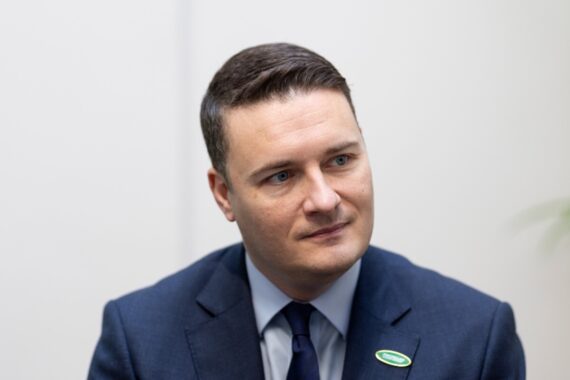
Health secretary Wes Streeting said that this shows ‘a can-do attitude from GPs’ and thanked practices for their efforts.
According to the Department of Health and Social Care, 98.7% of GP practices confirmed that their online consultation tool is switched on for the duration of core hours, although not all practices have declared their status. In all, 5,981 of 6,207 (96.4%) of GP practices responded to the question.
DHSC added that ICBs ‘review compliance routinely’, with support provided ‘for the minority of practices’ yet to fully implement the requirements.
Last week NHS England data showed that online patient requests submitted to GP practices went up by over one fifth in first month of new contractual access requirements. Over 8 million patient submissions were received by GP practices during October, up 21% on the previous month and up more than two thirds (68%) on last year.
Releasing the first set of data since the new requirements came into force, the commissioner said that ‘around one in three online requests’ were for ‘non-clinical reasons’ such as admin requests and repeat prescriptions, while 5.5 million were ‘clinical in nature’.
It comes after Pulse revealed GP concerns that the new requirements around online requests risk compromising patient safety, with patients reporting breathing difficulties, severe vomiting, acute abdominal and chest pain, and rectal bleeding through online forms.
Mr Streeting said: ‘In the 21st century, patients expect to be able to manage healthcare at their fingertips, and so they should. We organise so much of our lives online, there’s no reason the NHS should be any different.
‘I want to thank GPs and their teams for rolling this out. Eight million patients used online access in October alone, taking advantage of the flexibility and convenience.
‘These numbers show there was huge appetite from patients and a can-do attitude from GPs. We promised to end the 8am scramble, and this is a massive step towards that ambition. After more than a decade of decline, we are bringing our analogue NHS into the digital age.’
At the end of October Mr Streeting had urged ‘lagging’ GP practices to implement the changes and ‘move with the times’.
NHS England primary care director Dr Amanda Doyle said: ‘I want to thank our hard-working GPs and practice teams who are doing everything they can to support patients get the care they need, especially as we head into the winter months.
‘Flu arrived earlier than expected this year, so we’re urging people to come forward for their flu jab – it’s not too late. Getting protected before the festive period is one of the most important steps we can all take to help keep ourselves well and support the health service through the colder months.’
Meanwhile, primary care minister Stephen Kinnock told Pulse the rollout of mandated online consultations was ‘clear proof’ that the ‘best way to judge a service is to see how it works for patients’ – achieved in spite of ‘a small band of refuseniks’ within the BMA, the minister added.
Mr Kinnock said: ‘Thanks to online access, we are ending the 8am scramble for appointments. This is in spite of objections from a small band of refuseniks in the BMA’s GP Committee who warned that online access wouldn’t be successful.
‘That doesn’t mean online access works for everyone – patients with urgent issues should be directed to call or attend in person, or diverted to a more appropriate service. But the benefits are clear: improved patient experience, better triage, and more capacity to focus on those who need face-to-face care most.
‘Online access to appointments is a vital tool for protecting the NHS this winter, easing pressure on A&Es, and a crucial part of our mission to create an NHS fit for the future.’
The minister added that ‘general practice has not been overwhelmed’ by the online access changes.
A spokesperson for the Rebuild General Practice campaign said: ‘Online access is useful, but it does not fix the core problem. With GP numbers falling and demand rising, directing more patients through digital routes only adds pressure and increases the risk of unsafe triage. Every patient deserves timely, safe care from a GP who knows them. That requires investment in general practice, not more demand without capacity.’
The BMA has formally entered a dispute with the Government over the changes and GP leaders recently voted in favour of refusing to engage with the requirements as part of collective action against the Government.
In an exclusive op-ed for Pulse, Dr Doyle recently argued that the changes are essential for general practice to keep pace.
Pulse also revealed that GP practices are spending time equivalent to more than 200,000 appointments a week implementing new online access changes, which is increasing waiting times for patients and working hours for staff as a result.
Related Articles

READERS' COMMENTS [14]
Please note, only GPs are permitted to add comments to articles







More of a ‘must do’ attitude really, considering we were told we had to do it or else…
Whisper it quietly Mr Streeting might be on the side of patients and public opinion. if we have a health secretary who wants to invest in primary care preferentially then where do resources go? Primary care GPs/staff (more than our hospital colleagues) have always ‘managed’ with less of the cake. Our colleagues in deprived areas get even less and their patients are iller and die younger. Our leaders should be putting them first in any negotiations including encouraging/ improving wider team based primary care( because they do better there). I suspect if they did Mr Streeting might engage more positively. To our lofty leafy committee GP leaders: try trickle up not down.
If the government has actually listened to GPs and understood what they were trying to say they wouldn’t have escalated this.
The practice used in all the publicity has online access for GP requests open 7.30-4.30pm and admin only 4.40-6.30
This would have been a solution for many. I suspect they might be in breach of the contract although probably not in spirit .
The problem for the BMA is that they have to advise on the law of the contract. Therefore can’t be pragmatic. This is an argument over a misunderstanding and that is coming from Government
We need to win the argument around improving recruitment, retention, and working conditions in general practice, the engine room of the NHS. A strong, as part of a multi-neighbourhood provider, offers us huge opportunities.
If the government wants to make any headway with its ambitions to move more care out of hospitals or to shift the focus of care from reactive to preventive, it needs to ensure that the GP contract is far better funded and has the flexibility to ensure that the additional GPs we train can actually find work. Whether this comes through our involvement in multi-neighbourhood providers or a new GP contract remains to be determined.
The Secretary of State needs to understand if you overwhelm general practice, making it impossible for GPs to perform their duties efficiently and effectively, the result will be a never-ending queue of ambulances outside an A&E department. One in 20 might contain someone with time-critical, life-changing health needs; but the hospital will always struggle to sort the wheat from the chaff. What they need is an experienced generalist upstream to help manage demand. This is the only way to prevent the system from descending into chaos. I think this is part of the DH rationale behind neighbourhoods, but it has to be done fairly and must be invested in properly.
Who carries the can for unsafe triage? Doyle has not communicated the necessity for safe software but implemented the mandate with wilful denial.
Streeting is so intent on his soundbites, like ‘analogue to digital’, that – like Jeremy Hunt – he is deliberately sacrificing patients’ safety and will cover their backsides later by blaming “careless” or “reckless” GPs, when terrible and avoidable harm happens.
Now watch them all resign or retire under the intolerable pressure you have put them, Mr Streeting
First we had a complete Hunt in charge now we has Wes the w@@@@@@.It never changes the exodus will continue and the ambition for care in the community will go the same way as mental health care did in the 1980s. Can of special brew on a park bench anyone
Gaslighting sociopath.
Very trumpian; creating his own version of reality.
Wes makes Hunt look good
Will he also praise the now 300+ patients on waiting lists extending to 4-6 weeks?
Divide and rule…
Some comments here explain why Mr Streeting has a point with the BMA-personal attacks are unprofessional and destructive to our reputation. I agree with Douglas that our priority is to reduce queues outside hospital and on corridors and our debate should be about how we do that. Teams of all skills are needed to prevent elderly defaulting to casualty, especially in deprived areas. The model of trickle down from richer practices to poorer ( vested BMA GP committee)) do not work and increase inequality. Our colleagues who work in the toughest areas like Blackpool, Hull, Knowsley etc should be first in the queue for resources. We can argue how but let’s at least suggest solutions to the massive inequality in health outcomes and staffing levels in these places. We also must talk about patients first and our incredible NHS to regain public trust.. or we lose it forever.
Trite and disingenuous.
Mr Kinnock is wrong. Practices are being overwhelmed by online access-just not acutely. More of a slow boil which will lead to safety issues, burnout and exhaustion from the doctors. We are the frog in the water on the cooker-slowly the heat is getting turned up and we will slowly expire. We need to be given some control back about our access to be able to manage the ever increasing demand safely. They need to have some trust in their frontline clinicians who have shown time and time again how adaptable, innovative and patient centred we are.
Not sure what the trite and disingenuous comment was about…perhaps that’s intentional? If our politicians words perhaps you could provide solutions that don’t involve AI and are not just more doctors for every patient contact? With increasing health inequality despite there being 4 times as many doctors qualifying as in 1986 this argument might not wash. My suggestion is we put those areas with most health needs first then build the solutions supporting those doctors and other professionals working there(where they historically have not). Instead we are putting doctors first and the public ( and so politicians!) have noticed!