

GP practices raise concern over ‘loss-making’ diabetes care demands
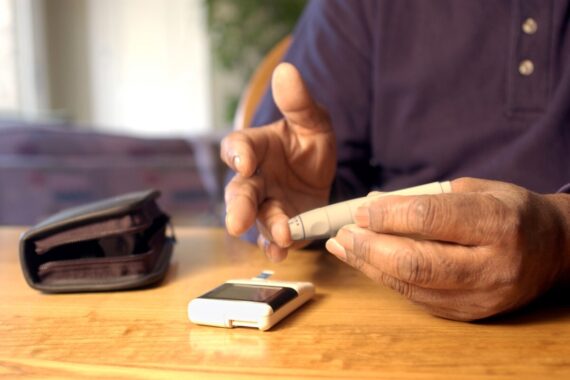


GP practices in one area have raised concerns they are offering diabetes care at a significant loss – with one practice claiming it now loses £150,000 a year providing the services.
Practices in the Leicester, Leicestershire and Rutland (LLR) ICB area have raised concerns about ‘difficult to deliver’ demands within a local enhanced service that carries a ‘significant workload burden’ via mandatory training, requires GPs to meet screening targets ‘outside the practice’s control’, and asks them to undertake follow-up work around patient non-attendance.
One Leicestershire GP practice manager claimed that the cost of delivering the LES significantly exceeds the value of the funding. They calculated that up to £17,000 annually was available to provide the service but it cost around ‘£14,000 per month in GP resource alone’ to deliver.
GP resource costs calculation (indicative)
600 diabetic patients seen face-to-face each month;
Assuming 13 patient contacts per session, contacts related to diabetes care are equivalent to just over 46 GP sessions per month;
Using £95,000 per annum (including on-costs) as average a for 6-session salaried GP, one session costs £304.49;
£304.49 (cost of one session) x 46 (no. diabetes-related sessions per month) = £13,984 per month.
The practice manager said: ‘Many of these patients would, of course, still require review regardless of participation in the enhanced service, so it is difficult to isolate the exact additional cost attributable solely to the LES.
‘The key point is that whichever methodology is used, the resource commitment appears significantly greater than the value of the enhanced service funding.’
The practice manager said if a practice only carried out core diabetes services, many enhanced activities would be ‘difficult to avoid’ and practices would be providing them unfunded.
They told Pulse: ‘Our concern is that, even if a practice chooses not to sign up to the enhanced service, many of the activities remain difficult to avoid within core general practice. Patients with diabetes will still require reviews, medication management, prescribing, monitoring and escalation where appropriate.
‘Whilst the enhanced service undoubtedly increases the intensity and structure of this work, it is not entirely discretionary in the same way as some other enhanced services. As a result, practices may find themselves continuing to undertake a significant proportion of the workload without the associated funding.’
The diabetes enhanced service specification seen by Pulse shows the ICB pays GP practices £17.50 per diabetic patient per year to provide diabetes care as per the GMS contract, as well as covering the cost of training staff involved in diabetes treatment.
Additional payments to deliver enhanced services totalling £7.50 (30% of the total annual payment) are dependent on additional outcome targets.
The practice manager said these additional targets were often ‘outside the practice’s control’ to influence – for example, including diabetic eye screening attendance as a target, despite screenings being delivered by external providers.
Achievement outcomes
1. 3 ‘forgotten’ Care Processes (foot checks, retinal screening, urine albumin) in line with local average;
Local average: 63%
Percentage/payment: 10% (£2.50 per Diabetic patient)
2. Minimum 10% improvement in 3 Treatment Targets and 9 Care Processes for Diabetic patients who are housebound/live in a care home or have a Learning Disability in line with local average improvement;
Local average: N/A – individual list sizes
Percentage/payment: 10% (£2.50 per Diabetic patient)
3. 3 Treatment Targets and 9 Care Processes for people aged between 19-45 with Early Onset Type 2 Diabetes (EOT2D) in line with local average;
Local average: 3TTs – 22.5%; 9CPs – 24.4%
Percentage/payment: 10% (£2.50 per Diabetic patient)
Source: Service specification, Primary Care Enhanced Diabetes Service
LLR LMC chair Dr Adam Crowther told Pulse concerns about the diabetes enhanced service have been raised to the LMC by multiple GP practices.
He said: ‘There’s been consternation about the LES from enough practices to make it noticeable to the LMC. My colleagues who have worked on that particular LES with the ICB were particularly frustrated about the difficulties in terms of resourcing.’
At last month’s LMC conference, some GPs argued a relatively small amount of practices – around 25-30% – in an area declining to take up a service could create a ‘critical mass’ practices to secure better funding and more attractive conditions for providing a LES.
Asked about the possibility of GPs doing the same with the diabetes enhanced service, Dr Crowther said: ‘I’m sure that would give leverage. However, you will always get practices that are absolutely committed to their patients, and I think lots of ICBs recognise that and will take that goodwill for granted when it comes to commissioning services for general practice, because they know that number of GPs will endure what they can.’
LLR ICB told Pulse if GP practices did not take up the enhanced service, ‘community diabetes specialist nurses provide coverage to enable patients to have a specialist service closer to their home’.
Responding to the practice manager’s claim that the payment is too low and conditions to receive the enhanced payment unreasonable, the ICB told Pulse: ‘The payment model is based on verified diabetes registers, with a set payment per registered diabetic patient, regardless of the complexity of care required. This payment compares favourably with the payments set by other systems in our region.
‘Historically, QOF data has been used as the source for these registers. However, as QOF data is published with a delay, payments were previously based on the prior year’s register. More recently, updated registers have been used, reflecting current patient numbers more accurately.
‘As the system evolves, the ICB is moving towards a more outcome-based approach, aligning with broader shifts away from single-disease management. Importantly, this enhanced service also provides additional income on top of QOF and has already demonstrated practices improvements in quality of care alongside financial incentives for practices.’
Dr Crowther said: ‘Outcomes are all well and good, but they don’t necessarily recognise the work involved in trying to achieve them. Some outcomes with a certain practice population will be very easy to deliver and for different practice population may be incredibly difficult to deliver.
‘That isn’t necessarily about the quality of the work that’s being completed by the practitioners.’
Visit Pulse Reference for details on 140 symptoms, including easily searchable symptoms and categories, offering you a free platform to check symptoms and receive potential diagnoses during consultations.
Related Articles

 Oviva’s fully remote Tier 3 Weight Management programme
READERS' COMMENTS [1]
Please note, only GPs are permitted to add comments to articles






the reorganisation that we are seeing seems to actually lead to primary care actually referring patients back into the acute trust for management. These are conditions that were typically managed in primary care. if we look at areas that are underfunded in primary care, then what then needs to happen is that what is the mechanism by which primary care can refer patients back into secondary care. this should then be costed. the LES fee should then be set appropriately. There should be a desire with all system partners to look at how we can reduce cost of healthcare delivery. This is the mature system approach that we should aspire to and work in partnership to deliver.