

Optometrists to bypass GPs with direct hospital referrals
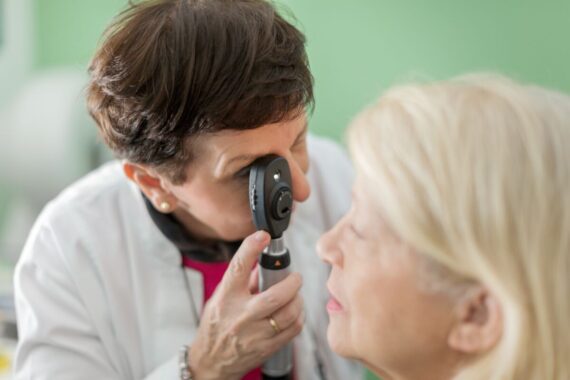


Optometrists across England will be able to directly refer patients to hospital within two years, in a move the Government said will free up GPs.
The Department of Health and Social Care announced it will invest £20m to give community-based optical practices with an NHS contract giving ‘100% access’ to the NHS e-Referral service and National Care Record Service by 2028 – a move which GP leaders have told Pulse they welcome.
This would enable optometrists to refer directly to hospital eye services, including NHS Online, an ‘online hospital trust’ which the Government recently formally established. It anticipated this would reduce ‘unnecessary hospital trips’ and ‘free up GP appointments.
Conditions where optometrists nationally will be able to refer directly to hospital include glaucoma, cataracts and age-related macular degeneration, the DHSC said.
The announcement said: ‘Community-based optometrists will be able to refer patients directly and digitally into NHS hospital eye services – including NHS Online when it launches next year – with access to relevant patient records to support faster and more accurate clinical decisions.
‘This will reduce unnecessary referrals and mean fewer people need a separate appointment simply to be passed on to a specialist, saving patients time and easing pressure on GPs.’
It explained the £20m would ‘fund access to the NHS e-Referral service for all community-based optical practices in England with NHS Contracts’ as well as the National Care Record Service, ‘allowing optometrists to view relevant eye care records to inform their clinical decision-making and save patients having to repeat their issues’.
The investment would also cover training and support for optical practices using the digitised systems, the Government added.
Doctors’ Association UK GP spokesperson Dr Steve Taylor told Pulse he anticipated the move would improve patients’ experience without negatively impacting GPs.
He said: ‘From a GP point of view, I can’t see a huge problem in conditions being referred directly. Whether it’s optometrists or opticians, the qualification of the person referring has got to be to be right, but most of the stuff that they’re referring is based on their machines.
‘Of all the things that GPs don’t need to be dealing with, eyes is one of them. It makes sense that opticians can refer directly regarding eyes. It’s probably a no-brainer.
‘It probably just takes a bit of the delay out of the service. If an optician refers to a GP and asks us to refer to the eye hospital, we’re not going to say no.’
And Essex LMCs chief executive Dr Brian Balmer said the move was ‘better for patients’.
Dr Balmer told Pulse: ‘The kit they [optometrists] have got is remarkable – it goes way beyond what any GP is going to do. So if they think a patient needs a referral, they should be able to do it. Going by the GP is just rubber stamping it.
‘I would be entirely for it and I can’t imagine why anybody wouldn’t be.’
Care minister Stephen Kinnock said: ‘For too long, patients have faced unnecessary delays, avoidable trips to hospital and a fragmented system that hasn’t put their needs first. That changes from today.
‘This £20m investment will bring eye care closer to home, equipping high-street optometrists with the digital tools they need to refer patients faster and more accurately.
‘This is exactly the kind of modernisation that will help shift the NHS from a one-size-fits-all, hospital-first model to one that is community-based, preventative and truly fit for the future.’
Last year, the Government launched a consultation on proposals to change prescribing rules so that some common and emergency eye conditions could be treated with drugs obtained on the high street. The Government said this would help alleviate pressure on GPs and hospital eye services.
Visit Pulse Reference for details on 140 symptoms, including easily searchable symptoms and categories, offering you a free platform to check symptoms and receive potential diagnoses during consultations.
Related Articles

READERS' COMMENTS [3]
Please note, only GPs are permitted to add comments to articles






I note the photo shows an auroscope not an ophthalmoscope. Wow! Let’s hope referrals aren’t coming from that assessment
Opticians can already refer directly to the Hospital Eye Service.
If we want to reduce uneccessary trips to hospital or GP for patients, perhaps Optometrists should be instructed to refer patients to Opticians before GP or HES ?
Or even make referral a function of mobile phones, since they can already scan eyes and retinas.
In South East London I send people to the minor eye conditions service (MECS) which is run by the local optometrists. They see patients quickly (within 1-2 days of the patient contacting them) and have both the equipment and the skills to do a much better examination than I can do. They are empowered to refer to the hospital, and let the GP know if they do this . A few opticians outside the system still send us GOS18 forms… If I do send a referral to ophthalmology myself, it is actually triaged by the same optometrists who run the MECS. I think it works well and the patients get a better service. I have not heard any complaints about it. I believe this operates in other parts of the country too.