

NHS England ‘hyper-focus’ on access has cut GP capacity to manage frailty, MPs warn
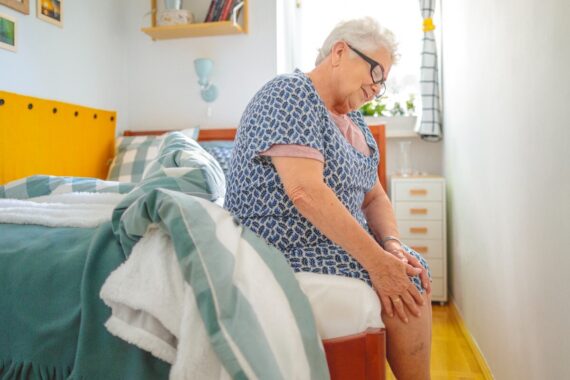


GPs are struggling to assess and manage vulnerable patients with frailty because NHS England has ‘overloaded’ GPs with the push for digital access, a committee of MPs has warned.
A ‘hyper-focus’ on access has had knock on consequences for GPs ability to offer preventive care for older people, the Public Accounts Committee found.
And it called on NHS England to take a ‘long hard look’ at what it expects from GPs.
While GPs are contractually required by NHSE to identify, assess and support people living with frailty, limited capacity means they are not currently able to deliver on the requirements, a PAC report warned.
The committee called on NHS England to set out ‘the basis on which it considers GPs and general practice have the capacity to deliver the full ranges of services and responsibilities expected from them’.
Figures show that just 17% of the over 65s were assessed for frailty in 2024/25.
In that same year, 226,000 people were diagnosed with severe frailty but only 16% had a medication review, and 18% had a falls risk assessment.
The committee said this level of care was ‘not acceptable’ but placed the blame squarely at the door of government and NHS England policy.
It follows a report last year from the National Audit Office also strongly criticising the level of support available for frailty.
It also found significant and unexplained regional variation in support for people with frailty, suggesting that better performance is ‘clearly possible’.
In 2024/25, 32 of 106 local NHS areas assessed less than 10% of their registered patients aged 65 or over but nine areas assessed 90% or more.
NHS England told the committee it had asked ICBs to tackle the variation, but the PAC said a threshold for intervening should be set alongside clear plans of how poor performance should be tackled.
But it also noted it is not clear exactly who is responsible for improving standards.
In evidence to the inquiry, NHS England recognised that it had pushed GP practices very hard over the past couple of years to improve access, which inevitably causes consequences to appear elsewhere, the committed noted.
It told the PAC that it is looking at other healthcare professionals sharing the service, such as community pharmacists undertaking medication reviews.
But the inquiry received evidence from pharmacists keen to do this work who told the PAC it is not adequately funded.
The PAC also said it has ‘deep concerns’ that the government’s planned cuts to ICBs are insufficiently thought-through ‘and will harm their ability and capacity to carry out their important work’.
PAC chair Sir Geoffrey Clifton-Brown said: ‘Those at risk of frailty need preventative and follow-up care – indeed, the value of this kind of care is so well-established that it is a requirement in GPs’ contracts.
‘Yet our report shows that in too many parts of the country GPs are simply unable to do this important work, overloaded as they have been with new and expanding priorities from NHS England.
‘NHSE needs to take a long hard look at what it expects from both the wider health system and from GPs, who are only human beings, running already complicated operations, and with limited resources.’
He added that the NHS and government must also closely assess the impacts of changes they wish to make, including the cuts to local health boards – a topic which the committee is planning to return to.
‘NHS England has been hyper-focused on ensuring people’s access, and digital access, to general practice.
‘However, we have an ageing population in this country, with millions of people at risk of frailty. Our report must act as a warning that any success in ensuring such access must not be built by a system turning its face away from older people as it prioritises other things.’
RCGP president, Professor Victoria Tzortziou Brown said: ‘What this report lays bare is that concerns raised by the college and others – that prioritising online access to our services without equal focus on continuity and proactive care may have unintended consequences for other areas of care, and risks disadvantaging some of our most vulnerable patients – are well founded.’
The British Geriatrics Society welcomed the report and said the findings were ‘unfortunately not surprising’.
It noted that the Modern Service Framework for Frailty and Dementia currently in development, ‘presented an opportunity to address these issues’.
An NHS England spokesperson said: ‘While this focus to improve access is starting to pay off, we clearly need to ensure older patients and those living with frailty continue to get the care and support they need – and new neighbourhood health teams, working alongside GPs and community services, should help shift the focus to priority groups of patients, including those with frailty and dementia.’
Visit Pulse Reference for details on 140 symptoms, including easily searchable symptoms and categories, offering you a free platform to check symptoms and receive potential diagnoses during consultations.
Related Articles

READERS' COMMENTS [5]
Please note, only GPs are permitted to add comments to articles







They were warned at length and still ignored the guidance and genuine advice that was offered.
Also, it appears Streeting MP knew exactly when to leave the NHS poison chalice and get out: no commitment to NHS or GPs.
What kind of challenger to the post of Prime Minister would he be? Useless. Absolutely useless.
Shocking. It’s almost as if we don’t have infinite time and doing new things will leave us unable to do old things.
If only someone could have warned them!
well well well
‘NHSE needs to take a long hard look at what it expects from both the wider health system and from GPs, who are only human beings, running already complicated operations, and with limited resources.’
opening online access has opened the flood gates for skin blemishes needing appts and tired all the time bloods ,where on earth is the time to manage the core medicine of frail elderly patients-what a shame !
DoH and NHSE are failing the vulnerable and again it will be the humble GP’s fault