

Childhood vaccine uptake rates for all main booster jabs continue to fall
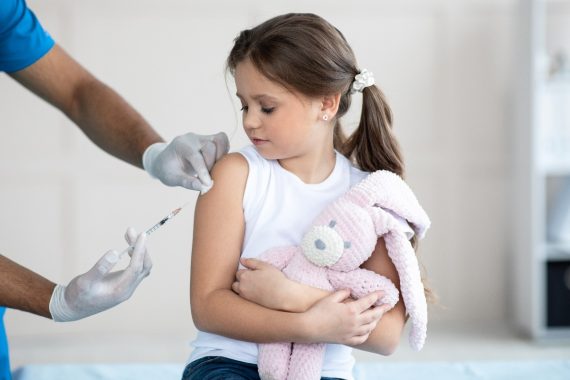


The UK Health Security Agency (UKHSA) and NHS England are asking parents to check their child’s vaccine records and catch up on any missed vaccinations with their GP practice, as uptake rates for all main booster jabs for children under five have decreased in England last year.
UKHSA published the figures for its cover of vaccination evaluated rapidly (COVER) programme annual report.
It revealed 91.9% of children who turned five between April 2024 and March 2025 had received one MMR (measles, mumps and rubella) dose, while 83.7% had received both.
The one dose figure is the lowest since 2011, while the rate for two MMR doses was the lowest since data collection began in the 2009/10 year.
It showed that 18.6% of children, almost 1 in 5, have not received their pre-school booster jab.
The World Health Organisation (WHO) recommends at least 95% of children should be immunised to achieve herd immunity against vaccine-preventable diseases – a standard not met for any of the main booster jabs.
Meanwhile, just 81.4% had received a 4-in-1 shot – for diphtheria, polio, tetanus and whooping cough – down from 88.5% a decade ago.
And 92.8% had received a six-in-one jab, showing an on-year increase, though this figure was still down nearly three percentage points from ten years ago.
The figures also showed sharp regional variation in uptake rates, with London performing worse than many other areas.
As with England as a whole, four-in-one shot uptake was the lowest among the vaccines in London, but just 63.8% of five-year-olds in the capital had received it – a difference of more than 17 percentage points. And only 69.6% of children aged five had received both MMR boosters.
A data quality note alongside its publication said ‘system changes’ in data collection in London this year meant figures for these two vaccines were likely to be underestimated.
It said falls in coverage ‘should not be used in isolation for local vaccination performance management or to direct public health action’.
UKHSA director of immunisation Dr Mary Ramsay said: ‘Far too many children will not be fully protected and safe when starting school and are at risk of serious diseases, such as measles and whooping cough, that have in recent years caused outbreaks.
‘Measles, being the most infectious disease, is the “canary in the coalmine” and a wake-up call that urgent action is needed to stop the very real risk of other diseases re-emerging.
‘That is why there needs to be a concerted effort in providing these vitally important vaccines, to make time to speak and reassure any parents who may have concerns and make it as easy as possible for their children to get vaccinated.
‘Parents should check their children are up to date with all their jabs and, if not, contact their GP practice as soon as possible.’
Primary care minister Stephen Kinnock urged parents to contact their GP practice if any jabs were missing from their record.
He said: ‘Too many children are starting primary school without complete protection against preventable and potentially serious illnesses like measles, whooping cough and mumps.
‘We know parents want to do right by their children and we’re working with the NHS to make it easier for all families to access these life-saving vaccines.’
Earlier this year, UK public health officials warned meeting the WHO’s 95% target would require ‘sustained effort’.
And in July the RCGP warned of the need to ‘restore momentum’ to the MMR vaccination programme after a child in Liverpool died after contracting measles.
Today, the Government confirmed that GP practices will offer a combined vaccine for measles, mumps, rubella and varicella (MMRV) as part of the routine childhood vaccination schedule from January next year.
Visit Pulse Reference for details on 140 symptoms, including easily searchable symptoms and categories, offering you a free platform to check symptoms and receive potential diagnoses during consultations.
Related Articles

 What do people really know about rare diseases?
READERS' COMMENTS [5]
Please note, only GPs are permitted to add comments to articles







This is not at all helped by messageing from the JCVI.
The spokesperson on the radio this morning was spouting misinformation nonsense about the chickenpox vaccine which is going to lead to more reduced confidence and belief in anything JCVI say in the future now.
A rigth shotgun to foot moment!
It should be mandatory or no NHS care if they catch it. Why should others fund their decision.
Truthfinder : some people are unable to have some kinds of vaccine, due to allergies, chemotherapy, or lack of certain kinds of white cells means they catch them despite vaccination. I have seen children on their third episode of chickenpox. We have had this vaccine for years, but until last year JCVI said it was better to catch chickenpox, survive the risks, and then have multiple episodes of shingles in later life, or have Shingrix to reduce them. Now, they plan the eradication of all chickenpox within a couple of years – This requires the execution of all those older children and adults who have caught it in the past before vaccines were available, who may pass it on from shingles to the small number who do not develop immunity from the vaccine, and all foreigners. Something wrong with the logic there.
Vaccines should be mandatory prior to enrolment in nursery or school. Also child benefit should also be dependent on vaccination. True allergy or contraindications unusual but if consultant paediatrics feel exemption then allowed for medical reasons.
I hear parents say they have done their research and feel vaccines unsafe but happy injecting online GLPs and smoking/raping.
Research from Facebook and Internet social media scaremongering doesn’t count as research.
Mandatory vaccination, would not work but a concerted effort to jag the bairns would. Perhaps a focus on protecting children and spending less time chasing adults with established, and mostly preventable, disease would help.
The children need protection the fat adult has made an informed choice.