
Targeted prostate cancer screening programme to be rolled out next year, DHSC confirms
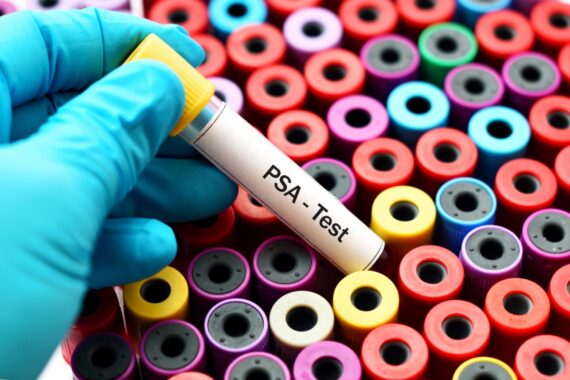


The Government has accepted a recommendation from the UK National Screening Committee (NSC) to introduce England’s first targeted prostate cancer screening programme.
The Department of Health and Social Care said today that the programme is ‘expected to be rolling out in 2027’.
It comes after last week the NSC advised against whole-population routine NHS prostate cancer screening – recommending instead a targeted screening programme involving PSA testing every two years for men aged 45 to 61 who have a pathogenic BRCA2 variant with a family history of breast, ovarian, pancreatic, or prostate cancer.
DHSC also announced that the TRANSFORM trial, funded by Prostate Cancer UK and the National Institute for Health and Care Research (NIHR) and testing the best ways to detect prostate cancer earlier, will be expanded so that all eligible Black men – aged 45 to 74, who have not had a PSA test or prostate MRI scan in the last five years – will be invited to take part.
The Government is working with the UK Cancer Genetics Group and Cancer Research to ‘explore guidance’ to help GPs support men with a suspected family history of prostate cancer who are not eligible for screening but ask about a PSA test.
Guidance for GPs and the public will be updated in line with the new recommendation to ‘make advice clearer and easier to follow’, including ensuring that for those men where existing clinical guidance recommends annual tests are offered, that offer will be continued, DHSC added.
And from 2027 men diagnosed with prostate cancer that is being actively monitored or treated will be able to order PSA tests at home, or book an in-person blood test locally through the NHS App.
Health secretary James Murray said: ‘This is a major step forward in how we tackle prostate cancer – focusing on those most at risk, improving the treatments available, and backing the research we need to close the evidence gaps and save lives.
‘We’re following the science to make sure men get earlier answers and better care, and to avoid doing unnecessary harm.
‘By investing in research through trials such as TRANSFORM, we’re building a fairer, more effective prostate cancer screening system for the futures.’
RCGP president Professor Victoria Tzortziou Brown said: ‘GPs are committed to improving the early detection of prostate cancer and reducing the number of lives lost to the disease.
‘Screening programmes should be introduced where there is clear evidence that the benefits outweigh the potential harms.
‘The NSC’s recommendation reflects the current evidence on PSA-based population screening, including concerns about overdiagnosis and unnecessary treatment, and we note the Government’s decision to accept this.
‘At the same time, we recognise the need for continued progress. We welcome ongoing research, including the expansion of the TRANSFORM Trial, to develop more accurate approaches to identifying clinically significant prostate cancer. We hope advances in testing and risk assessment will inform future screening policy and improve outcomes for patients.’
DHSC chief scientific adviser and chief executive officer of the NIHR Professor Lucy Chappell said: ‘Expansion of the TRANSFORM trial to all eligible Black men is a massive step forward in strengthening the evidence to find the best, most effective and safest ways to screen those at highest risk of prostate cancer.
‘The investigator team will continue to work closely with Black community leaders and organisations to support meaningful participation in research across all parts of our society.
‘Building a screening programme on the strongest possible evidence depends on people from all backgrounds taking part. We encourage anyone invited to take part to take up this opportunity.’
In November last year, the NSC had already said a draft recommendation that it was set to advise against routine NHS prostate cancer screening.
It came under increased pressure last year to reconsider PSA testing policy, particularly after Sir Chris Hoy’s announcement that he had been diagnosed with terminal cancer.
Last month, an updated Cochrane review concluded there is evidence that PSA screening reduces prostate cancer deaths.
Visit Pulse Reference for details on 140 symptoms, including easily searchable symptoms and categories, offering you a free platform to check symptoms and receive potential diagnoses during consultations.