

BMA criticises chancellor for ignoring general practice in Autumn Budget
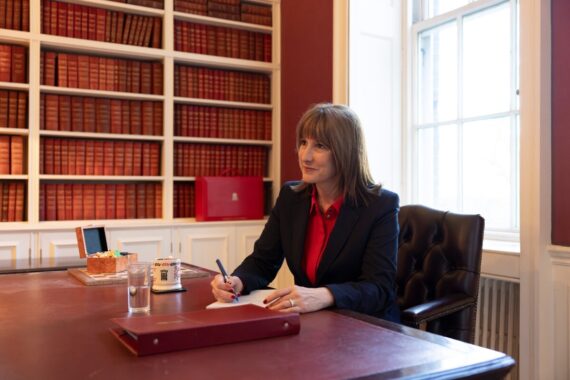


The BMA has criticised the chancellor’s Autumn Budget as it did not commit to a specific level of funding for neighbourhood health centres and seemingly ignored general practice.
In its own analysis of the Budget announcements, the union said that beyond the commitment to neighbourhood health centres, ‘there was little in the budget directly related to GPs’, despite their ‘crucial role’ delivering primary care.
And it warned that with inflation higher than expected, it is ‘likely’ the cost pressures that GPs have endured over recent years ‘will continue to impact their service provision’.
‘Without any additional funding, there were some announcements in the budget that will likely push costs up even further,’ the union said.
The Budget confirmed there will be no increases to national insurance or income tax, nor a tax on partnerships, which had been subject to speculation in recent months.
However, GP practices’ pay bills will increase again as the National Minimum Wage and the National Living Wage will go up from April.
This will see a full-time worker on the National Living Wage getting an increase in pay of £900 a year, while someone on the National Minimum Wage will see a £1,500 increase.
GP accountants have previously told Pulse that the rise needed to be accompanied by funding increases for GP practices to cover the increased costs.
The BMA pointed out that the chancellor ‘re-announced’ that 250 new neighbourhood health centres would be established, with 120 to be operational by 2030, but that it did not commit to a specific level of funding.
And it warned that the return of Public Private Partnerships (PPP) as a means of funding healthcare ‘will likely be a major concern’.
Previously, GPs had expressed concern over proposals to reintroduce the model for taxpayer-funded projects ‘in very limited circumstances where they could represent value for money’.
The union added: ‘Rather than committing a specific level of funding, the Budget only alludes to a Neighbourhood Rebuild Programme which will rely on Public Private Partnerships (PPP).
‘It suggests that PPP models will combine with public investment and be held on government’s balance sheets as a means of funding upgrades to or repurposing existing healthcare facilities, as well as and creating of new facilities to become neighbourhood health centres.
‘The BMA has long been critical of the use of private finance within the NHS. The previous and notorious model of Private Finance Initiatives (PFI) generated substantial long-term costs for relatively little investment, which continues to harm NHS budgets to this day.’
It added that while in the lead up to the budget, the chancellor declared that protecting the NHS was ‘a core priority’, there was little in the budget to suggest a significant increase in resources would be made available.
‘t remains uncertain this Government’s ambition for the health system as set out in its recently published 10-Year Health Plan is viable without serious reconsideration of the planned spending constraints,’ the BMA concluded.
Pulse has contacted the Treasury for comment.
Related Articles

READERS' COMMENTS [2]
Please note, only GPs are permitted to add comments to articles






No doubt Chancellor will start complaining about lack of Trust and Respect from the BMA now.
Followed by stating that she has given plenty of money for winter issues to the NHS and Trusts/PCGs/HBs, but it is up to the intervening layer of NHS Managers to decide where it is best spent!
PPPis a short term fix with long term pin , rents will be exorbitant, money that the treasury cannot afford today but pushing recurring debt to the future , poor financial planning by anybodies standard.