

Government to fund ‘medicine access courses’ to increase number of deprived area students
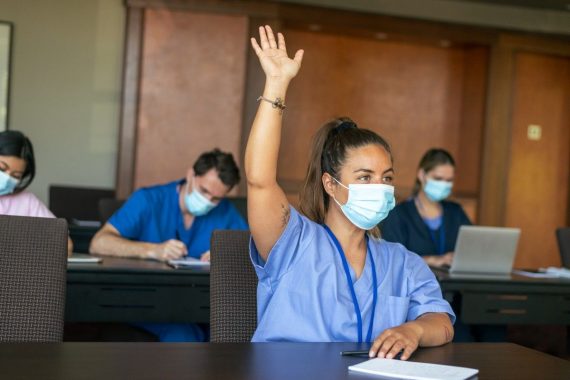


The Government will support 2,000 young people from England’s ‘most deprived areas’ to apply to university through funded ‘medicine access courses’ over the next three years, it has announced today.
The support, backed by £2.3m, will include giving young people access to summer schools or placements within the NHS, where they can increase their knowledge and skills, the Department of Health and Social Care said.
DHSC also said that it will ‘expand or reallocate’ medical school places so that areas with poorer health outcomes or ageing populations ‘train more doctors locally’.
To support doctors from disadvantaged backgrounds who face higher relocation costs, the Government will also trial a three-year pilot programme that will see resident doctors stay in one place for longer, easing the financial burden and disruption to family life.
And it announced 2,000 additional nursing apprenticeships, backed by £65.4m, concentrated in areas ‘facing the greatest training shortages and highest levels of deprivation’.
DHSC said that careers in the medical profession, particularly doctors and health care specialists are ‘often out of reach’ for many because schools and families in disadvantaged communities ‘often lack the knowledge needed to guide students towards medicine’.
It pointed to data showing that one third of schools have never had a pupil apply to medical schools, and around half have never had a student accepted.
Students from under-represented backgrounds will be able to apply to courses from spring next year, working with NHS England and partners like the Sutton Trust, Social Mobility Foundation and Medical Schools Council.
The Government also pledged to increase by 50% the proportion of students who received free school meals being accepted into medical school in England by 2035.
It comes as it published new data showing that the percentage of 18 year olds who received free school meals and were accepted into medicine degrees has risen from 4% in 2019 to 7% in 2025.
The acceptance rate to medicine courses of 18-year-old applicants who received free school meals also went up in the same period, from 33% to 36%.
Health secretary Wes Streeting said: ‘Talent is everywhere in our country, but opportunity isn’t. I don’t want the NHS denied the talents and potential of the doctors, nurses and staff of the future, simply because they are never given a chance.
‘We’re determined to break the class ceiling in the NHS so that our professions are elite, not elitist. My message to the best and brightest young kids who want to a future caring for their country in the National Health Service is – go for it.
‘By backing people from every background to train and work in the NHS, this will benefit patients, the NHS, and students.’
Chair of the Academy of Medical Royal Colleges Dr Jeanette Dickson said: ‘This is great news for patients, the medical profession and the NHS. We have long-argued doctors and other healthcare professionals should reflect the communities they serve.
‘As someone who came from a less than privileged background myself, I can certainly vouch for the notion that medicine, and healthcare more generally make a great career for people from all backgrounds and walks of life.
‘Similarly, basing trainees in the areas of greatest need also makes good sense, and will very likely help narrow health inequalities - it is a national health service after all.’
It comes after a bill prioritising UK medical graduates for foundation and specialty training became law last month.
The Medical Training (Prioritisation) Bill, introduced to prioritise UK graduates and others in a select ‘priority group’ for places before other eligible applicants, received Royal Assent today after it was first introduced to Parliament in January.
Related Articles

READERS' COMMENTS [1]
Please note, only GPs are permitted to add comments to articles






Our local medical school tried something like this.
It was a disaster, significant numbers of students unable to cope with the course despite significant extra support.
The scheme was quietly dropped and is never mentioned.