
High Court overturns GP’s suspension over ‘untrue’ QOF entries


A GP who was suspended for three months for recording ‘untrue’ QOF information has had her suspension quashed by the High Court.
The Medical Practitioners Tribunal Service (MPTS) had ruled in April that Dr Sarah Alam had altered 14 patient records in April 2018, retrospectively recording verbal invites for chronic disease annual reviews which ‘she knew to be untrue’.
Dr Alam, who was a senior GP partner at Umar Medical Centre in Blackburn, then exception-reported these invites for the purposes of complying with QOF.
The MPTS panel said Dr Alam’s ‘dishonesty’, while serious, was ‘limited in scope’ and not motivated by financial gain, although there was ‘at least the potential for there to be a risk’ if a patient had missed a chronic disease review as a result.
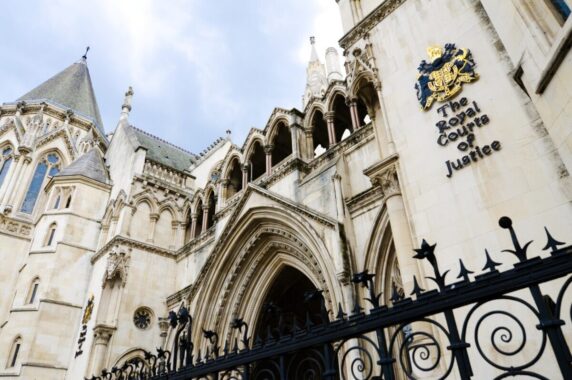
But earlier this month, the High Court found ‘errors of principle in the Tribunal’s approach’, saying it had applied an ‘inconsistent’ measure for dishonesty.
Because her appeal was ongoing, the substantive sanction did not take effect, and no immediate order was imposed. Dr Alam was therefore free to practise throughout.
She appealed the MPTS decision on two grounds: the dishonesty principle and what she argued was the tribunal’s ‘reversal of the burden of proof’.
On the first point, Mr Justice Jarman said the tribunal had failed to ‘stand back from the minutiae’ and take an overview of the dishonesty allegations, noting it had accepted that many entries were made honestly.
Her counsel, Andrew Colman of MDDUS, argued that the tribunal’s findings implied Dr Alam would have switched between honesty and dishonesty within minutes of making different entries.
Justice Jarman said it was also an error not to consider Dr Alam’s previously unblemished character, supported by around a dozen testimonials from colleagues who had worked with her for up to 10 years and spoke of her ‘honesty, competency and patient satisfaction’.
On the burden-of-proof issue, the judge pointed to the tribunal’s reference to giving Dr Alam ‘the benefit of the doubt’ on one occasion — implying that this benefit was withheld elsewhere, which he said would amount to reversing the burden of proof.
The High Court quashed the finding of impairment and the suspension on the first ground. It did not need to rule on the second, though Justice Jarman said he ‘would accept’ Mr Colman’s submissions had it been necessary.
The GMC had argued that the High Court should be slow to interfere with findings of fact made by an expert tribunal. Justice Jarman said he accepted this principle but justified intervention because of the tribunal’s ‘errors of principle’.
Simon Gomersall, partner at the law firm Weightmans, told Pulse the outcome of the appeal was unusual because the initial tribunal decision is normally advantaged during similar cases.
He said: ‘When considering appeals against Medical Practitioners Tribunal (MPT) the High Court will almost always show deference to the original decision-maker.
‘The Tribunal has the advantage of directly hearing and assessing the evidence, while the High Court hears no evidence at all when considering appeals brought by either registrants or the GMC. Courts are therefore reluctant to interfere with findings of fact, which is why successful appeals are more commonly based on errors of principle and law.
‘Appeals arguing that a Tribunal simply should have interpreted the evidence differently remain highly unlikely to succeed. However, Dr Alam’s case shows that findings of fact aren’t entirely off limits where an error of principle in the Tribunal’s approach led to incorrect conclusions.
‘The case is also a stark reminder of the potentially catastrophic consequences for healthcare professionals involved in regulatory investigations and of the critical responsibility placed on Tribunal members to get it right.’
An MPTS spokesperson told Pulse: ‘We always consider appeal judgments carefully for any learning points that can be used to improve future decision-making by MPTS tribunals.’ A GMC spokesperson said: ‘We fully respect the role of the courts and their careful consideration of appeal cases.’
In 2023, two GPs were suspended for 12 months after an MPTS tribunal found that their falsification of QOF records amounted to serious misconduct.