

Court case against GMC over PA scope of practice dismissed on all grounds
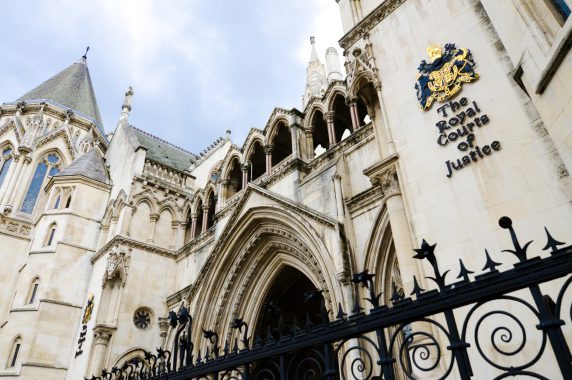


A legal case against the GMC over its refusal to set an official scope of practice for physician associates (PAs) has been dismissed on all grounds.
The judicial review was brought on by Anaesthetists United (AU), along with the parents of Emily Chesterton, a 30-year-old woman who died after seeing a PA in general practice who she believed was a GP.
It was brought to highlight ‘serious concerns’ about setting a scope of practice and supervision of PAs and anaesthesia associates (AAs) and was also supported by the BMA, while the Doctors’ Association UK donated £30,000 to the group’s fundraising campaign.
It was aiming to achieve ‘clear and enforceable guidance’ setting out what PAs and AAs ‘can and cannot do’, and argued that the GMC has a statutory duty to set those standards.
But today Mrs Justice Lambert dismissed the judicial review on all grounds, and said that she is ‘satisfied’ that the GMC’s exercise of its role as regulator of associates ‘was coherent and rational’.
The main grounds of the case were that the GMC ‘failed to produce standards’ that would:
- set ‘adequate limits’ on the tasks PAs may undertake post qualification by the introduction of a scope of practice;
- ensure that informed patient consent is obtained for treatment by requiring associates to state unequivocally that they are not medically qualified;
- ensure that PAs are safely supervised by doctors, including when delegating appropriate clinical tasks;
- and that this failure by the GMC ‘was irrational’.
The judgement found ‘no failure’ by the GMC to take into account ‘material evidence or mandatory relevant consideration’ and ‘no logical error or critical gap’ in the GMC’s reasoning.
However, the judge said that there exists ‘a genuine debate’ about whether the imposition of national limits on the practice of associates is ‘overall in the interests of patient safety’.
But she added: ‘It is not for me to enter the debate and resolve it one way or the other. That is not this court’s role: my only role is to determine whether the defendant’s decision not to impose a ceiling on practice is irrational.
‘Further, this court is simply not equipped to weigh complex social, political and economic issues and then express a concluded view on the pros and cons of limits of practice.’
In a statement, AU said: ‘We are hugely disappointed that Mrs Justice Lambert has dismissed our judicial review on all grounds.
‘Our lawyers will be looking next week at whether or not we can appeal the judgement. Whether or not this is practical depends on financial, as well as legal considerations. We will report on this as soon as possible.
‘Since we started this case there has been a sea-change in attitudes towards the use of Physician Assistants. The Leng review, and its widespread adoption, has been a key part of this change; and the public are now more aware of what PAs are and what background they have.’
A spokesperson for the GMC said: ‘Our thoughts remain with the Chesterton family. Today, our regulation of associates—supported by a robust system of registration —ensures they are safer and better equipped to carry out their duties and can be held to account if they pose a risk to patients or public confidence.
‘We welcome the decision of the High Court to dismiss the claims on all grounds and we are pleased the Court found our approach when considering how we would regulate associates, and our decision not to impose limits on their practice, was “coherent and rational”.’
The BMA’s chair of council Dr Tom Dolphin said that the outcome was ‘disappointing’, but added that it is ‘important to make clear’ that the court ‘has not vindicated’ the GMC’s refusal to set a scope or adopt scopes set by others.
He said: ‘The case was rightly brought by Anaesthetists United and the family of Emily Chesterton following the failure by the GMC to act on the overwhelming consensus of doctors that there should be a clear scope of practice that sets safe limits on what physician assistants can and cannot do.
‘That consensus is still correct even though the court today decided that who sets scope is not a matter for a court of law.
‘We thank Emily’s parents Marion and Brendan for their bravery in bringing this case, and the many doctors who supported AU directly by providing funds to ensure it could be heard.
‘We remain proud to have stood by AU, the wider medical profession, and the Chesterton family, and are sorry that today’s outcome didn’t deliver the outcome we all wanted.
“It is important to make clear that the court has not vindicated the GMC’s refusal to set a scope or adopt scopes set by others. Instead, it has simply stated the GMC’s decision not to do so was not unlawful.’
Related Articles

 Oviva’s fully remote Tier 3 Weight Management programme
READERS' COMMENTS [2]
Please note, only GPs are permitted to add comments to articles







Govt wants MAPs to replace doctors, govt gets MAPs to replace doctors.
An Americanised corporate healthcare system requires MAPs to maximise profit.
A sad day when both patients and doctors have to sue the GMC showing the GMC’s lack of support and credibility.