

GPs must get share of £100m put towards reducing waiting lists, says Welsh GPC chair
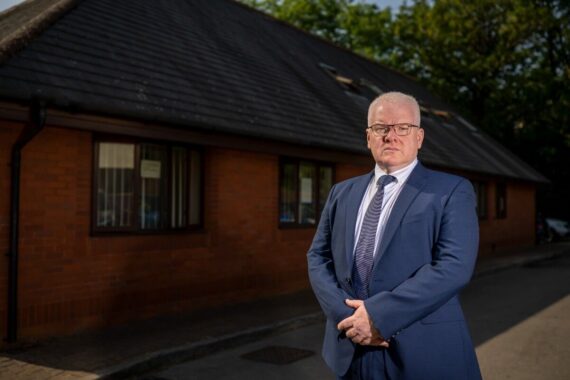


Exclusive The BMA will ‘unashamedly’ be looking for a share of the £100m pot the Welsh Government has allocated towards reducing waiting lists, the chair of its GP committee has said.
Dr Gareth Oelmann told Pulse LIVE in Cardiff that Wales’ new Government ‘needs to be judged upon actions, not upon the rhetoric’, but that ‘opening signs’ are showing that the ‘listening and understanding is there’.
It comes as Plaid Cymru leaders recently said they will review the way GP services are funded, and used the supplementary budget to allocate an extra £145m to the NHS, including £100m to ‘start implementing a plan to reduce waiting lists’.
Plaid Cymru took over from Labour following the Senedd election in May 2026, forming a minority Welsh Government for the four-year Senedd term.
Dr Oelmann said: ‘I will unashamedly be looking for a share of that money. We’ll be looking for a share of the £100m that they have announced will go towards waiting lists.
‘Because in that planned care journey I would say that the patients start with us, we lend them to secondary care for a while, and they give them back, so it’s very important that in that money we are not ignored.’
He said that the GP contract negotiations for the current financial year are yet to start due to a ‘transition’ between Government administrations in Wales, and that the delays are ‘unacceptable’.
He said: ‘What’s happening with contractual negotiations for 2026/27? Those negotiations haven’t started.
‘You can only negotiate with the with the current government, there’s that transition. It’s unacceptable that it’s delayed, we keep on saying that’s unacceptable.’
Last year’s contract negotiations were delayed too, and in December the BMA in Wales reached a deal with the Government resulting in £41.9m of investment for 2025/26, and including some elements of this year’s contract.
Dr Oelmann said: ‘I’d rather that it took a little bit longer and that it was right, it was worthwhile, rather than rushing something that would be insignificant.
‘As part of that deal, there was an announcement of ring fenced investment equivalent to 5.8% of the GMS contract value, which was for preparedness towards “community by design”, and that money, you will have already seen the first tranches of it, split in thirds.
‘The bit that everybody is asking me about is the Transformation Change Fund, and what that really means. What’s that going to involve?
‘That is still with the legal teams of Welsh Government. There are many reasons why it’s taken so long, and I think we’re just about to formally write out to the practices to explain that there has been a delay in that, some of which is due to the change in the administration.
‘We accepted the money, because we knew that without an upfront amount of money, practices would have been struggling with cash flow issues all the way through from April, and it’s unacceptable.
‘We still need to know what that transformation fund is going to actually mean in reality. How practices are going to access it, what it’s going to do, what you’re going to be expected to do for it.’
The BMA also released the results of survey of GPs from across Wales, which found that 54% of respondents described patient access as ‘routinely inadequate in the face of demand’ because of ‘severe and sustained underinvestment’.
The annual survey, which has looked at the workload, workforce and wellbeing in Welsh general practice since 2023, identified a service that ‘remains under severe pressure’.
It found that 70% of respondents reported workload having a ‘routine or constant impact on their own personal wellbeing’, while 63% reporting routine or constant impact on patient care.
As a result, practices are actively making cuts to survive, with 62% of GPs reporting increased personal workloads, 43% reporting recruitment freezes, 31% having to defer investment into premises/IT/facilities etc and 23% reducing service provision including minor surgery and shared care.
There are also ongoing signs of ‘workforce fragility’, the union warned, with only 62% of contractors planning to remain as a GP partner in three years.
The union said: ‘The findings, published as part of the BMA’s ‘Save Our Surgeries’ campaign show a system under unprecedented strain, a result of 106 surgery closures, 20% fewer full-time equivalent GPs since 2012 resulting in a 31% increase in patients per full-time GP and a service in receipt of just 6% of the total NHS budget for Wales.’
The Welsh Government recently told health boards that they must deliver an increase in proportion of funding going into primary care by 0.5% each year from 2027 onwards.
And a Parliamentary committee report had also called on the new Welsh Government to formalise workload sharing between primary and secondary care and suggested measures to address the inverse care law.
Pulse LIVE will also visit Newcastle, Glasgow, Belfast and Liverpool this year. Book your free place today.







