

Government needs to redistribute money to end GP underemployment, says RCGP chair
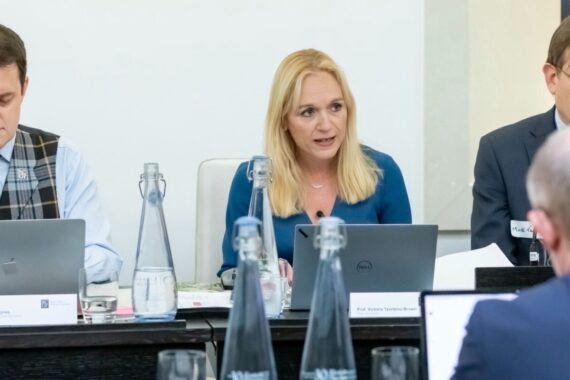


Exclusive If the Government will not make additional funding available to reduce GP underemployment, it must redistribute money from elsewhere in the NHS, the new chair of the RCGP has said.
Speaking on the new episode of the Pulse in Focus podcast, Professor Victoria Tzortziou Brown said ‘underemployment is the clearest example of a system not working properly’, while reiterating the college’s position that practices should receive ring-fenced funding to hire GPs at all career stages.
As it stands, GPs have been added to the additional roles reimbursement scheme (ARRS) but practices are only allowed to use the funding for newly-qualified GPs.
But Professor Tzortziou Brown said that while ARRS is currently ‘used a solution to the current shortage of doctors’ this is not ‘what it was there to do’.
She said: ‘It is important that we have urgent improvement to the current ARRS, which should include widening the eligibility criteria and addressing the generally low pay scales that make recruitment and retention quite difficult. But what practices are telling us – very clearly – is that the biggest problem is lack of core funding.
‘As a college, we have consistently called for practices to have the funding that they need to employ GPs within the core funding. I think this is important if we want to see the GP-to-patient ratios going to safe levels and also provide the access – that is so important to policymakers – going forward.’
Professor Tzortziou Brown stressed that this would also need to come with an increase to overall funding going to general practice.
She said: ‘We keep hearing that there is no new money available – if this is the case, then funding will probably need to be found by redistributing the allocations across the NHS a bit more fairly.
‘Care is increasingly being shifted from hospitals into the community, but funding does not follow patients. Clinical pathways are continuously being redesigned, but they are not properly costed and resourced. I think if we really want to deliver more care closer to home, we cannot just keep transferring work in an unfunded way.
‘So, it is a matter of funding, and we need to think how we can allocate the existing resources more appropriately and fairly if there is not new money.’
The interview also saw the RCGP chair admit the college was ‘surprised’ to be invited as a stakeholder in 2026/27 contract consultations, and reiterated her position that contract negotiations is the role of the BMA and not the college. However, despite this, it has engaged in the consultation by making a submission and meeting with the Government.
Regarding the college’s submission, she said: ‘I cannot go into much detail because the whole thing is confidential and we have respected this. But what I can say is that there are some clear principles that we have been quite vocal about, ones that we think are important to shape not just this future contract, but any future contract going forward.’
She said the college’s key messages are that: ‘capacity must come before targets’; that ‘access must go hand in hand with quality and continuity’; that ‘equity must be built in by design’; ‘reporting needs to be proportionate’; and ‘workforce well-being and retention must be central’.
She also said she ‘hopes’ that the college will continue to be involved in upcoming contract consultations, including for a wholesale new GMS contract.
You can hear the full interview – which also covered the topics of prioritisation of UK medical graduates; GPs’ role in the 10-year plan rollout; the BMA’s dispute with Government; and continuity of care versus access requirements, in the latest episode of the Pulse in Focus podcast.
Related Articles

READERS' COMMENTS [3]
Please note, only GPs are permitted to add comments to articles







Why are they still recruiting twice a year ?
More GPs, more RCGP annual dues?
When was the first time the the Inverse Care Law discussed????