

Exclusive interview with GPCE chair Dr Katie Bramall: ‘Nothing is off the table’
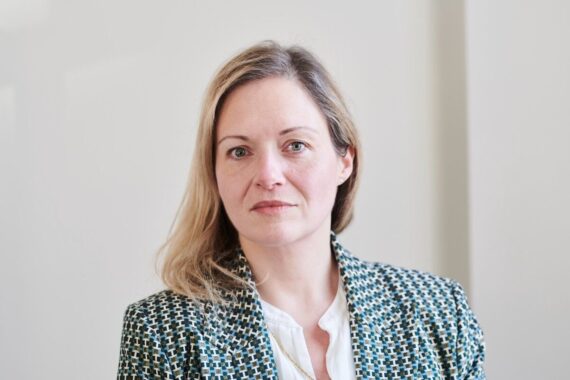


On the day the fraught 1 October contract changes came into force, Pulse editor Sofia Lind sat down with BMA GP Committee England chair Dr Katie Bramall to quiz her on online access requirements, the new GP contract and what shape the new Government dispute will take
Sofia Lind: So, as of today, you are again in dispute with the Government. Is that right?
Katie Bramall: Yes. When I’ve finished my call with you, I’ll be going through my letter and getting that sent to the secretary of state – then we formally go into dispute.
SL: Do you have any hope still that there might be safeguards put in place – or is this it now, do you think?
KB: We are always open to sensible, collaborative conversations in good faith. We’ve always maintained that we tried to engage with NHS England and DHSC colleagues on this from March when the contract was agreed, conditional upon the safeguards and the commitment to a new contract.
Our door will always be open, but it looks as though theirs is firmly closed, and I think that it has been bolted after the secretary of state’s comments in his speech to the Labour conference yesterday. I think he tried to label us in with other branches of practice, and the BMA as ‘forces of conservatism’ and wanting to keep medicine in a ‘20th century’ museum. I thought it an interesting choice of words for general practice, given how we are decades ahead in terms of tech compared with other parts of the NHS.
This is not about saying ‘no’ to general practice having online consultations; we already deliver millions of them. It’s not about saying ‘no’ to total triage. It is about not having the abilities to discriminate between what is routine and non-urgent. We must prevent erroneous urgent queries getting through. We need to be able to safely divert patients when a practice is at capacity. It’s also about the GP Connect Update Record and the write access.
We know this has been rushed out. It should have been piloted properly. They should have engaged with the Joint GP IT Committee – who published their statement and are ready, eager and willing to work with NHS England and Department of Health – to get in place the necessary safeguards on that. We know it’s not right. That’s why 15,000 patients were wrongly coded ‘patient pregnant’ when they attended their community pharmacy for emergency contraception. They’re still unpicking and unpacking that disastrous state of affairs.
SL: NHS England has put out a new FAQ document on online access. One concern that had been raised with us by several practices was whether, if there was an influx of online patient requests at the end of core hours, whether they had to respond to all of those queries in the same day; or whether there was a cut-off, at some other time than 6.30pm. But from the FAQ document it looks like they actually do have to respond to them all on that same day?
KB: Yeah, I agree. It’s like the FAQs are doubling down. They’re saying on the one hand, they want to be supportive of practices, but on the other they’re saying: ‘You’ve had plenty of time, we’ve talked about this for years. It was announced in May 2023.’ Which, of course, was a year where the contract was imposed. The same goes in 2024 when they snuck in core hours changes.
I think it’s tone deaf, to be honest with you. If you also look at the Health Services Safety Investigations Body, an organisation that comes under Department of Health and Social Care: their own recommendations around online consultations cover the safety, the lack of resource, the lack of capacity.
I had conversations with senior government advisors at the Labour Party conference, and they said: ‘We have no interest in breach noticing any practice.’ And I said: ‘Well, then you need to put that in black and white, so that then practices understand that they’ll do the very best they can, but you’re not going to start weaponising this.’ But they’ve refused to. I still have every hope that they will do so, because that would be in everyone’s best interest, but they seem intransigent to that, and I think that’s deeply regrettable and very irresponsible.
SL: So are you pushing NHS England for any particular cut-off time? Say if the request comes after 16.30 then could it be answered the next day? Or something to that effect?
KB: We’ve explored all sorts of possibilities like that. In the FAQs, they’ve actually doubled down and become more black and white. We’ve said that they are intentionally brusque in their language; they’re inflammatory. They do not reflect any lived experience of a GP currently working and practising on the front line, with experience of handling online consultations and demand-versus-capacity mismatch. It’s tone deaf, and I think it tells us a lot about what’s going on behind the doors at NHS England.
SL: Do you have any meetings planned with them to discuss it further?
KB: Not at present, but we have continually said that we want to land this well, we don’t need to have this dispute, and that we want to be completely reasonable. We have always played a straight bat. I have shared my correspondence with Amanda Doyle and Ed Scully – the leads at NHS England, the DHSC, respectively – going back to April, because I’m being challenged on social media and by LMCs saying: ‘What actually did you agree? Was this nailed down?’
What we have written we are going to put in the public domain as an audit trail, so everybody can see in black and white that we have been completely honest and transparent throughout. It is DHSC and NHS England who are now deciding to change their perspective. They started to say: ‘Oh, well actually, we meant the poster in the waiting room’, or ‘We meant the document on the website’. Well that patently is not a safeguard against this. Then they said: ‘Oh actually, it’s on practices to get this done.’ And in another letter, they said: ‘Well, it’s also on online consult providers.’ They keep flip-flopping around whose responsibility it is, whilst, of course, continually abrogating their own responsibility.
SL: What exactly is it that you need in order for this to safely go ahead?
KB: We need NHS England to work in good faith with the Joint GP IT Committee, to work through their documented concerns around the functionality of GP Connect Update Record before we can have write access deployed, and we want them to allow practices to keep that switched off whilst we work through that so we know it’s safe.
With online consultations, we need practices to have the functionality to be able to safely discriminate between what’s urgent and what’s not, and if a practice has hit capacity, they need to be able to divert patients accordingly. It is not fair and not reasonable and not safe to expect them to continue to accommodate requests when they are not going to be able to meet those expectations.
And also, as per the motion I put to GPC England, there’s also further assurances we need, working with senior figures in government and the Department of Health, around the 10-year plan and commitments to the protection of GMS, and clarity over funding envelopes for 2027 and beyond – and also around the single and multi-neighbourhood provider contracts as well.
We’re not seeing any progress on a new contract, and given we’re continually told that there is no money, that makes me very concerned as to what a new contract might look like. Now, they may well want to negotiate a new contract still, but if there is no uplift in funding attached to it, I don’t see why practices would support that. And they’ve already commented on Carr-Hill, but we’ve not been co-producing these discussions which also flags serious concerns for me; it looks like it’s a redistribution of deck chairs on the Titanic rather than a levelling-up process, which has been spoken about so much.
We cannot continue to have smoke and mirrors, and try to assemble a service – what was a world-class, respected service labelled the jewel in the crown of the NHS – on broken promises. I think this is so regrettable. There was such optimism, hope and aspiration, even just six months ago. And I think what followed afterwards – with the 10-year plan – was such a profound misstep: to not co-produce the 10-year plan and work with the medical profession.
Well, we’ve seen the outputs from the (BMA) Special Representative Meeting and I think it is particularly the case for general practice – and the implications on us as a branch of practice: They’ve made that [new contract] commitment, and it makes you wonder whether they thought this was a sleight of hand in order to be able to say: ‘Well, it’s still contract reform!’ If you’ve got the money to produce these [two] novel contract forms [in the 10-year plan], then you’ve got the money to invest in GMS. There’s plenty of money. It’s how it’s being deployed and where it’s being deployed – and that comes down to a choice.
It’s a bit like this with GP Connect Update Record and with online consultations. This is not economics, because it’s not going to cost the Treasury a penny, so therefore it’s ideological. And if it’s ideological, and they’re really doubling down on this ideology, that’s really bad news for how long this dispute may go on for.
SL: So at the moment there are no meetings? I was under the impression that the contract discussions were supposed to start in September, but they haven’t?
KB: They were indeed, and we wanted to have meetings before and after GPC England. But I don’t believe today that there are meetings in the diary right now. And I know that normally, after the Labour Party conference, the department will be assembling their negotiation asks for 26/27. They’ve still not shared the cost envelope, and they will be getting the ‘write around’ agreed between all the [Government] departments before getting the mandate to open negotiations with us.
But we’ve been really clear. As per my letter to Stephen Kinnock on 22 July, we need to know what the cost envelopes are. There’s no good going around a supermarket with a full trolley, putting in even more stuff, and then getting to the tills and opening your purse and realising you can’t actually afford what you want to buy. So we need to know how much is in the purse before we can agree what goes in the trolley. If all they’re going to be offering us is an uplift in line with inflation – then I don’t see how anything can be bought. If you’ve got the same this year as next year, you haven’t got any money to buy anything new, which is a shame, because this is not the conversation we wanted to have.
I think general practice is really open, innovative, flexible, and can-do in its attitude. We’re a really easy profession to work with. We could have some really elegant and effective business propositions for this government who are looking to increase productivity and efficiency. My goodness, we’re the best place to come.
It just seems so redundant and such a missed opportunity, which is ultimately going to harm patients – and I think also harm Labour when they come to the ballot box. I’ve said from the beginning, this is going to risk causing GP waiting lists, and the last thing this government is going to want (come the next general election) is the public saying: ‘Well, we didn’t have GP waiting lists when they came into power, and we do now.’ So, they’re going to have to reap what they sow.
SL: You mentioned already about people reaching out to you, asking: ‘What did you actually agree to?’ That’s been raised internally in the BMA as well, and there’s a review. So can you explain what that review is looking at?
KB: The review is a slightly separate thing. It’s around: how correspondence from the department and NHS England comes into the BMA; how it finds its way to elected members; the opportunities given to us as elected members to comment and feed back; and what sight do we get, if any, on what correspondence is then fed back to the department and NHS England. I think that’s where we need greater clarity and transparency.
My understanding at the present time is that that’s sitting in the [BMA’s] Department of National Negotiation and Representation to be taken forward. The review conclusions and recommendations are due to be presented to GPC England at its November meeting, in about six weeks’ time. I think that will be very helpful because we need a consistency of approach. We need standard operational procedures. I think it’s really important that you learn from and develop structures to help elected members, rather than potentially create confusion where it didn’t need to be.
SL: So was this contract amendment missed? Were there mistakes in how the contract was negotiated? Or is it just, according to you, DHSC being disingenuous?
KB: No, it’s not that either. It’s how the BMA processes work across the different teams. So GPC has two separate teams. It has the secretariat that serves the committee – the elected members. It also has the independent contractor doctor team that supports the negotiations and contract process. It’s then about how those teams interoperate, how they complement each other, what areas are covered, and what continuity there is of staff, and how those staff correspond with the elected members.
It all comes down to streamlined working processes and whether they’ve been followed or whether they’ve been frustrated due to overwhelm or staff absences. So really, it’s more to do with getting communications right.
SL: Primary care minister Stephen Kinnock said that he’s ‘mystified’ that you’ve now tried to renege on your agreement. What would you say about that?
KB: I think that’s really disappointing given that he came to the council chamber and addressed GPC England on 17 July. When challenged really articulately and eloquently by our committee members, he looked them in the eye and said that Whitehall wasn’t interested in a one-size-fits-all approach; they weren’t going to make practices do what they couldn’t deliver. And that is absolutely what has happened.
Now, of course, we know that there later came a hasty clarification from the Department that ‘actually Minister Kinnock meant this [instead]’. He clearly probably got a dressing down from his civil servants after he left the BMA. But I think it goes to show that this doesn’t make sense on any level. It’s ideological, not practical, patient-centred, nor practice-centred.
We’ve also got to think about practice wellbeing; the impact on reception, care navigators, practice management teams, as well as GPs and frontline clinicians. It can lead to overwhelm, burnout and people leaving their jobs. That churn is distressing in practices, and factors into the lack of continuity of care and the taskification of medicine.
It’s interesting because we also have spoken to a KC, and papers are currently sitting with a KC to see if there is a potential avenue to undertake a judicial review. Because I think it’s fair to say that on paper it looks as if what has been progressed has not been reasonable. So we await that with keen interest, in terms of one of our potential next steps.
SL: You mentioned the letter already. So you will be sending a letter today declaring the dispute?
KB: Absolutely, yes indeed.
SL: What’s that letter going to say?
KB: It’s going to express regret that we’re in this position; that we could easily not be here, and be having much more sensible discussions instead. It’s going to be reiterating the wording that was put to GPC England to vote upon. So there’s absolute clarity around the areas and grounds for dispute. That will cover the three conditions upon which GPC England agreed this year’s contract in good faith, subject to: a new substantive contract; GP Connect Update Record (write access), working with the Joint GP IT Committee; and online consultations having the sufficient functionalities embedded in the platforms to be able to discriminate safely between urgent and non-urgent – so that you could keep on your non-urgent, but you could switch off your urgent when you were reaching capacity.
SL: And will there be a ballot of GPs?
KB: Nothing’s off the table, to be honest with you. I think we are going to need to listen really carefully to the mood and the experienced, lived feelings of practices at the front line, and GPs running their practices. I anticipate we will be corresponding with BMA members in short order around the next steps.
SL: So there is no ballot – indicative or otherwise – that has been planned already?
KB: Indicative ballots and formal ballots are options that are absolutely open to us at this stage. That’s what we’ll be looking at.
SL: How are you now feeling about the 10-year plan? How certain are you about the Government’s commitment to GP partnerships and the GMS contract? Are you feeling concerned that these new contracts that were mentioned in the 10-year plan could supersede GMS contracts?
KB: It’s hard to say because there’s such little detail. We know the delivery chapter was spiked – I’m told that’s the term used in government circles – by Alan Milburn, so there is a lack of clarity. We don’t know what’s in a single neighbourhood provider contract. We’re told it must be GPs, but I’ve also heard talk that it cannot be held at the same time as a GMS contract. I don’t understand why that mutual exclusivity needs to be there. I think that will further fan the flames of concern and discontent that this is undermining GMS. Whether or not the single neighbourhood provider contract is meant to be a successor to the PCN DES? We have no idea.
We’re on record stating the importance to GPC England of moving the additional roles reimbursement scheme fund to a practice-level reimbursement. In fact, it was a condition in GPC England’s letter on the 22 July. There is no reason why the Treasury should balk at that.
We’ve had civil servants say: ‘Well, it’s very difficult, because how will we know you won’t make people redundant or use it to fund existing staff?’ And I’ve responded that you just can’t operate like that. Of course there won’t be redundancies, because that would require huge restructuring processes and redundancy payments, which practices do not have a fund for. It’s amusing, but slightly ironic that we’ve seen this happen at an ICB level; announcements paused because of the challenges from Unison and various trusts and the lack of any identified funds around restructuring and redundancy processes. So they really ought to know where of they speak.
And these members of staff in PCN teams have been often stabilised well over two years now. That would be quite a complicated HR picture to unravel for practices. Again, I don’t believe that PCN managers or clinical directors have got the time or the inclination. I think where there’s churn, where people naturally move on or step down from their roles, there’s a fresh opportunity to really consolidate funding and focus on more GPs and more practice nurses. But other than that natural churn, the chances of significant change are unlikely.
This has always been open book. ICBs have always wanted evidence of the reimbursements, the contracts and the appointments. So to suggest they can’t do it, because what stands as evidence that a PCN won’t stand as evidence from a practice is ludicrous. That’s just trying to obfuscate around what is an obvious solution.
If there is no money, then an easy win for the Government is to reinvest that £1.4bn across practice-level reimbursements and claim they’ve put in an uplift. That would also offer greater continuity for those staff members to not feel so spread across different practices as well. It would be better for patients.
So what they need to do is really clear from our perspective, and it doesn’t need to be difficult. If there are ideas of ours that they like, we will be delighted for them to claim them as their own policy. This isn’t a competition. All we want is: for practices to feel more stable; for GPs to feel more settled; for under and unemployed GPs to have greater opportunity for work that brings them joy and professional satisfaction; and for patients to be safe. We want to do the best we can with what we have. That’s all we really want.
I think it is really irresponsible to be promising pots of gold at the end of these infinite-capacity rainbows. It’s ultimately going to come back to the Government when the 1.5 million patients who see their practices every day will experience, in some cases, the growth of GP waiting lists; and in other cases, fewer GP face-to-face appointments, because more GPs have to be redeployed to be handling triage.
You can’t create more with nothing. Isaac Newton’s laws still stand, whether or not the secretary of state wants to have a headline in the conference speech.
SL: So we know what ministers have told everyone about online access, but what have they told you about GP Connect concerns? You’ve asked for extended indemnity – is there any movement on that at all?
KB: It is lots of platitudes: ‘We’re happy to work with you on this in the months ahead’; and ‘We’re happy to continue to work with the Joint GP IT Committee working through this’. But we’ve been trying to work through this for six months, and there’s been very little traction. So those words feel like rather empty promises from where I’m sitting today.
SL: So my final question is: What do you think might be on those ballot papers when they do come around? What could this dispute look like? Working to rule, much like the last dispute, or something different?
KB: I think it has the potential to be a bit different. We’ve got a number of options:
It can be ‘you do nothing, and you accept what has been done to you’. And I think there’s the option for an indicative ballot to test the waters. Then there’s the option to undertake industrial action, including breaching your contract – over diverting and switching off online access when you’re full.
There’s also the option of wanting to take actions that fall short of breaching your contract – which would look more like a suite of collective action that we undertook in 2024. But it would need to be completely different, because so much has changed in the past 12 months.
So those, as I see it, are the options that we have before us, and I’ll be taking advice from colleagues in senior BMA roles, and also we’ve got ongoing focus groups with the profession. We’ve got the England conference at the start of November, by which point I would hope we’ve got greater clarity on what our next steps are.
I mentioned the potential opportunity for a judicial review. That can take time, but it doesn’t mean that we have to await the findings. We can continue in parallel to have discussions with the profession, whilst that’s going on in the background, if that gains traction.
So really, nothing is off the table.
This interview was edited for clarity and brevity
Have you got a view you want to share with Pulse?
We’re always open to first-hand pieces and opinions from GPs.
Email your piece for consideration to be published on our site.
Related Articles

READERS' COMMENTS [2]
Please note, only GPs are permitted to add comments to articles







Hmm the bit around was was agreed and whether anything was missed is as clear as mud.
Nothing is off the table. Except elbows. Elbows should be off the table. “Keep your elbows off the table,” mum used to say….Elbows…and Action. Any real consequential action has always been off the table….And striking. Elbows and Action and striking. Oh, and undated mass resignations….Whatever did the BMA do for us?
The will to live drained away while reading the interview…….
Pabulum, good word that.
The BMA – still Managing the Extinction of Quality General Practice, by Cliché.