

Stephen Kinnock: Online GP access is about bringing ‘maximum convenience’
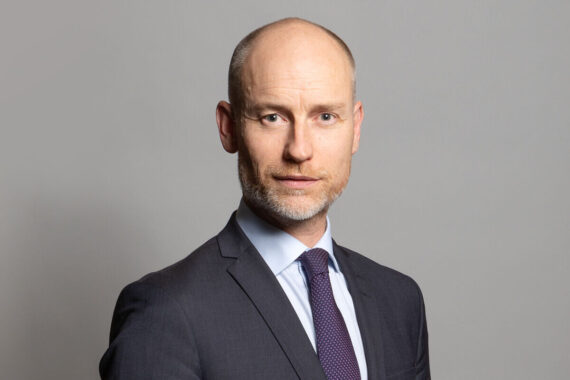


On a visit to a West London GP practice, invited by the Department of Health and Social Care, Pulse reporter Harry Hetherington got a chance to quiz primary care minister Stephen Kinnock on the new online access requirements coming into force today, and the BMA GP Committee’s decision to re-enter dispute with the Government.
Q: What is this practice (Grand Union Health Centre) doing right?
Stephen Kinnock: It’s great to be here this afternoon to meet the excellent team and to talk about the way in which they’re using online appointments and booking systems as a really important tool in terms of improving patient access and improving the patient journey.
They have been doing it for years, and they’ve seen a very clear link between really enabling online access and tackling the 8am scramble. We all know that the thing that probably drives more frustration than anything else for both patients and practices is having that long queue where everyone rushes to get on the phone in a manic scramble at 8am. It’s very clear that when you offer that online opportunity, people are then far less likely to pick up the phone and do the 8am scramble. So we talk quite a lot about that, and I think that’s why we’re so excited about rolling out the online access from 8am to 6.30pm in every single practice in England.
A very large percentage of practices are already doing this, but the difference is now that we want to iron out the inconsistencies and get this universally adopted right across the country.’
Q: Speaking of the practices which aren’t already using this system, could you summarise how general practice will change, both for GPs and for patients, from 1 October?
SK: If a GP practice currently only offers a telephone appointment system or a walk-in appointment system, you will be subject to the 8am scramble in particular, and you’ll be also dealing with patients who probably have to wait days, if not weeks, to get an appointment. By shifting onto an online booking system, either through the NHS app or (booking systems such as Patches – used by GUHC).
What you’ll be doing is hugely improving the effectiveness of your booking system, thus taking pressure off the 8am scramble. You’ll also be improving continuity of care, because when patients go online and do their booking, there’s a drop-down box, which gives the list of doctors that are available. And if you’ve got a doctor that you regularly go to, you’ll see that you select that and you get the appointment.
All of that will massively enhance the productivity and efficiency of the system, will reduce the frustrations that are driven by the 8am scramble, (and) improve continuity of care, which we know also always improves patient outcomes.
I think the transformation really is that shift from analogue to digital, and it’s about becoming a service that is maximum convenience and better for care.’
Q: Are you confident the necessary patient safeguards are in place for these online consultation tools, i.e. patients not being able to submit urgent requests online erroneously?
SK: We made it very clear when we signed the contract with the GPCE back in February that every practice is absolutely within its right to put a statement on its website saying the online booking system is for non-urgent appointments – ‘If you have an urgent need, please use the telephone or come in’.
I think that’s the key safeguard, because as long as you’re very clear about that, that will give a very clear signal to your patients. The other thing, of course, is you need a good triage system. But I don’t think there’s a single practice in the country that can function without effective triage. Triage is the lifeblood of any effective GP practice.
Talking to the excellent team here, there’s a colleague who is focused on triaging all of the online appointments, doing a check of every single one that comes in. But I mean, it’s hardly even worth saying – why would we be telling GP practices that they need to do triage when triage is just a fundamental part of making any GP practice work? And that triage process has to apply both to people walking into the practice, people telephoning the practice, and people doing the online booking.
Q: How does the Government intend to solve the new dispute with the BMA over this issue: opening online requests through core hours without safeguards having been guaranteed?
We’re mystified by the GPC’s position. Frankly, we agreed a contract with them back in February. The contract stated very clearly that by 1 October, every practice in the country should be offering online booking from 8am to 6.30pm, so one thing we will not be doing is unpicking or unravelling a contract that both parties signed up to. We were so pleased that contract was accepted by the GPC for the first time for many years.
I think it was an accepted contract rather than an imposed contract, underpinned by £1.1bn additional investment, 2,000 more GPS on the front line, making the ARRS more flexible, introducing advice and guidance with an investment of £80m. So, a really compelling package of investment, but investment must always come with reform, and we thought that the GPC was on board with that. We thought the GPC wanted to see that drive, that shift from analogue to digital, from hospital to community, from sickness to prevention.
We thought the GPC was on the same page as us in terms of the vital role that primary care plays and the need to fix the front door of the NHS, which is GPs. We thought we all wanted the same thing. We can’t do that if we are agreeing contracts in February and then trying to unpick them in September, October. That’s simply not acceptable. So we were happy to get back to the table with the GPC, to go through those issues and get back onto the same page. But we are absolutely clear that the commitment to online consultation is a cast iron commitment in the contract, and that will be our starting point.
Q: This has also caused internal tensions within the GPC, but do you understand wider GP concerns about the varying capacity needed to deal with appointments through core hours that exists among the thousands of practices in England? You have practices like these which are success stories for online consultation, then you’ve got very rural practices serving isolated communities – there’s a lot of variance between the more than 6,000 GP practices in England?
SK: I’m not going to comment on the internal machinations of the GPCE, but what I will say is that, of course, change and reform always poses questions about not being quite sure how this is going to work out, and I understand that people are concerned by change, but if you cherish something, you have to be prepared to change it. We have to modernise. We have to deliver the 10-year plan.
We inherited a dreadful mess when we won the election in July 2024, and we spent the last 14 months straining every sinew to get the NHS back on its feet to be fit for the future. We need to do that in partnership with general practice – we want to do that in partnership with general practice. That does mean that everybody needs to be prepared to commit to change and put their shoulder to the wheel.
But we also see this as not at all a risk or a threat. This is a big opportunity to improve your patient journey, improve patient outcomes, make GP practices more effective and more productive. It is good for everybody. So yes, change sometimes can be a little bit uncomfortable, but this change will absolutely deliver much better outcomes.
This interview has been edited for clarity
Note: This article was updated at 10:21 on 2 October to include the name of the GP practice Mr Kinnock was visiting
Have you got a view you want to share with Pulse?
We’re always open to first-hand pieces and opinions from GPs.
Email your piece for consideration to be published on our site.
Related Articles

READERS' COMMENTS [14]
Please note, only GPs are permitted to add comments to articles







Hilarious to see the people in charge of our health system saying that booking a GP appointment should be like ordering a takeaway. It doesn’t even stand up to my 5 year old daughter’s critique and she loves egg fried rice.
interesting use of terminology here- keeping a website open for queries from 8-6.30 is NOT the same as using said website to allow patients to “book into available convenient appointments”. We don’t use our website for that. fascinating how the MP in the article doesn’t seem to be able to clarify the ask! if practices release most appointments on the day then there will still be the 8am scramble when they are all gone by 10am! opening the website longer does not create more capacity of appointments (a bit like creating more phone lines does not create more receptionists to answer them)! Smoke and mirrors…..
Our local surgery has totally abolished the 8 am scramble –
by not answering the phones until 0830 !
They now have an 0830 scramble instead, and appointments are all filled up by 0840, so the telephone staff are then redundant too.
A bit concerning that he thinks online booking is what we’ve been saddled with. I daresay most of us could manage that (although last time we tried patients booked any appointment they could find and it was a disaster of dressings in doctors clinics and complex mental health patients booking themselves into smear appointments. Almost like health is more complex than getting a takeaway or a short back and sides
Even in his interview he says that the one practice out of 6000 that he is singing the praises of has someone doing triage. With the contractual requirement to have online access 8am to 6.30pm that will mean a clinician available to do the triage for 10 and and half hours Monday to Friday.
If they are occupied studying online requests and responding to them they will not be able to do face to face consultations.
It is not going to create anymore appointments.
1. This interview has been edited for clarity
Harry / Pulse : For the sake of complete clarity can you tell us which GP practice this is? It’s relevant
2. We’re mystified by the GPC’s position
Stephen, I think the relevant medical terminology is ‘brain fog’
Had a great conversation today whilst retraining as an electrician and doing my Level 3 Diploma.
My adult learner colleagues had no difficulty understanding how an office based surgery system with a finite amount of staff, pre-booked appointments and need to also look at all of the healthcare related admin could not just magic up extra hours to see additional patients / look at a potential deluge of questions let alone act on them.
No one working in healthcare is sat twiddling their thumbs looking for work, we are all working flat out with a diminishing real terms funding envelope and GP workforce despite a lack of posts for qualified GPs because of the funding available to employ them.
You cannot add additional patient access and thereby expectation without providing additional resources.
Anyway got to read about final ring circuit testing now,so gotta go, but I am back at work on Friday doing my best for my patients within the time available to me and not magic time!
TO – interesting portfolio – but remember in a tricky situation cut the red wire…(or is it the blue wire)… 😉
As a patient myself who struggles to get an appointment around my own schedule
and as i am not able to treat myself
This sounds great
The Gov would like appointments to be taken up on the basis of wants not needs
so someone does have to triage the limited appointments
A lot can be managed remotely with accurix and may not need a face to face
but its all additional work
and someone has to be doing it
at a time when the service is very short staffed
Hopefully this extra billions of funding will materialise
and the gp Employment crisis can be minimised
fair dos to prioritise the new gps for ARRS
But very experienced GPs may be left out in the cold
when they will provide greater efficiancy
Think about it Wes before you change departments
i
I’m waiting until 23.30. Then I will send a text to all the patients who sent in a query after 5pm.
I will be advising them all to attend reception at 8am.
They can then book an appointment to see me in 4 weeks time.
Hi David – added now!
If I was a takeaway I would be paid for each meal delivered. At some point it would make economic sense to employ more staff to be able to deliver more takeaways and make more profit. So in a peace work contract it is fine. On a fixed base this is not fine. Removing friction in the system does nothing to increase capacity. More doors on the bus and no more seats doesn’t make the bus carry more people. Indeed adding the doors may require removal of some seats. What you need is more seats. All eles is just repainting the same bus with a fancy logo.
It is all very concerning. There is a critical error of pure logic in Stephen Kinnock’s answers. This lies in his consistent conflation of “online booking systems” (direct appointment slot selection, such as via the NHS app or systems like Patient Access, which often include features like doctor drop-down menus) with “online consultation tools” or “online requests” (form-based e-consultation submissions for routine, non-urgent queries, which are triaged by the practice without patient selection of specific slots or doctors). This equivocation fallacy undermines the coherence of his claims, as the benefits he describes—such as reducing the 8am scramble through alternative booking channels, improving continuity of care via doctor selection, and providing safeguards through simple website statements—logically apply only to direct booking systems, not to the actual requirement being discussed (e-consultation forms). For e-consultation requests, patients submit details that are then triaged and assigned by staff, without patient-driven choice of doctor or immediate slot allocation, meaning his touted improvements do not necessarily follow and may even contradict the policy’s intent, rendering his defence illogical and unsubstantiated. Once again, we are introducing obstacle to good, human, care. The true dictat is: keep it cheap…
Of course, it’s GPs who need to be more effective and more productive isn’t? 33 millions appts per month and enough appts to see everyone 6 times a year isn’t quite good enough is it? Truly baffling comments.