
Dr Clare Bannon: ‘GP partnerships are the most effective part of NHS’
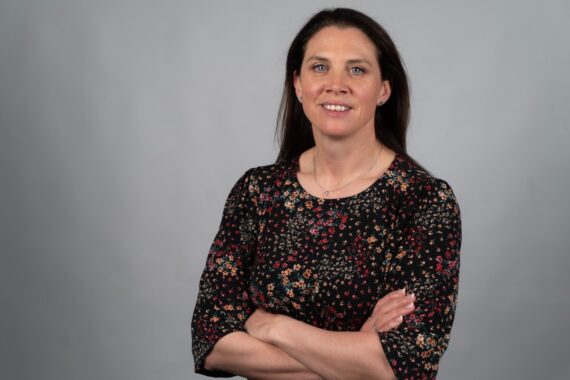


Pulse’s Anna Colivicchi sat down with Dr Clare Bannon, the new chair of the BMA’s GP Committee in England, on her very first day of the job to discuss her plans for the term, including where the profession goes with collective action now, how ‘plan B’ will progress, how the partnership model will work with neighbourhoods and more
Anna Colivicchi: What made you want to stand for chair of the BMA’s GP Committee?
Dr Clare Bannon: I didn’t initially want to stand. I think I’ve ended up [doing so] because I always want to improve things for GPs. I am a GP and until this week, I have been working eight sessions a week as a partner. I can see the issues and problems.
I was very reluctant to stand, as I felt like the role I was [already] doing was maybe enough for me. But other people encouraged me to do it, saying: ‘Well, if you wanted to do something different, you’d be really good at the job’. That is what pushed me to stand in the end.
Having done the roles I’ve done before [Dr Bannon was a former GPC deputy chair and has held a variety of roles within the local CCG, ICBs and LMC], I see so many things we could be doing differently for the benefit of the profession.
I only decided six or seven weeks ago to stand, so it’s been a bit of a whirlwind in my own mind more than anything.
AC: You mentioned doing things differently. Last year’s contract negotiations obviously didn’t go very well: the BMA lost their sole negotiating powers, and negotiations became a consultation with other stakeholders; rather than just a bilateral negotiation with the BMA. What are you hoping to do differently to safeguard negotiations for next year?
CB: I think it’s a really good opportunity for a reset, [having] new people [in the GPC] and the Government as well.
I have already got lots of relationships with NHS England from my regional work, policy lead work, and the work I did when I was previously a deputy chair. I have had loads of conversations with leaders within NHS England, and I think that will stand me in good stead because I already have good relationships with them.
I think they will see it as a positive that we can move forward with a reset of that relationship, and I think it will put us in a much better position than we were in last year. Personalities are different, and I think personality-wise I can get the best out of negotiations – and out of other people. I think I can put my point forward really clearly and help the other side see how GPs can help NHS England. I think that will be an important part of the way forward.
AC: It sounds like you want to bring forward positive negotiations. But do you have a plan for what happens if that fails, and we are in the same position again?
CB: Yes, we need to have those plans properly lined up. Obviously, I’m brand new to the job, and we haven’t got the full strategy. But that’s what I want to do – I want to work up a really thorough strategy around engagement with stakeholders, around broad influence, and around actually making sure that the messages we are trying to get across, we are getting across to the whole range of stakeholders – as well as the Government and NHS England. I don’t think we can wait until we are at the negotiating table. We need to do it from the start.
I want to give an opportunity for a reset. I want to give the Government an opportunity to come back to the table and improve the offers we have currently, and be clear about what they’re going to come into this autumn and winter’s negotiations with. They will need to bring something much stronger. Otherwise, we will have to escalate action.
AC: Will collective action continue in its current form – where one small action each month is introduced? Or are you hoping to do things differently? From what we have heard from grassroots GPs, it feels like it is only a minority of the profession that is enthusiastic about the current method, with the rest not very excited.
CB: This month the plan is to give an opportunity for that reset and move forward with the opportunity for the Government to offer us positive change and a meaningful offer. If they can give us more reassurances and improve some of the issues we’ve got, then I don’t think we will necessarily have to escalate.
But we’re going to be getting in plan really strong escalations. I think we do need to step it up a gear in terms of: if they’re not coming to table, if they’re not saying the right things, and if we’ve not got really concrete reassurances from them – then we are escalating.
I’m thinking about [collective action] around safe working – that’s what practices are really struggling with, the huge demand from online consultations. That is the kind of area where I think we’re going to be needing to step things up quite strongly.
So yes, it will be cumulative if we continue with collective action, as well as a case of stepping [it] up too. I want to see stronger [collective action] – something that practices and individual GPs can really buy into, because I do tend to agree that GPs on the ground haven’t felt that it’s been strong enough so far. So I would like to really step that up again, if it’s needed.
AC: You said that the plan is to give the Government an opportunity to come back. Do you have a plan to ask the health secretary back to the table as soon as you are in office?
CB: Absolutely. We’ll be asking for a meeting, and my hope is that we can have some constructive dialogue where they can come back with some positivity for GPs. There are lots of issues going on with the profession now. Obviously, the Government are also aware [in the background] of the ballot we have announced for an alternative strategy – a plan B – and that is something we’ll continue to work up in the background.
I will be contacting the Government imminently to arrange a meeting and give them the opportunity. Obviously, it is a slightly difficult time politically as there may be another new secretary of state [soon]. So, whether that meeting happens with this secretary of state or a couple of weeks later with the new one, is something we will still be working out. But obviously, that’s a conversation to be had between us and Government.
AC: What would collective action around safe working look like?
CB: It still needs working up. I only started the job today and haven’t got a team yet, so there is a lot to discuss. We have loads of ideas.
As GPs, we are on the front line. We deliver 1.55 million appointments every single working day – a huge amount of work. We face financial uncertainty, and we’re also really struggling with the day-to-day workload. I did triage just a few days ago – online consultations – and it’s really tough as a clinician.
So [it would be] more than collective action; as it would also give GPs the opportunity to take back some control and be able to do the work that they need to do for their patients. It would make sure we’re doing the things we know patients value and actually improve things in the system.
Safer working allows you to have the time to do the proactive care and continuity. We’re not against online consultations, but we’re against online consultations creating unnecessary and huge quantities of demand. So, it will be around that, but the detail is isn’t yet fully worked up.
AC: So it could be specifically around online consultation or triaging?
CB: Online consultations are likely to be part of it, but it will be around safer working in general.
AC: As part of the 2025/26 contract negotiations, the BMA asked for a new wholesale GMS contract – which Wes Streeting agreed to. This never materialised. Now that we have a new health secretary, the BMA has said that this is probably not going to happen. As chair, will you continue to push for a completely new GMS contract?
CB: I’m less worried about that. I think there needs to be some contractual change, but there are pros and cons of a wholescale change of GMS. I think there are huge problems with the funding formula, and obviously there’s the Carr-Hill review currently happening.
But ultimately, what we want is to see a significant uplift in core contract funding. We’re not getting enough funding to do the job right now. It has not risen sufficiently – even with inflation. And what we’re really clear about is that normal inflation is not the same in healthcare; healthcare inflation is so much higher. We do so much more in general practice now than we did even 10 years ago, and the funding formula has just not kept pace with that.
So, our main ask is less around contractual reform (although there are some elements that do need to happen). But we absolutely need to see a significant uplift in the core contract funding to allow GPs to provide the continuity of care for patients that they so desperately want to give.
AC: So your priority would be funding rather than a completely new contract?
CB: I think a completely new contract without funding isn’t going to work, and I think that’s the point. It’s not that we don’t need contract reform. There does need to be an element of contract reform, but it’s got to be underpinned with the funding.
AC: You also said that you want to protect partnership. You’re a partner yourself. Do you think it is possible to protect the partnership model in its current form, given the plans for the neighbourhood model and the new contracts?
CB: I think it’s possible and completely necessary. General practice is the most efficient part of the health service for one reason; partnerships. We are light of foot. We can make changes. We can do things differently. We can innovate, and that’s why we are such an efficient part of the health service.
So, I absolutely think it can be part of the new system. The BMA needs to support practices and be clear about how they should work in their local systems, and how they can ensure that the right governance structures are there to enable the practices to be protected within these new structures. We will be encouraging practices to work with ICBs, GP federations and their PCN structures as the new neighbourhoods are created.
We need to be clear about what we expect to happen with the single neighbourhood and multi neighbourhood provider contracts. I think GPs are going to be critical to that – neighbourhoods can’t exist without GPs. GPs want to maintain the partnership model, so it is critical that we bring those two things together and help guide the process.
AC: The neighbourhood contracts were meant to come out last autumn but did not. Now there is this variation to the PCN DES which could mean they won’t come at all. How do you feel about that? Does it feel like there is uncertainty? And do you have any ideas as to what those contracts should do to protect the partnership model?
CB: Absolutely – I have so many ideas of how those contracts need to protect partnerships. I think it’s been slow because the Government and NHS England haven’t had a very clear picture of where they’re going with those organisations. But we are clear that general practice has to be at the heart of them.
We would like to see multi neighbourhood providers [operate] through GP federations or groups of PCNs – so that practices are at their heart – and [ensure] that they are being managed in a way that does support partnerships. The BMA and GPC England will want to be giving clear guidance around how we can ensure that GP practices are supported within the new structures.
So I think there is still a strong possibility that the [neighbourhood contracts] will go ahead. Obviously, we are going to have a significant change in Government over the coming months meaning things could change again. So I don’t want to pre-empt anything, but we are making sure that GPC England is ready to give that guidance. Over the coming weeks and months we will be making sure that practices know how to navigate things so they can maintain autonomy, continue to function and be supported to thrive in the new systems.
AC: What are your thoughts on a plan B for general practice? Will the ballot happen this summer? What are the next steps going forward?
CB: I think people – the committee, members and the whole profession – worry about plan B because they are concerned it is privatising [general practice]. The GP profession is desperate. We all want to see the NHS succeed and stay free at the point of use. That is hugely important and sits at the heart of what so many GPs think – even though that often isn’t necessarily the best for GPs as individuals as it often actually makes our life harder!
But I think plan B is important because although we want to keep the NHS free at the point of use, we’re currently not delivering the care that we want to deliver. We’re not delivering the care that our patients want and need; that might be because they end up going to A&E because they can’t get an appointment, or they’re paying privately for something. We are seeing the amount of private scans and appointments go through the roof, and the use of online pharmacies rising.
Plan B is not about just privatising NHS services. It is about looking at the alternatives; the different strategies we can use; what would good care look like and how much would it cost; and how we present that all to the Government? How can we enable practices to have an alternative if the NHS fails? Because we want to support it, but we’ve got to run something [else] alongside it.
Whilst it’s early days, plan B will give the profession options – that is what it is about. It will give us alternative strategies to move forward; either in the eventuality that the contract is unsustainable or that the NHS fails in some way.
AC: It is interesting that you make that distinction between plan B and privatisation, because people have been concerned about that. It has almost felt like, even though GPC were voting in favour of it, some parts of the profession were scared of it. But it is not the only possibility that they want to see – they want to have options.
CB: Plan B is a backup. It just means that GPs haven’t got nowhere to go. We obviously have unlimited liability as GP partners, and that is scary as an employer. We have loads of families relying on us for their income, and that is a responsibility that we take seriously.
So if the contract continues to be underfunded and we can’t survive, what are our other options? We have got to explore that, and unfortunately, part of that is exploring private services. But that’s not the driver of it; the driver is giving GPs options and making sure we can continue to give good patient care.
AC: Do you still plan for the ballot to be this summer? Will it include all GPs (not just partners)? Will it just be a ballot of BMA members or every single GP?
CB: As much as much as I’d like to answer that, I don’t think I can right now as we are at such an early stage.
Plan B needs to be a plan before we can have a ballot on it, and we haven’t fully worked up the plan. It will depend on how quickly we can do so. I don’t want to push it down the road. We need to have done the ballot before we get to the next round of full negotiations for next year’s contract.
I think it being in the near summer is unlikely. Whether we can do it at the end of the summer or towards autumn is difficult [to say]. But we are moving forward with [plans for it] from day one.
But there is no point doing Plan B without the plan. We have got to be really clear on that. It is a mechanism to support and help practices as well as be something for negotiations. So it has got to be robust, supportive and do what we need it to do.
AC: What do you want to do as your first action as chair?
CB: I think the first action of chair is uniting the profession, having a reset, and being clear we have a new opportunity. That opportunity applies both internally as a committee, and externally with the wider profession. I want to get more people on board with the collective actions we currently have. We’re going to have a public-facing campaign, and we would really like GPs to get on board with that as well.
I think the [most important thing] is to bring people together within the profession as well as resetting our relationship with the Government and NHS England. Building those relationships is the most important thing – then bringing evidence and explaining GPs’ position and actually trying to move forward and find solutions together.
General practice is the key to improving the NHS. All the evidence points towards that, and I think that is what we need to be clear about. We are not here to cause difficulty. We’re here to help people find solutions.
AC: Would the public-facing campaign you mention be different from what has already been launched?
CB: It is about going out properly to every practice and getting all GPs involved with that campaign. It’s about that being visible in individual GP practices. That will be fully launched over the coming weeks. There will be more information in GP surgeries, including things that patients can interact with and show their support for their GP practices. We know patients support their GPs and value their services because they want to see them maintained and improved.
AC: So, it is about making patients understand how general practice funding and the contract works, and alerting them that it is not sustainable?
CB: Yes – it will help patients show support for their GP. I speak to patients every day and so many of them understand that we are in a struggling system, and they do want to support us.
Lots of patients are generally so patient. We often run late because appointment times aren’t as long as they might be, and the support we’re given from our individual patients is high. I think we need to utilise that because we have got that support, but it’s quiet in the background on an individual GP-patient level.
AC: Is there anything else that you want GPs to know about your plans as chair?
CB: A current concern that we haven’t touched on is list cleansing. That is very early on my list of priorities to be to be tackling.
We know that over 300,000 patients have been removed from GP practice lists, and whilst we agree that practices’ lists should be up to date and should accurately reflect the patients on those lists, it’s happening very quickly and is potentially financially destabilising practices.
We also know that from the types of patients [that are being deducted] there may be a potential equality and diversity issue. And it is often practices in the most deprived areas that are struggling with this. We really need to ensure that we’re not leaving vulnerable patients without a GP, and also that we are not leaving practices in those deprived areas with a sudden drop in funding, putting even greater strain on them.
[NB: This interview took place one day before NHS England pledged that money saved through its ongoing GP list-cleansing exercise will ‘remain within general practice services’].
AC: I know that the BMA has asked for a pause and for the money that has been saved to be reinvested back into general practice, but do you have any other ideas of how you want to tackle that issue with NHS England?
CB: In first instance, it will be using the relationships and having discussions, which I haven’t had the opportunity to do yet. But if it becomes more of an issue and we’re not resolving it, then we may tie it into collective action in the future.
But there is a lot of talking to do about it first. I think there is a will within NHS England for them to make sure the money is reinvested, and we have got good opportunity to influence how that happens for the benefit of the practices that are losing the funding – and for the profession as a whole.
AC: Is there anything else that I haven’t asked that you think GPs should know about your plans?
CB: We will be getting the team in place, and you will be hearing a lot more from me going forward. I won’t be silent, but I want to listen. I’m not about telling people what to do. I’m about getting the broader team on board. This role isn’t about one person; it’s very much about having a team.
We’ve got such a wealth of experience with GPC England – huge numbers of senior LMC leaders and experienced GPs. We need to draw upon that wealth of knowledge for the benefit of the profession. So that is what I am here for – to pull all those views, ideas and understanding together for the benefit of the profession.
This interview has been edited for clarity and brevity
Have you got a view you want to share with Pulse?
We’re always open to first-hand pieces and opinions from GPs.
Email your piece for consideration to be published on our site.